

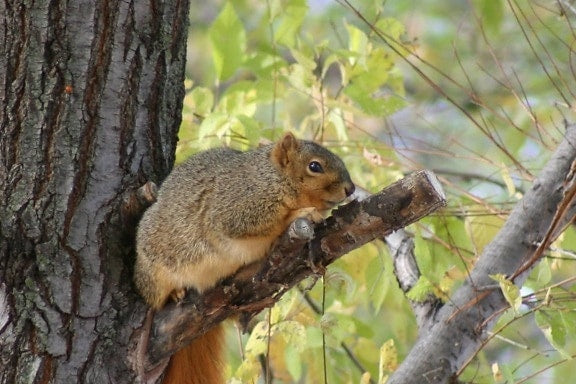
The Airgun Hunter’s Guide to Squirrels, Part Two: California Ground Squirrels
Last month, we climbed into the trees with the Eastern Gray Squirrel and talked about why understanding your quarry is every bit as important as understanding your airgun. This month, we're staying in squirrel country—but we're coming back down to earth.
The California Ground Squirrel is a very different animal from the tree-dwelling gray squirrel. If you approach both species in exactly the same way, you're likely to discover something very quickly: A squirrel isn't just a squirrel.
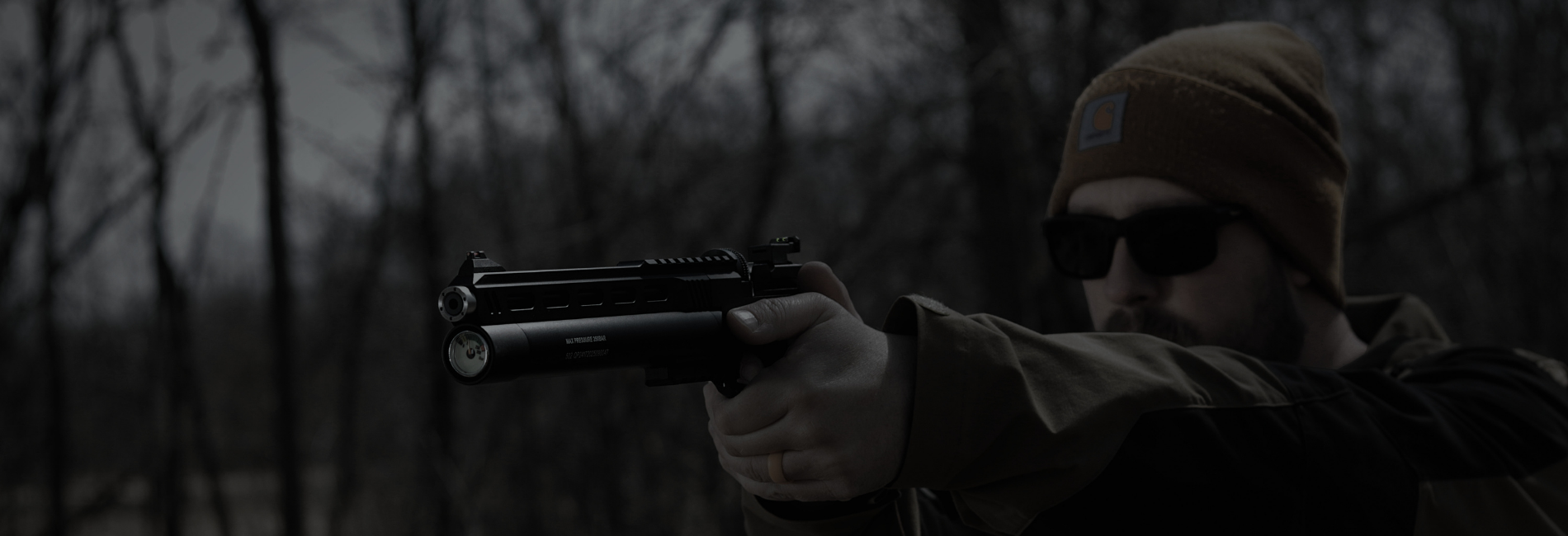
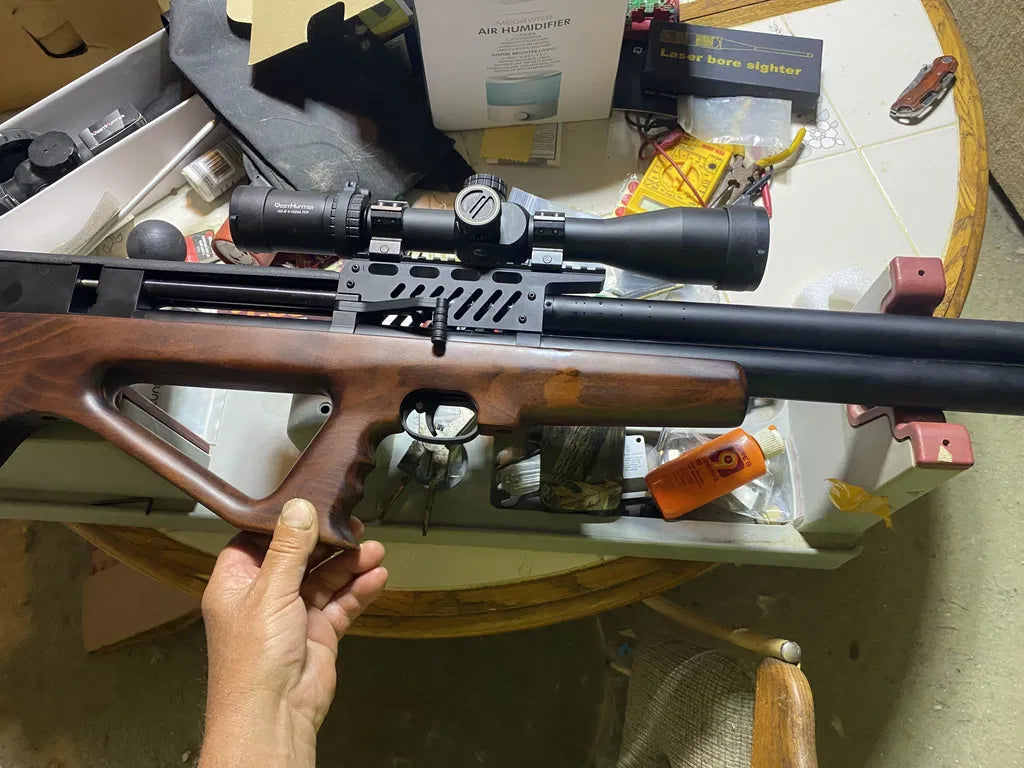
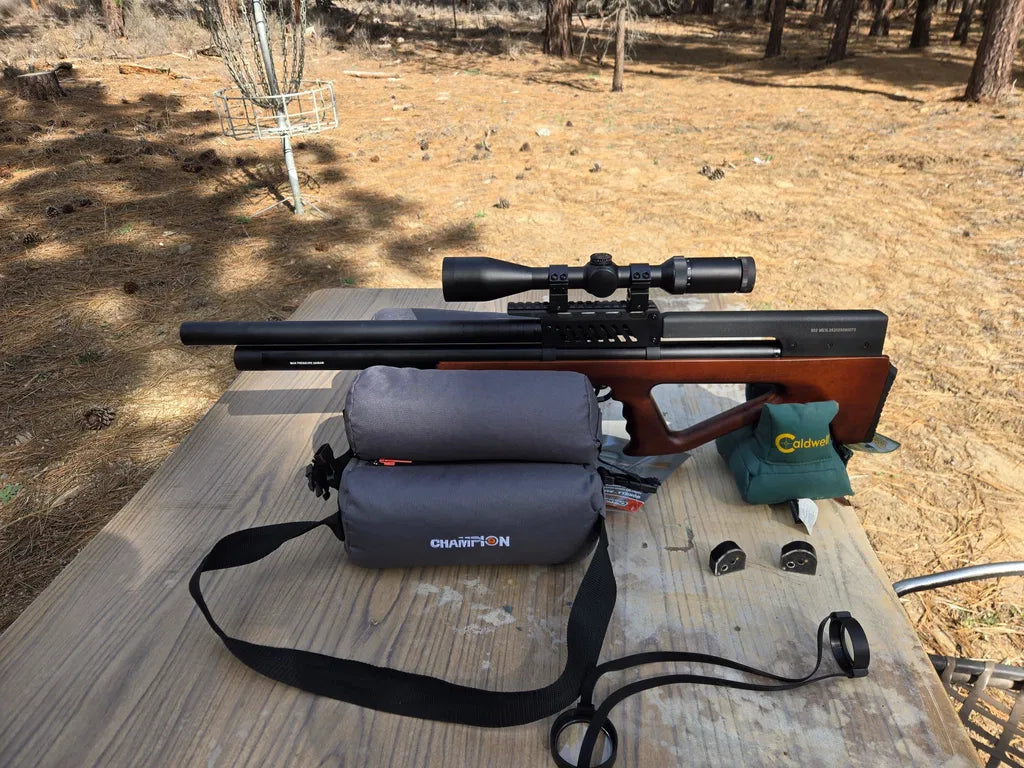
Understanding the differences in behavior, habitat, feeding patterns, and response to danger can dramatically change how you approach the hunt. On my coastal California farm, the Pinty Thumper and Pinty Timber are my go-to airguns for population control. For squirrel-sized quarry, I find the 15 to 30 ft/lb range to be a very useful level of performance. In .177 or .22 caliber, these rifles are well suited to the job when the shooter understands their limitations and stays within an effective range.
But before we talk about the airgun, we need to talk about the animal.

Meet the California Ground Squirrel
California Ground Squirrels are built for a life very different from that of an Eastern Gray Squirrel. Instead of spending much of their time moving through trees, ground squirrels spend their lives on or near the ground. They establish burrow systems and use the surrounding landscape for feeding, travel, and escape.
That burrow is a major part of understanding them. A ground squirrel doesn't necessarily need to run away across an open field when it becomes alarmed. It may simply disappear into the nearest entrance. One second you have a perfectly visible squirrel; the next second you have an empty patch of dirt. And if you've ever watched one do it, you know just how quickly that transition can happen.
Learn Where the Burrows Are
If you're managing squirrels on a farm, the first thing to learn is where they live. Look for burrow entrances, disturbed soil, well-used paths, feeding areas, and places where the vegetation has been disturbed by repeated traffic.
Once you know where the colony is established, you can begin understanding how the squirrels use the surrounding property:
- Where do they feed?
- Where do they travel?
- Where do they sit and watch?
- Where do they retreat?
- Which direction do they approach from?
Those questions are far more useful than simply knowing that there are squirrels somewhere on the property. Ground squirrels can be predictable, and that predictability is one of the things that makes them interesting quarry for an airgun hunter.

They Are Always Watching
A California Ground Squirrel may look like it is simply standing around eating—don't be fooled. That squirrel is paying attention.
Ground squirrels live in an environment where danger can come from almost any direction, and they have evolved a very effective alarm system. A squirrel that is feeding may suddenly stop, sit upright, and scan the area. That pause is important: it is the squirrel gathering information.
If you are moving around in the open, the squirrel may detect you long before you realize it has seen you. This is where patience becomes a major advantage. Don't immediately move because you think the squirrel has spotted you. Freeze. Watch. Sometimes the animal will return to feeding; sometimes it will disappear. Either way, you've learned something.
Patience Beats Speed
One of the great things about airgun hunting is that it rewards a hunter who is willing to slow down. You don't need to cover a hundred acres in an hour—you need to understand a small piece of ground.
Find a location with a good view. Get comfortable, watch the area, and learn the rhythm of the animals. Ground squirrels may spend periods feeding, watching, traveling, and retreating. Their activity can change with conditions, time of day, temperature, food availability, and disturbance.
The more time you spend observing them, the more those patterns begin to make sense. And once again, this is where the title of this series really comes into play: Know your quarry.

Matching the Airgun to the Job
A California Ground Squirrel is still squirrel-sized quarry, which means there is no reason to turn a straightforward pest-control job into an exercise in excessive power. For the type of hunting I do on my coastal California farm, 15 to 30 ft/lbs is an excellent performance range for this size of animal when used appropriately.
The Pinty Thumper and Pinty Timber fit naturally into that role, and both .177 and .22 caliber are well suited to squirrel-sized game. There is something to be said for using enough gun to do the job without unnecessarily increasing projectile energy and potential travel.
For this kind of hunting, I prefer pellets rather than slugs. A pellet can provide the necessary performance for squirrel-sized quarry while generally reducing the potential for excessive pass-through travel compared with more energetic projectile combinations. But once again, ammunition doesn't eliminate the shooter's responsibility: know what is behind the target, know the surroundings, know the airgun, know the ammunition, and know the distance.
Your Effective Range Is Your Effective Range
Every airgun hunter eventually needs to answer an uncomfortable question: How far can I really shoot accurately in the field?
- Not how far the manufacturer says the rifle can shoot.
- Not how far somebody on the internet says they shoot.
- Not how far you managed to hit a target once on a perfectly calm day.
Your effective range is the distance at which you can reliably place the projectile where it needs to go under realistic field conditions. That's your number, and it may be different from somebody else's. It may even change from day to day.
Wind, shooting position, lighting, fatigue, and the animal's behavior can all affect the shot. If a squirrel is outside your reliable range, let it walk. There is nothing wrong with that—a missed opportunity is better than a bad shot.

Humane Hunting Is the Shooter's Responsibility
An airgun hunter has an obligation to make every reasonable effort to achieve a quick and effective kill. That begins long before the trigger is pulled:
- Practice first and know your equipment.
- Understand your trajectory and how your chosen pellet performs.
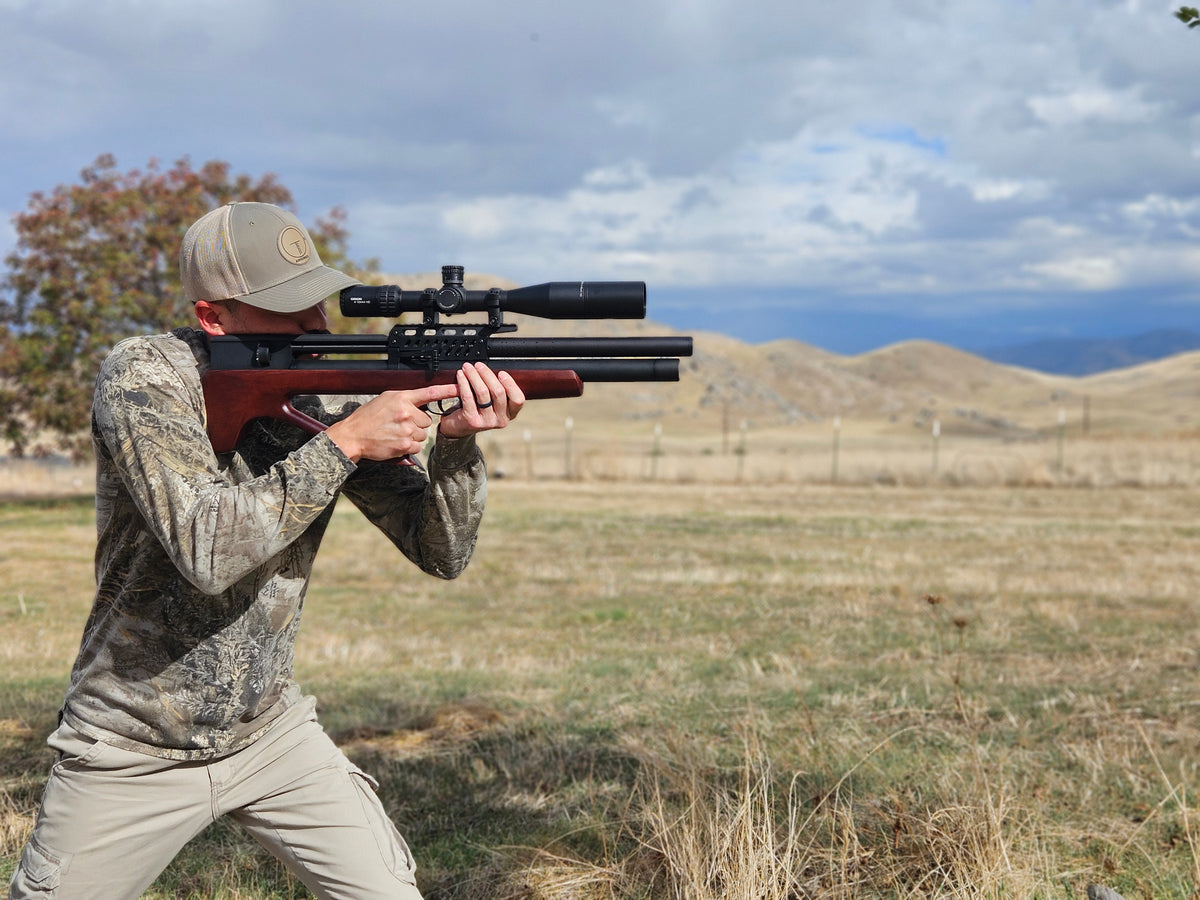
- Learn to shoot from the positions you are likely to encounter in the field.
- Don't take a shot simply because an animal is visible—visibility isn't the same thing as opportunity.
The best shot is one where you have confidence in your ability to make a clean hit, a suitable backstop, and a clear understanding of what lies beyond the target. That responsibility belongs to the shooter every time.
Ground Squirrels and the Farm
On a working property, California Ground Squirrels can become more than a wildlife-watching curiosity. Their burrowing activity can create problems around structures, roads, fields, gardens, and other areas where their presence isn't compatible with how the property is being used.
That makes population control a practical part of farm management in some situations. And this is where an airgun can be particularly enjoyable. There is a satisfaction in dealing with a problem quietly and precisely rather than turning every pest-control job into a major production.
You can walk the property, check the usual locations, watch the burrows, and look for movement. Let the animals' behavior tell you where to spend your time. The more you understand the squirrels, the less time you spend wandering around hoping something appears.
Don't Forget the First Rule of Hunting
There is another lesson from Part One that applies just as strongly here: Take the carcass with you.
Whether you're hunting on private permission or public land, nobody wants to encounter somebody else's discarded quarry. If you harvest an animal, retrieve it and deal with it responsibly and lawfully. Respect the land, respect other people using the property, and remember that your actions in the field reflect on every other airgun hunter. A clean hunting area is simply better for everybody.

The Fun Part
After all the talk about range, shot placement, behavior, equipment, backstops, and responsibility, it is worth remembering why we do this: it's fun.
There is something uniquely satisfying about airguns—maybe it's the quiet report, the precision, the challenge of making a good field shot with a relatively small projectile, or simply being outside and paying attention to things that most people walk right past.
A ground squirrel can teach you patience and observation, as well as the fact that an animal weighing only a fraction of what you do can still outsmart you pretty easily. And sometimes it does—that's okay. The next time you see that little head pop out of a burrow, you'll have learned something from the last encounter.
Two Squirrels, Two Completely Different Hunts
That brings our two-part squirrel series full circle. Last month, we looked at the Eastern Gray Squirrel—a tree-dwelling animal that uses branches, trunks, cover, and elevated feeding areas. This month, we've looked at the California Ground Squirrel—an animal whose world revolves around burrows, open ground, feeding areas, and rapid retreats to safety.
Both are squirrel-sized quarry. Both can be appropriately hunted with an airgun in the 15 to 30 ft/lb range using .177 or .22 caliber pellets. But the hunting experience is completely different.
And that is the larger lesson: the best equipment in the world won't replace knowledge of the animal you're pursuing.
- Understanding behavior helps you find the animal.
- Understanding your airgun helps you make the shot.
- Understanding your effective range helps you decide when to shoot.
- Understanding your responsibility as a hunter helps ensure that when you do pull the trigger, you are prepared to do it properly.
So get outside, watch the animals, learn their habits, practice with your airgun, know your limits, respect the property, and clean up after yourself. And when everything comes together, enjoy the moment. Have fun! That's why we shoot airguns to begin with.



Share:
First Time Using a Rifle Scope? How to Get a Clear Sight Picture | Pinty
Pinty Airguns Explained: PCP Pistol vs Bullpup vs Rifle Guide