

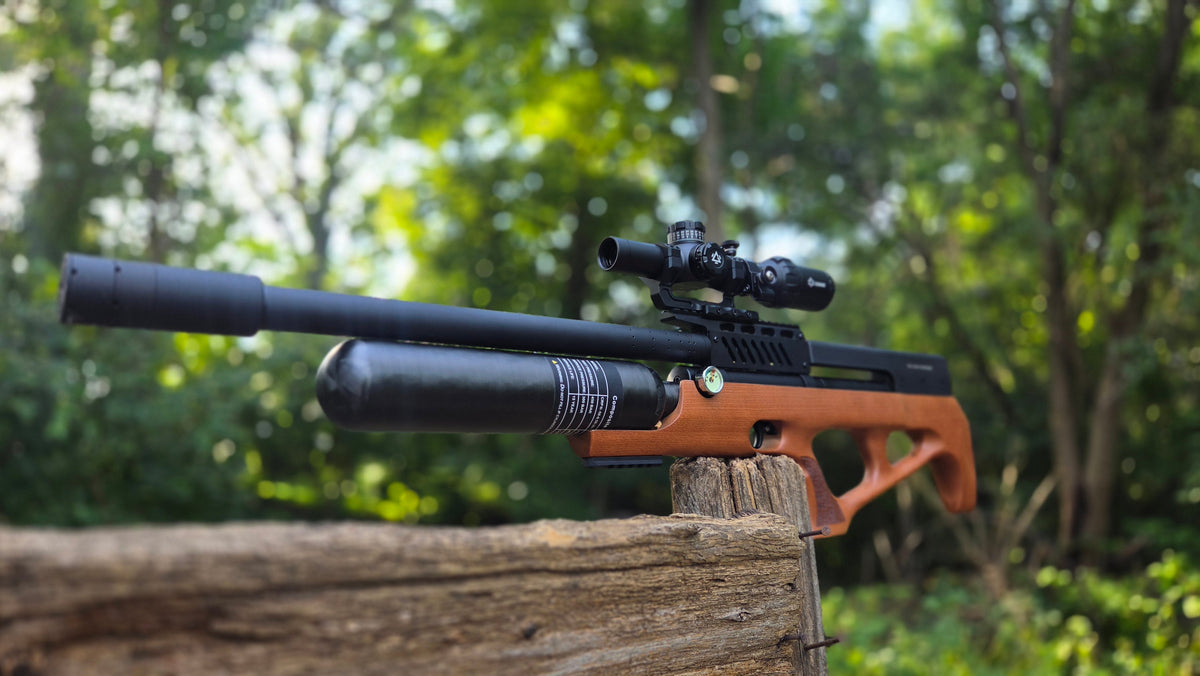
Pinty Airguns Explained: Understanding the Different PCP Platforms
Safety Note: PCP airguns operate under high pressure. Always follow the manufacturer's instructions for filling, handling, storage, and maintenance, and comply with applicable laws and local requirements.
If you are new to Pinty airguns, one of the first things you may notice is that there is more than one type of PCP platform in the lineup.
You may come across the Pinty Buster PCP pistol, a compact bullpup such as the Striker, or larger PCP platforms such as the Nightfall or Nighthawk. They are all PCP airguns, but they are built around different formats, dimensions, and design priorities. That can make the lineup a little confusing when you are seeing these models for the first time.
Instead of trying to decide which model is "best," it is more useful to understand how the different Pinty airgun platforms fit together. Once you know the basic differences between a PCP pistol, a compact bullpup, and a larger PCP rifle platform, the specifications and model names become much easier to navigate.

What Does "Pinty Airguns" Actually Include?
Pinty offers several different PCP platforms rather than building every airgun around the same basic design. At a broad level, you can think about the lineup in three main formats:
- PCP Air Pistols: Compact platforms such as the Buster Tactical.
- Compact Bullpup PCP Platforms: Shoulder-mounted platforms with the action positioned farther back to create a shorter overall package, such as the Striker Compact Bullpup MKII.
- Larger PCP Rifle Platforms: Full-size rifle configurations found within our dedicated PCP air rifles category, including the Nightfall MKII and Nighthawk.
There are also other configurations within the broader lineup, including models such as the Vanguard, Timber, Thumper, and Falcon series. The dimensions, air capacity, weight, and overall configuration can vary considerably between these models. That is why looking at the platform type first can be a useful way to understand the lineup before comparing individual specifications.
Quick Comparison: Pinty PCP Platforms at a Glance
The following examples show how different Pinty PCP airguns can vary in format and air capacity:
| Platform | Example Model | Air Capacity | Format |
|---|---|---|---|
| PCP Pistol | Buster Tactical | 100 cc | Compact PCP pistol |
| Compact Bullpup | Striker Compact Bullpup MKII | 310 cc | Bullpup PCP platform |
| PCP Rifle | Nightfall MKII | 350 cc | Larger PCP platform |
| PCP Rifle | Nighthawk | 200 cc | Larger PCP platform |
These specifications are based on the current product information available from Pinty and can vary between specific versions or configurations.
The purpose of the comparison is not to rank the platforms. It is simply to show why two Pinty airguns can have very different specifications while still belonging to the same broader PCP category.

Why Does Pinty Have Different PCP Platforms?
A PCP airgun does not have to follow one particular shape. A compact PCP pistol, a bullpup, and a larger rifle platform can all use pre-charged pneumatic technology while offering very different physical configurations.
1. Compact PCP Pistol: The Buster
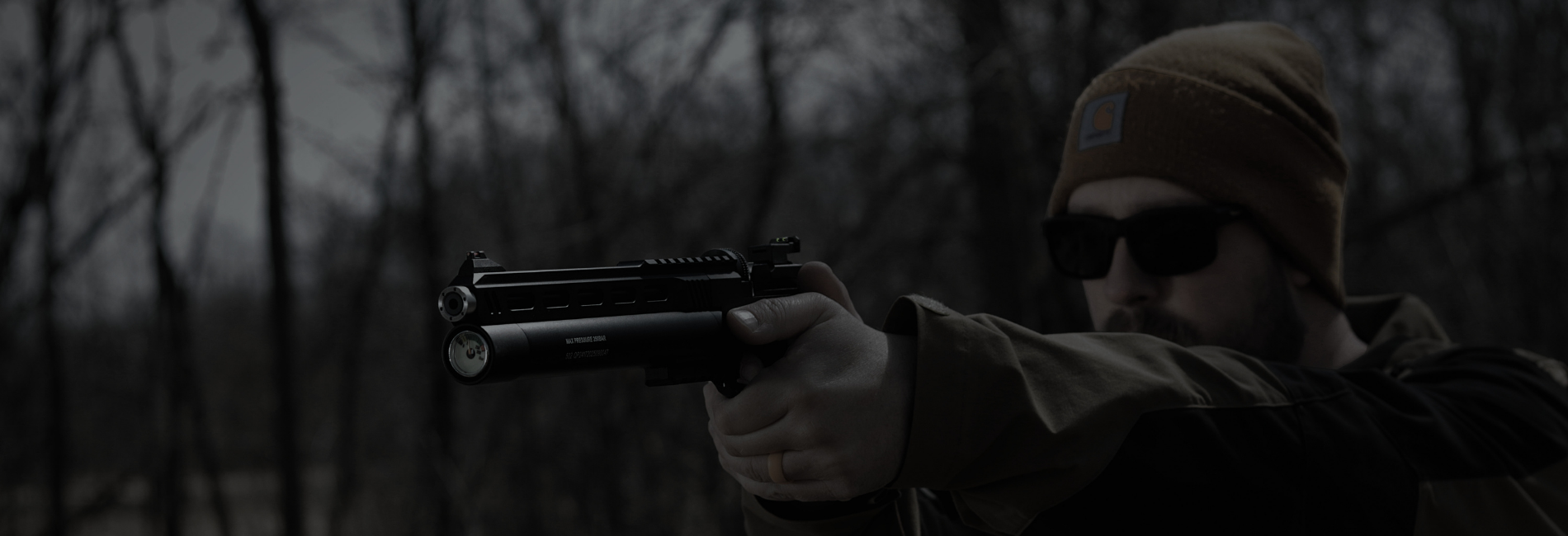
A compact PCP pistol puts more emphasis on keeping the overall platform small and relatively light. The Pinty Buster PCP pistol is an example of this approach. The current Buster Tactical is listed with a 100 cc cylinder, a 10.4-inch barrel, and a weight of about 2.8 pounds. It is available in .177 and .22 configurations.
Its compact dimensions make it a distinctly different platform from a full-size PCP rifle. Rather than comparing the two simply by individual specifications, it makes more sense to first consider whether a compact PCP pistol is the type of platform you are looking for.
2. Compact Bullpup PCP: The Striker
A bullpup design places the action farther back in the stock, behind the trigger area. This allows the overall platform to be shorter without requiring the same reduction in barrel length as a conventional layout. The Striker Compact Bullpup MKII, for example, is listed with a 310 cc air cylinder. This gives it a very different physical configuration from the Buster PCP pistol while keeping it within a relatively compact rifle-oriented format.
3. Larger PCP Rifle Platforms: Nightfall and Nighthawk
Larger PCP platforms provide another configuration within the Pinty PCP airgun lineup. Models in our PCP air rifles collection like the Nightfall MKII are listed with a 350 cc cylinder, while the Nighthawk is listed with a 200 cc cylinder and a maximum fill pressure of 300 BAR (4,350 PSI). These models are physically different from the Buster and Striker, so their specifications should be understood in the context of their overall platform rather than compared by a single number.

Why Platform Matters More Than the Model Name
When you first encounter a growing Pinty airgun lineup, it is easy to focus on the model names: Buster, Striker, Vanguard, Nightfall, Nighthawk, Falcon, Thumper, Timber. Without any context, these are simply a list of product names.
A better way to understand them is to start with the platform. Ask: Is this a PCP pistol, a bullpup PCP platform, or a larger PCP rifle platform?
Once you know that, the specifications become much easier to put into context. The Pinty Buster PCP pistol, for example, uses a 100 cc cylinder and a compact pistol format. The Striker Compact Bullpup MKII uses a 310 cc cylinder in a bullpup rifle configuration. The Nightfall MKII uses a larger 350 cc cylinder.
Those differences do not automatically make one model better than another. They reflect different physical designs and configurations. That is the more useful way to read the Pinty lineup.
The Numbers Don't Tell the Whole Story
When comparing PCP airguns, it is easy to focus on a single specification. A larger cylinder may look better on paper, a higher fill pressure may sound better, or a longer barrel may appear to offer an advantage. But specifications only become useful when you understand them as part of the complete platform.
For example, the current Pinty lineup includes products with substantially different air capacities. The Buster Tactical is listed with a 100 cc cylinder, the Striker Compact Bullpup MKII with 310 cc, and the Nightfall MKII with 350 cc. That difference does not mean that the largest cylinder is automatically the right choice.
When comparing models, consider several factors together:
- Overall size and weight
- Balance and physical configuration
- Caliber
- Air cylinder capacity
- Maximum fill pressure
- Regulated shot information, where provided
- The specifications and intended use described by the manufacturer
- The filling equipment required for the specific model
This is why comparing Pinty airguns by one number alone can give you an incomplete picture.

A Simple 4-Step Guide to Exploring the Pinty Lineup
If you are browsing Pinty PCP airguns and are unsure where to begin, start with the platform rather than the model name.
-
Step 1: Choose Your Physical Format
First decide which general format you are looking at: PCP pistol, compact bullpup PCP, or larger PCP rifle platform. This immediately narrows down the type of product you are considering. -
Step 2: Check the Air System
Look at the cylinder capacity and the manufacturer's specified fill pressure for the exact model. Do not assume that a larger cylinder or higher pressure is automatically better for your needs. More importantly, make sure your filling equipment is rated for the requirements of that specific model. Always follow the manufacturer's instructions and never exceed the specified fill pressure. -
Step 3: Look at the Physical Configuration
Consider the overall dimensions, weight, and configuration of the airgun. A compact PCP pistol and a larger rifle platform can feel very different simply because they are built around different physical formats. This is also the point where you can check the model's specified rail or mounting system if you plan to use an optic or other compatible accessory. -
Step 4: Verify the Exact Model Specifications
Once you have narrowed down the type of platform you want, check the official product information for the exact model and version. Pay attention to available calibers, fill pressure, cylinder capacity, barrel specifications, magazine or loading configuration, included components, compatible accessories, and manufacturer instructions. This final step matters because specifications can differ between models and sub-variants.
PCP Pistol or PCP Rifle: Start With the Format
If you are looking through our high-performance PCP air rifles and pistols for the first time, one of the most useful questions is surprisingly simple: Are you looking for a PCP pistol or a PCP rifle platform?
That question can narrow the lineup considerably:
- A PCP pistol gives you a compact format. The Pinty Buster is the clearest example within the Pinty lineup.
- A bullpup PCP gives you a shoulder-mounted rifle format while using a layout designed to keep the overall package compact.
- A larger PCP rifle platform gives you another physical configuration, with different air capacity, dimensions, and handling characteristics.
There is no need to treat one format as the universal answer. Start with the format you are actually looking for, then compare the models within that category.
Where Does the Pinty Buster PCP Pistol Fit?
The Pinty Buster PCP pistol sits on the compact end of the Pinty PCP lineup. That distinction is important because the Buster should not simply be viewed as a smaller version of a PCP rifle—it is a different platform.
The current Buster Tactical is listed with:
- .177 and .22 caliber options
- 100 cc air cylinder
- 250 BAR maximum fill pressure
- 10.4-inch barrel
- Approximately 2.8-pound weight
Those specifications help explain where the Buster fits within the wider Pinty airguns lineup. If you are specifically looking for a compact PCP pistol, the Buster is a natural model to explore. If you are looking for a shoulder-mounted PCP rifle, explore our PCP air rifles section to find a different starting point.

How to Think About the Pinty Airgun Lineup
Once you understand the basic platform categories, you can think about the lineup in a much simpler way:
- Looking for a compact PCP pistol? Start with the Pinty Buster PCP pistol.
- Looking for a compact shoulder-mounted platform? Explore the bullpup side of the lineup, including models such as the Striker Compact Bullpup MKII.
- Looking for a larger PCP rifle platform? Explore models such as the Nightfall MKII and Nighthawk in our PCP air rifles category.
The point is not to create a ranking. It is to make the product lineup easier to navigate.
What Should You Compare After Choosing a Platform?
Once you know which platform you are interested in, the comparison becomes much more straightforward. Start with the specifications that actually matter for that category:
- Size and Weight: Look at the complete airgun rather than focusing on one component. Overall length and weight can affect how the platform fits your storage, transport, and handling preferences.
- Air Capacity and Fill Pressure: These specifications tell you more about the air system. Always compare them against the requirements of your available filling equipment and the manufacturer's instructions.
- Caliber: Different Pinty models may be available in different caliber configurations. Check the exact product page rather than assuming that every version of a model has the same options.
- Configuration: Look at whether the model uses a pistol, bullpup, or more conventional rifle configuration. This can tell you more about the physical character of the product than a single performance number.
- Model-Specific Features: Finally, look at the details that are unique to the model you are considering, including loading system, rail configuration, adjustment features, and included components.

Final Thoughts
The Pinty airgun lineup includes several different PCP platforms, from compact air pistols to bullpup configurations and larger PCP rifle platforms. The easiest way to understand the lineup is not to memorize every model name or compare every specification at once.
Start with the platform. Then look at the physical configuration, and finally compare the specifications that apply to that particular platform.
The Pinty Buster PCP pistol is a good example of why this approach works. Its compact PCP pistol format makes it fundamentally different from larger Pinty PCP air rifles, even though both belong to the same broader PCP category. Once you understand that relationship, the rest of the Pinty lineup becomes much easier to explore.
Always follow the manufacturer's instructions for the specific model, use appropriately rated filling equipment, and handle airguns responsibly in accordance with applicable laws and local requirements.




Share:
The Airgun Hunter’s Guide to Squirrels, Part Two: California Ground Squirrels