


For many airgun enthusiasts, punching paper and pest control are only part of the fun. When your PCP air rifle can consistently print a "single hole" group at dozens of yards, a far more adrenaline-charged world opens up: airgun competition shooting.
In the airgun world, a handful of annual events draw the most intense attention from top shooters worldwide. They are not only a test of marksmanship, but a showcase of the airgun industry's finest precision technology.

Pyramyd Air Cup (PAC)
The 2026 edition drew 240 competitors, the largest field in its history. Three distinct disciplines define the match:
- Gunslynger Pits two shooters side by side in a high-speed race to knock down 20 metal silhouettes.
- Field Target Places targets at undisclosed distances from 10 to 55 yards, forcing shooters to range them via reticle holdover or side-focus wheel.
- Benchrest Seated, supported precision shooting where the X-ring on the target is a razor-thin 0.2 inches across.

Extreme Benchrest (EBR)
This is also the most unforgiving test of ammunition consistency in the sport. At 100 yards, an airgun pellet has lost much of its muzzle velocity, and wind drift affects it more than a smallbore rimfire round. Any slight variation in grain weight or head diameter gets magnified into a visible point-of-impact shift on paper.

ISSF World Cup & Continental Championships
Unlike PAC and EBR, the ISSF system specifies pellets in the rulebook itself. ISSF regulations mandate that 10-meter air rifle and air pistol competitions use .177 caliber (4.5mm) flat-headed (wadcutter) pellets. The flat head cuts a clean, sharply defined circular hole in paper targets, allowing judges to score accurately down to tenths of a point.
The Microscopic World of Victory: Why "The Gun Sets the Floor, the Pellet Sets the Ceiling"
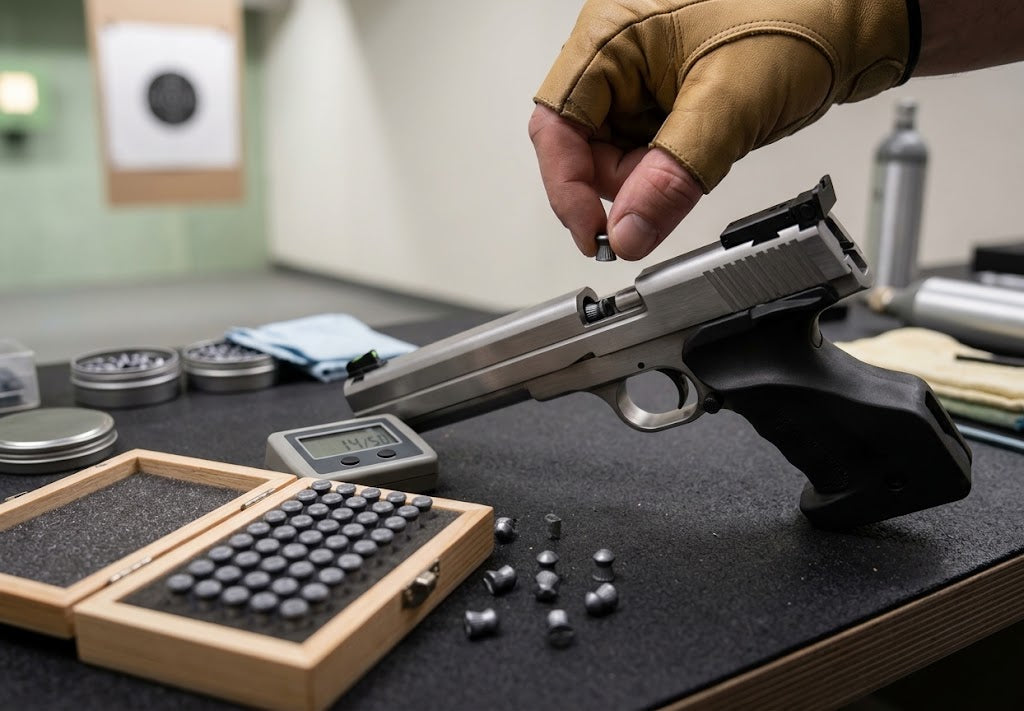
If you've ever walked through the staging area at one of these top events, you'll notice something interesting: beyond fine-tuning regulators and hammer springs, shooters spend hours on something that looks tedious: sorting pellets.
In long-range matches like EBR or 100-yard benchrest, even if the airgun itself holds pressure perfectly, a pellet with a 0.1-grain weight deviation or the slightest deformation on the skirt edge can produce fatal yaw as it travels across wind layers.
Elite shooters look for three "extreme matches" when selecting match ammunition
Shape matched to airflow
In long-range, wind-fighting competitions, domed pellets dominate thanks to their superior aerodynamic profile and high ballistic coefficient (BC). In 10-meter paper-target shooting, wadcutters reign supreme because they punch clean, readable holes.
Weight matched to velocity
Too light, and a pellet can break the sound barrier at the muzzle and tumble. Too heavy, and the trajectory arcs excessively. Finding the "golden grain weight" your barrel favors is a required course for every competitive shooter.
Micron-level tolerance control
Match-grade pellets typically hold head diameter tolerances within ±0.005mm. That tiny dimensional difference dictates the consistency of friction between pellet and rifling, which in turn determines whether extreme spread (ES) can be locked into single digits. China's national standard for competition pellets (GB/T 28800) specifies the same ±0.005mm head diameter tolerance and an extreme spread of ≤8 m/s, compared with 28 m/s allowed for standard-grade pellets — that is the true gap between "match grade" and "everyday grade."
Head diameter tolerance
±0.005mm
Match-grade pellets, per GB/T 28800
Key TakeawayIn the pursuit of ultimate precision, a pellet is not just a consumable item. It is the most critical "last step" in the entire airgun system.
Pinty's Pursuit of Precision: The Pinty Official Pellet Series Is Coming

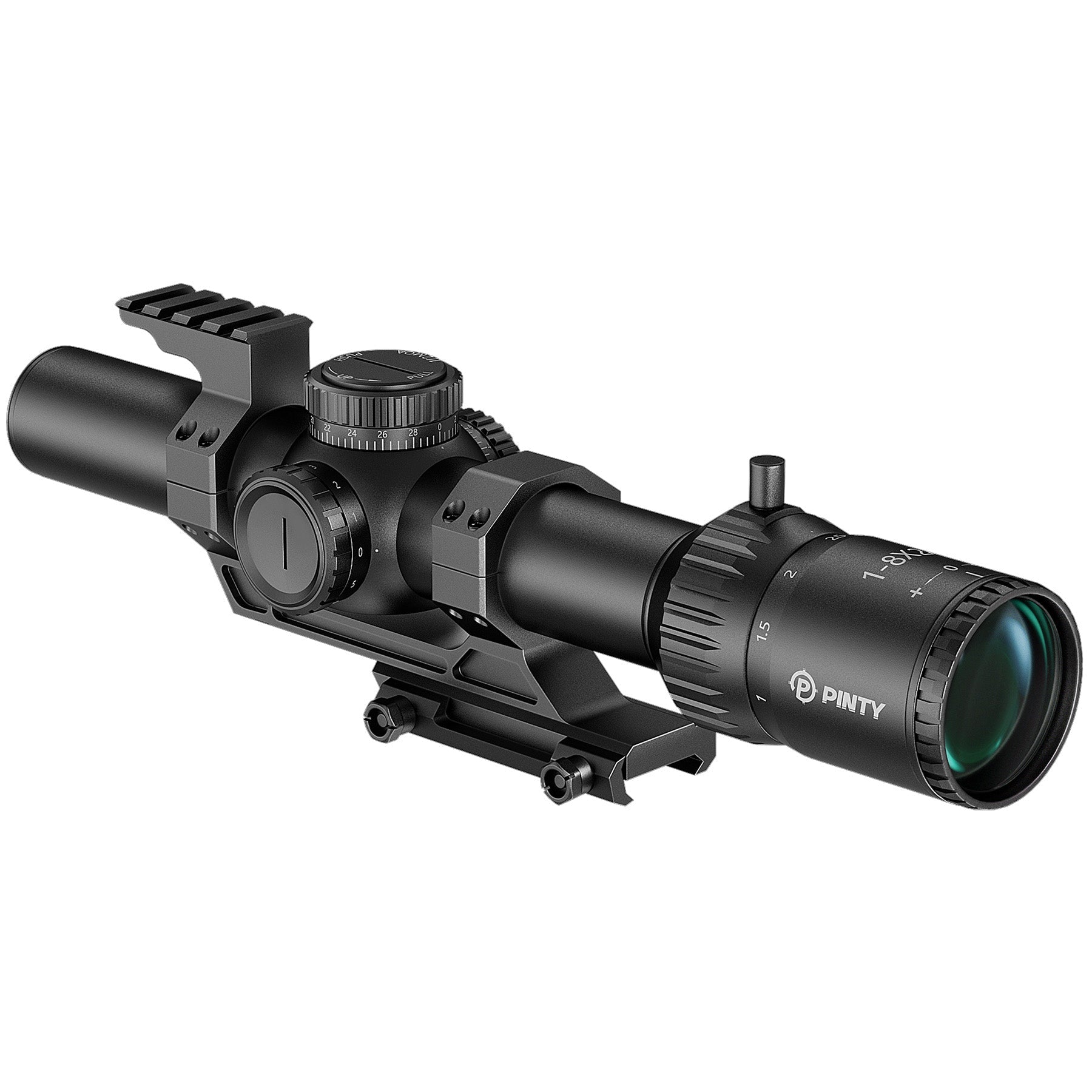
At Pinty, we share the same uncompromising obsession with precision as competitive shooters. From our versatile, agile PCP air rifles to finely tuned tactical optics, we've been committed to giving shooters stable, reliable field performance.
To help our shooters achieve even greater consistency in everyday target practice, long-range benchrest challenges, and training, the Pinty official high-precision pellet series is now in intensive R&D and testing.
We are tightly controlling alloy composition, aerodynamic profile designs, and grain weight consistency, aiming to make every pellet that leaves the muzzle a perfect match for the ballistic characteristics of Pinty barrels.
Coming Soon
Pinty Official Pellet Series
More details on calibers, models, and launch timing for Pinty pellets will be revealed soon.
Stay Tuned




Share:
Why Match Airgun Pellets Are Flat-Headed: A Pellet Guide for Pinty Shooters