


Caliber
Cylinder Size
Velocity
Max. Fill Pressure
Weight
Barrel Length
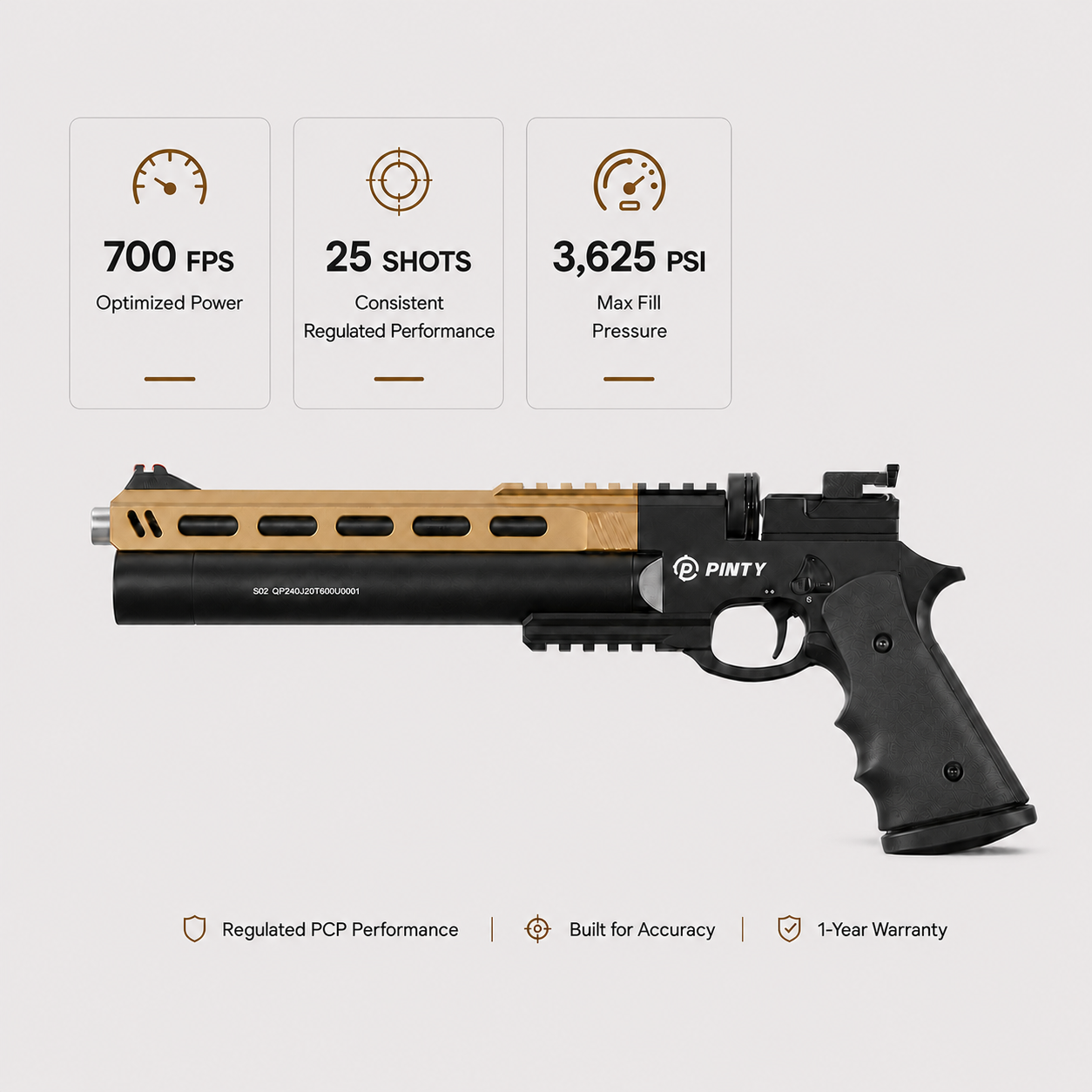
Caliber
Cylinder Size
Velocity
Max. Fill Pressure
Weight
Barrel Length
Compare Air Models
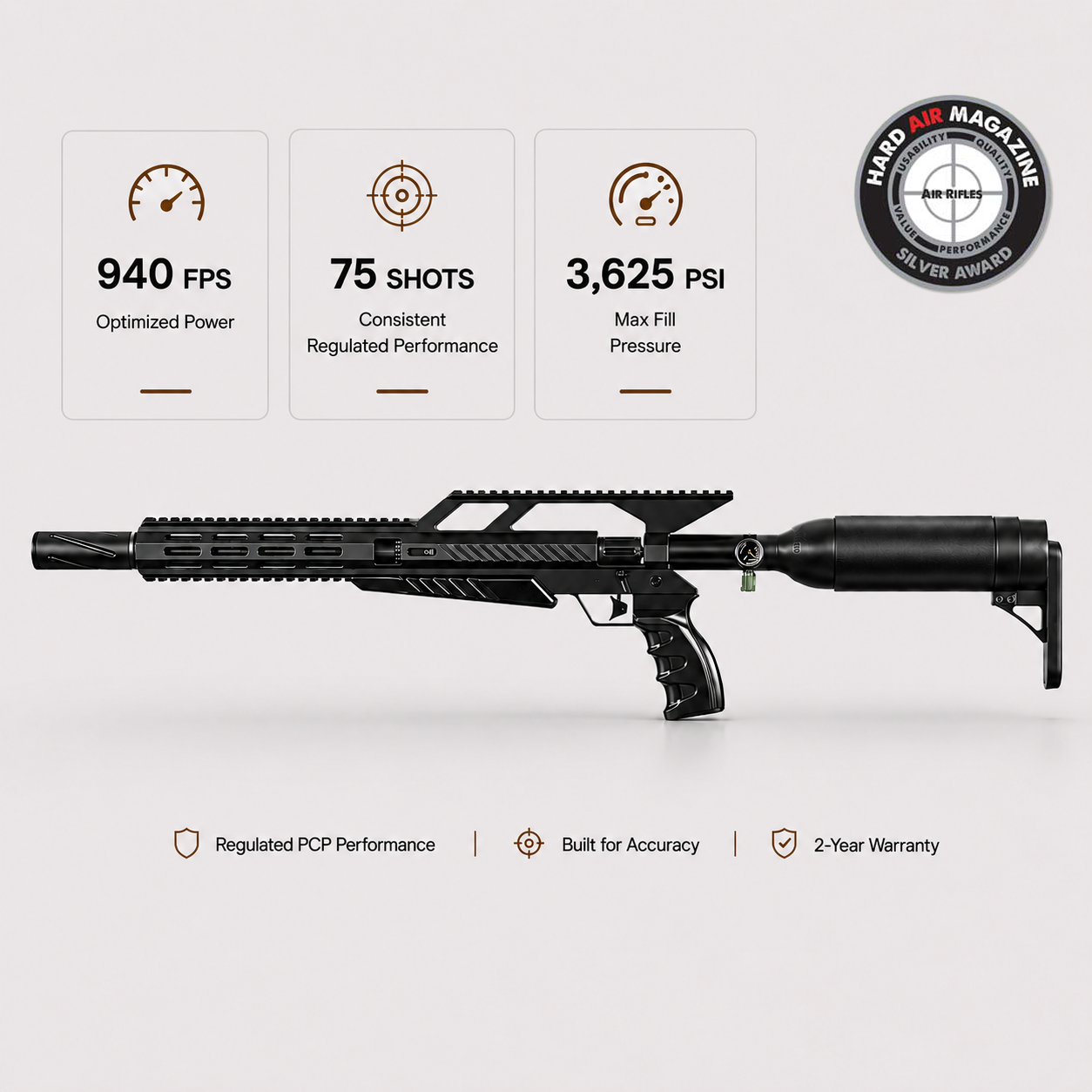
Caliber
.22 (5.5mm)
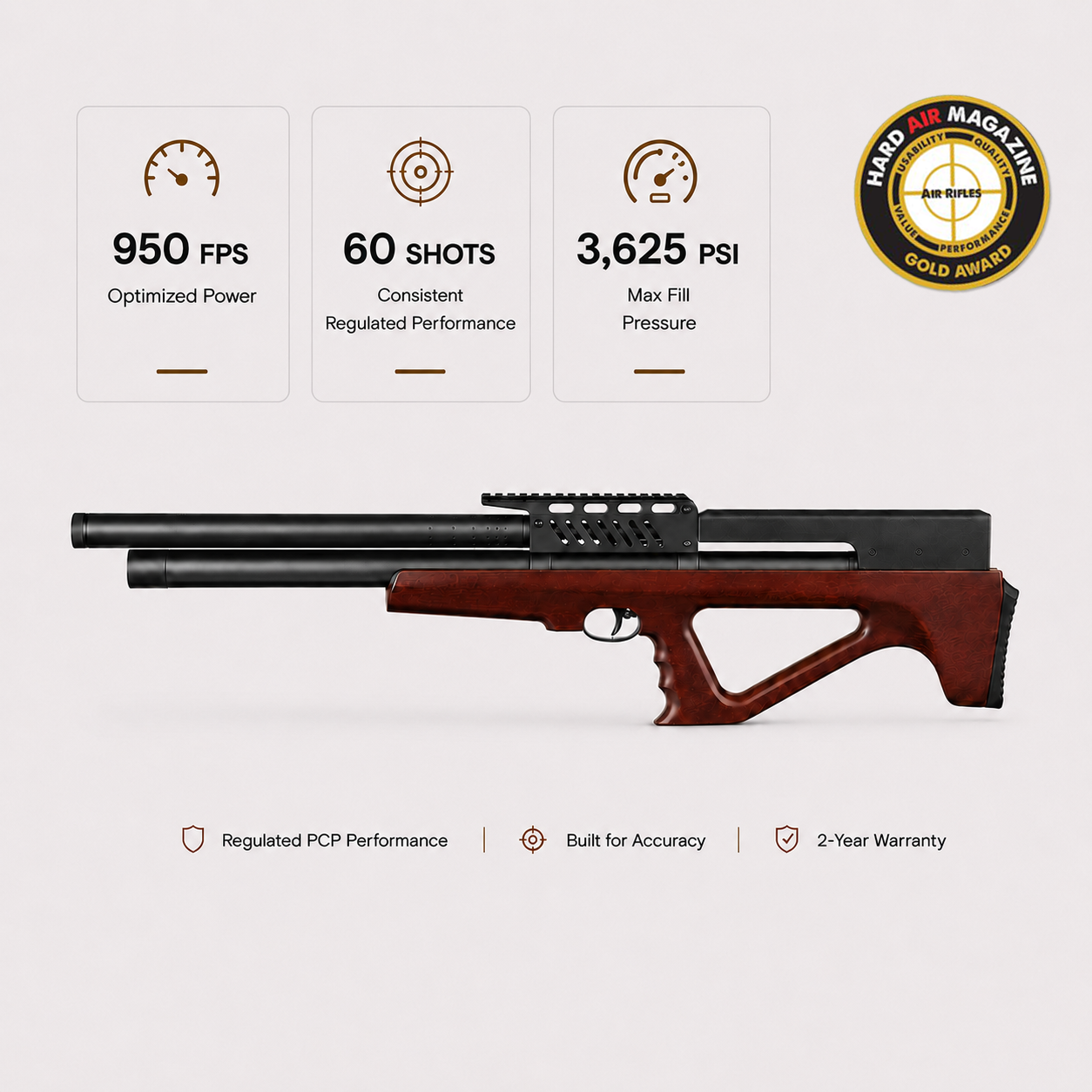
Caliber
.22 (5.5mm)
.25 (6.35mm)
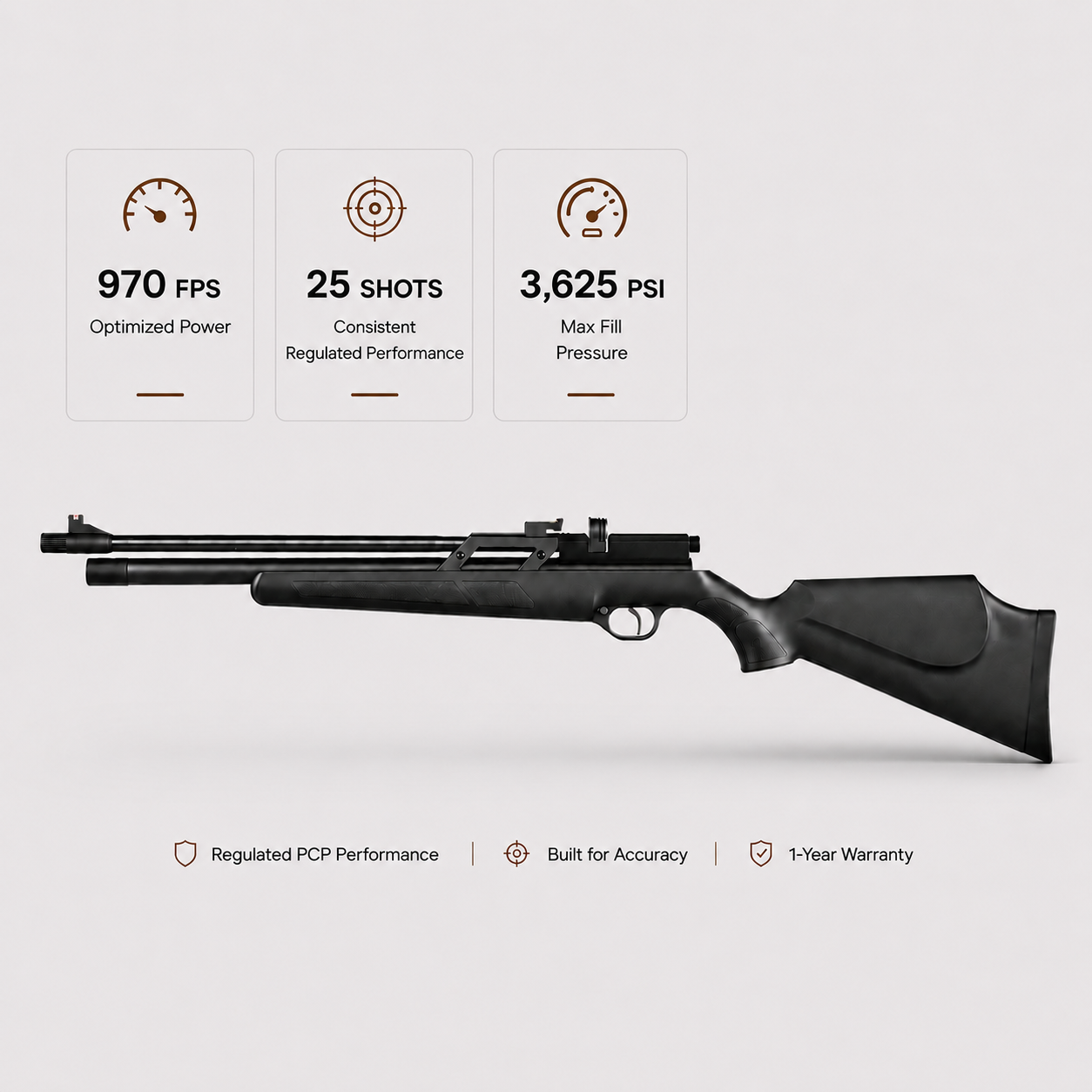
Caliber
.177 (4.5mm)
.22 (5.5mm)
Velocity
900 fps (18.13gr pellets)
Velocity
920 fps (.22, 18.13gr pellets)
860 fps (.25, 25.39gr pellets)
Velocity
900 fps (.177, 8.18gr pellets)
800 fps (.22, 18.13gr pellets)
Cylinder Size
350 cc
Cylinder Size
310 cc
Cylinder Size
100 cc
Regulated Shots
75
Regulated Shots
45 (.22)
35 (.25)
Regulated Shots
25 (.177)
20 (.22)
Shots per Fill
120
Shots per Fill
70 (.22)
60 (.25)
Shots per Fill
40 (.177)
30 (.22)
Function
Single-shot
Function
Repeater
Function
Repeater
When It Matters, We’re There.
Responsive Customer Support
Get fast, reliable assistance whenever you need help.
Warranty Protection Coverage
Every product is backed by a clear warranty policy.
Hassle-Free Replacement
Simple and straightforward solutions when issues arise.

Choosing Your First PCP Air Pistol
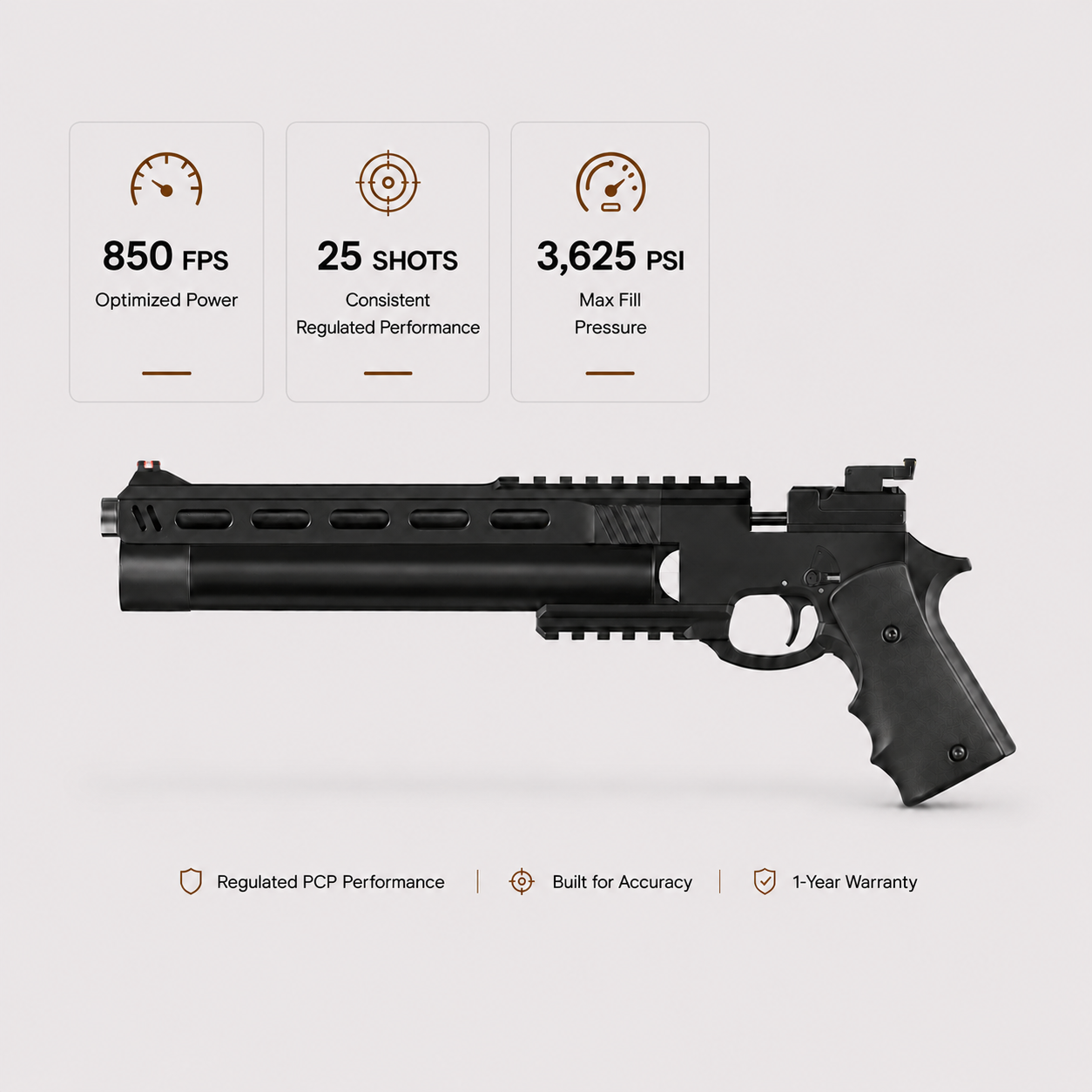
If you are thinking about stepping into the world of Pre-Charged Pneumatic (PCP) airguns, starting with a pistol is a fantastic move. However, buying a PCP air pistol is fundamentally different from purchasing a traditional spring-piston or CO2 model.
When you buy a PCP, you aren't just buying a gun; you are adopting an entire air ecosystem. This includes managing high-pressure air tanks, understanding regulator behaviors, and figuring out your filling method. A truly great PCP pistol prioritizes consistency, efficiency, and usability over raw, uncontrolled power.
1. Your Main Purpose
Because PCP pistols range from ultra-lightweight Olympic match guns to high-power "mini-rifles," your primary shooting goal acts as your most important filter.
- Target & Backyard Plinking: Look for a .177 or light .22 caliber model. You will want lower power, a quiet footprint, a high shot count per fill, and a crisp, light trigger.
- Pest Control (Where Legal): Opt for a .22 or .25 caliber. Here, you need higher energy retention and knockdown power, meaning shot count will take a back seat to raw performance.
- Formal Competition: Look for an extremely consistent, regulated .177 pistol with zero recoil, match-grade anatomical grips, and a highly adjustable trigger.
2. Your Caliber
Caliber dictates your pellet’s trajectory, wind resistance, and impact energy.
- .177 (4.5 mm): Offers the flattest trajectory and the most affordable ammunition. This is the gold standard for target shooting and formal competition.
- .22 (5.5 mm): The most popular all-around choice. It strikes the perfect balance between muzzle energy and accuracy, making it incredibly versatile.
- .25 (6.35 mm): Delivers massive impact energy but results in a significantly lower shot count per fill. This is a niche choice reserved almost entirely for close-range pest control.
3. Understand Power Metrics (Don't Just Chase FPS)
A common beginner mistake is focusing strictly on feet-per-second (FPS) numbers on the box. In the airgun world, Foot-Pounds of Energy (FPE) is the metric that defines actual power, calculated using both velocity and pellet weight.
- Target Pistols: 3-6 FPE. Optimized purely for accuracy and paper punching.
- Utility/Plinking Pistols: 6-20 FPE. Great for steel spinners, cans, and casual shooting.
- Hunting-Style Pistols: 20+ FPE. These are heavy-hitting, often bulkier "mini-carbines" that require robust air delivery.
4. Regulated vs. Unregulated
This is the single most important technical choice you will make regarding the gun’s internals.
- Regulated PCP (Highly Recommended): Features an internal valve that ensures every single shot receives the exact same air pressure, regardless of how much air is left in the main tank. This gives you perfectly consistent velocity and an identical Point of Impact (POI) from your first shot to your last.
- Unregulated PCP: The velocity follows a bell curve—starting lower when the tank is completely full, peaking in the middle, and dropping off as the tank empties. While unregulated guns are cheaper upfront, they require more experience to find the pressure "sweet spot."
If you value out-of-the-box accuracy without calculating pressure drops, choose a regulated pistol.
Regulated vs Unregulated PCP Air Rifles: What is the Difference?
5. Calculate the Shot Count per Fill
Because a pistol has a small onboard air reservoir, its shot capacity is limited.
- Compact Pistols: Usually yield 20-60 shots per fill.
- Micro-Carbines: Can yield 40-120 shots per fill due to larger or higher-pressure cylinders.
Always look for reviews noting how many consistent shots a gun gets before the Point of Impact shifts. A low shot count means you will be chained to your filling source, which can quickly drain the fun out of a long backyard plinking session.
6. Plan Your Fill Method In Advance
You cannot shoot a PCP without a way to fill it to pressures often ranging between 3,000 and 4,500 psi. budget for one of these three methods:
- Hand Pump: The cheapest option (50-150). It offers complete independence but is physically exhausting, especially for high-pressure reservoirs.
- PCP Compressor: The most convenient long-term solution. Portable 12V/110V bench compressors have become highly affordable (200-400) and let you fill up at home or from a car battery.
- High-Pressure Air (HPA) Tank: Carbon fiber or SCUBA tanks allow for instant, silent refills at the range. However, you must have a local dive shop or paintball shop capable of filling the tank to 4,500 psi.
7. Size, Ergonomics, and Balance
Holding a PCP pistol is vastly different from holding a standard firearm. Onboard air cylinders inherently add weight to the front of the gun.
Before buying, look closely at the ergonomics. A front-heavy pistol causes rapid wrist fatigue, which will destroy your accuracy. If you plan on mounting heavy optics like a pistol scope or a large red dot, make sure the pistol grip offers enough support—or check if the gun accepts an aftermarket shoulder stock to transform it into a stable micro-carbine.
8. Optics and Build Quality Checklist
- Rail Stability: Ensure the gun has a reliable rail system (preferably Picatinny or a deep 11mm dovetail) to secure your sights without losing zero.
- Eye Relief: If using a traditional scope, ensure it is a dedicated pistol scope designed for arm's-length viewing. Standard rifle scopes will not work. (What is Eye Relief and Why Does It Matter to Accuracy)
- Aftermarket Support: Stick to established brands. Ensure you can easily buy spare magazines, replacement O-rings, seal kits, and find active community forums for troubleshooting.
9. Budget
When entering the PCP world, one of the easiest traps for a beginner to fall into is budgeting solely for the price of the pistol itself. Unlike springers or CO2 guns where you only need a tin of ammo or a few cheap gas cartridges to get started, a PCP air pistol requires an initial investment into a complete operational system. If you spend your entire budget on a high-end, 4,500 psi regulated pistol but forget to budget for the equipment required to feed it air, you will be left with an incredibly expensive paperweight.
To map out a realistic budget, you must factor in the three distinct pillars of a PCP setup: the gun, the high-pressure air source, and the optics. An entry-level pistol generally costs between $200 and $500, but you must immediately pair it with a fill source. While a $60 hand pump keeps the entry-level system cost around $310 to $400 (including a basic red dot sight), it requires significant physical effort. For most shooters, upgrading to a $250 portable compressor is well worth the investment for the sheer convenience of effortless, automated fills.
If you decide to step up to a mid-tier, regulated pistol for better shot-to-shot consistency, the gun alone will run between $500 and $900. When paired with a reliable 12V compressor and a dedicated, long-eye-relief pistol scope, your total system investment will realistically hover around $900 to $1,200. Ultimately, looking at the "total system cost" before entering the hobby ensures you won't be caught off guard by hidden expenses, allowing you to build a reliable, balanced setup that is ready to shoot from day one.
10. Essential Accessories: Sights and Silencers
Optics
Many PCP pistols do not come with standard open iron sights out of the box, meaning you will need to choose an optic:
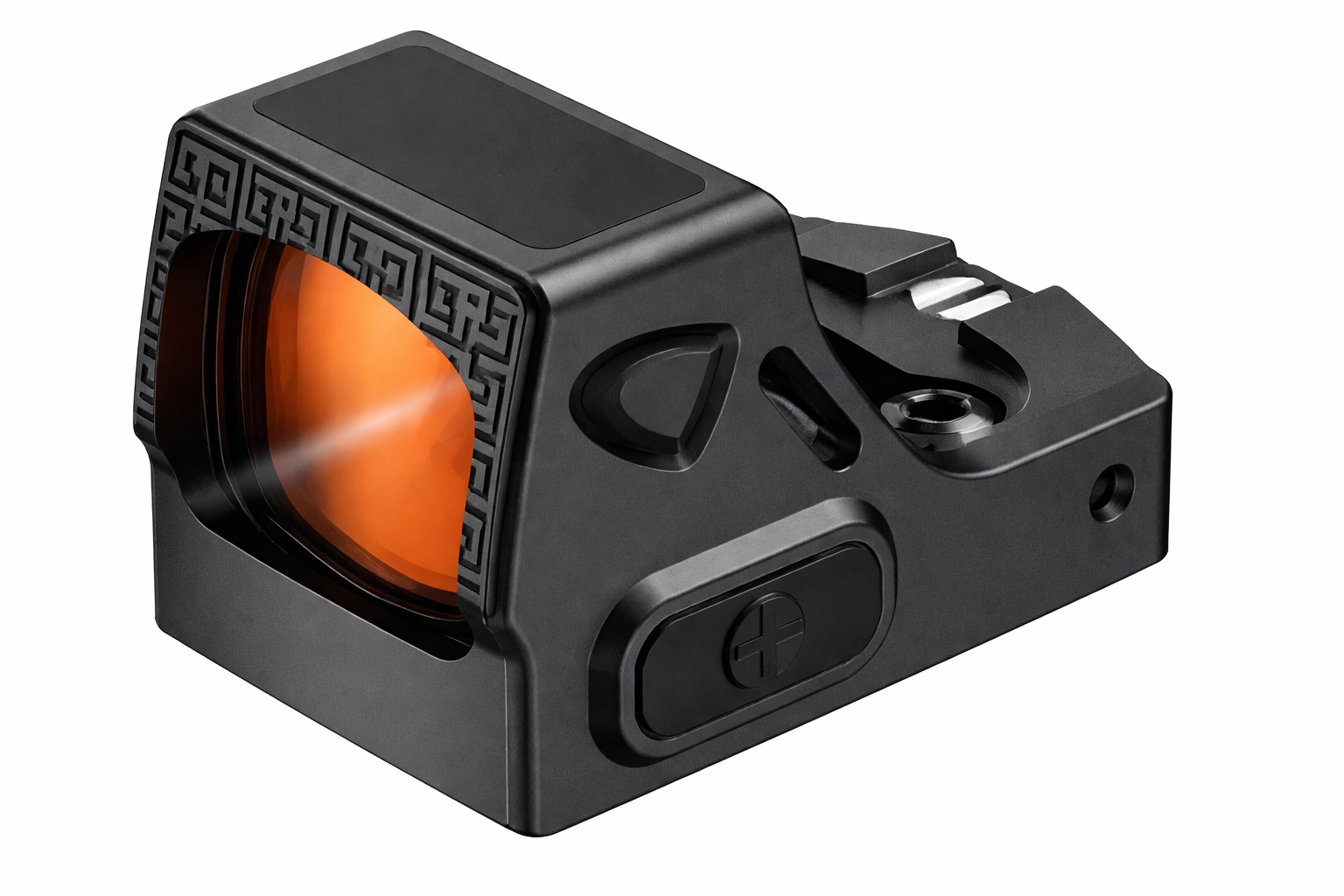
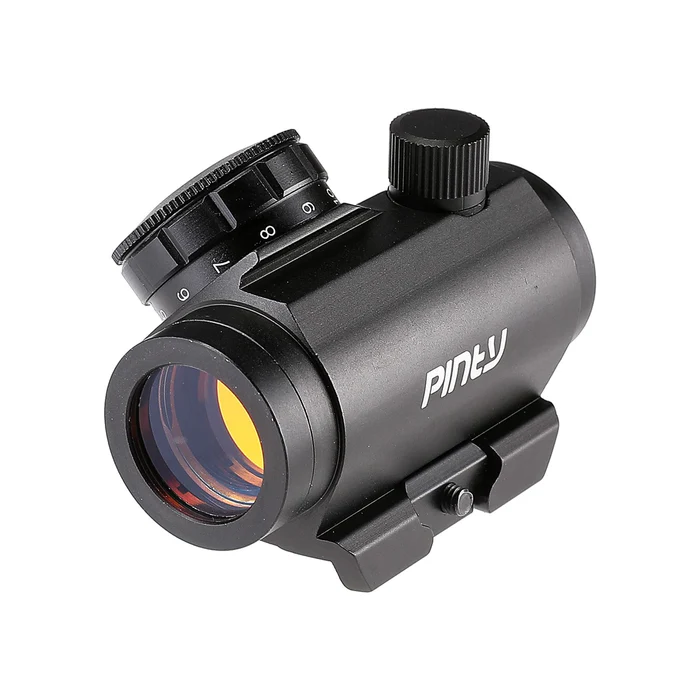
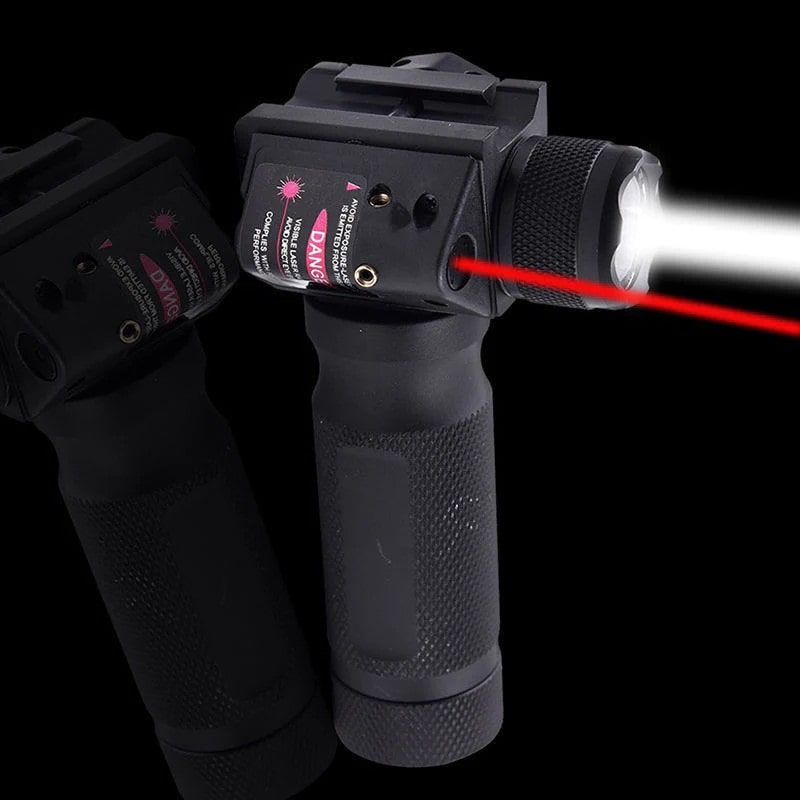
- Red Dots & Lasers: These keep the gun lightweight, offer no magnification, and allow for quick, open-eye targeting.
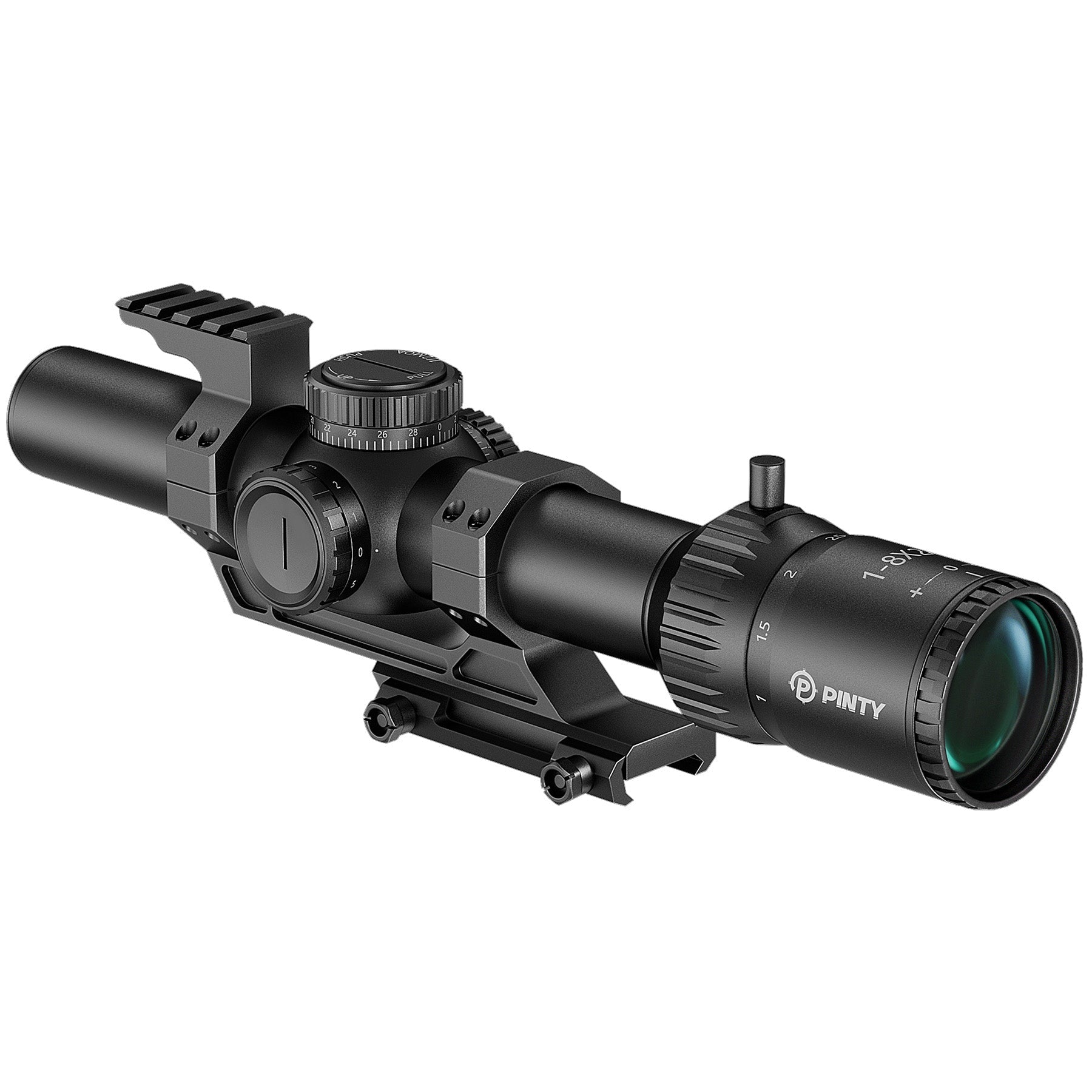
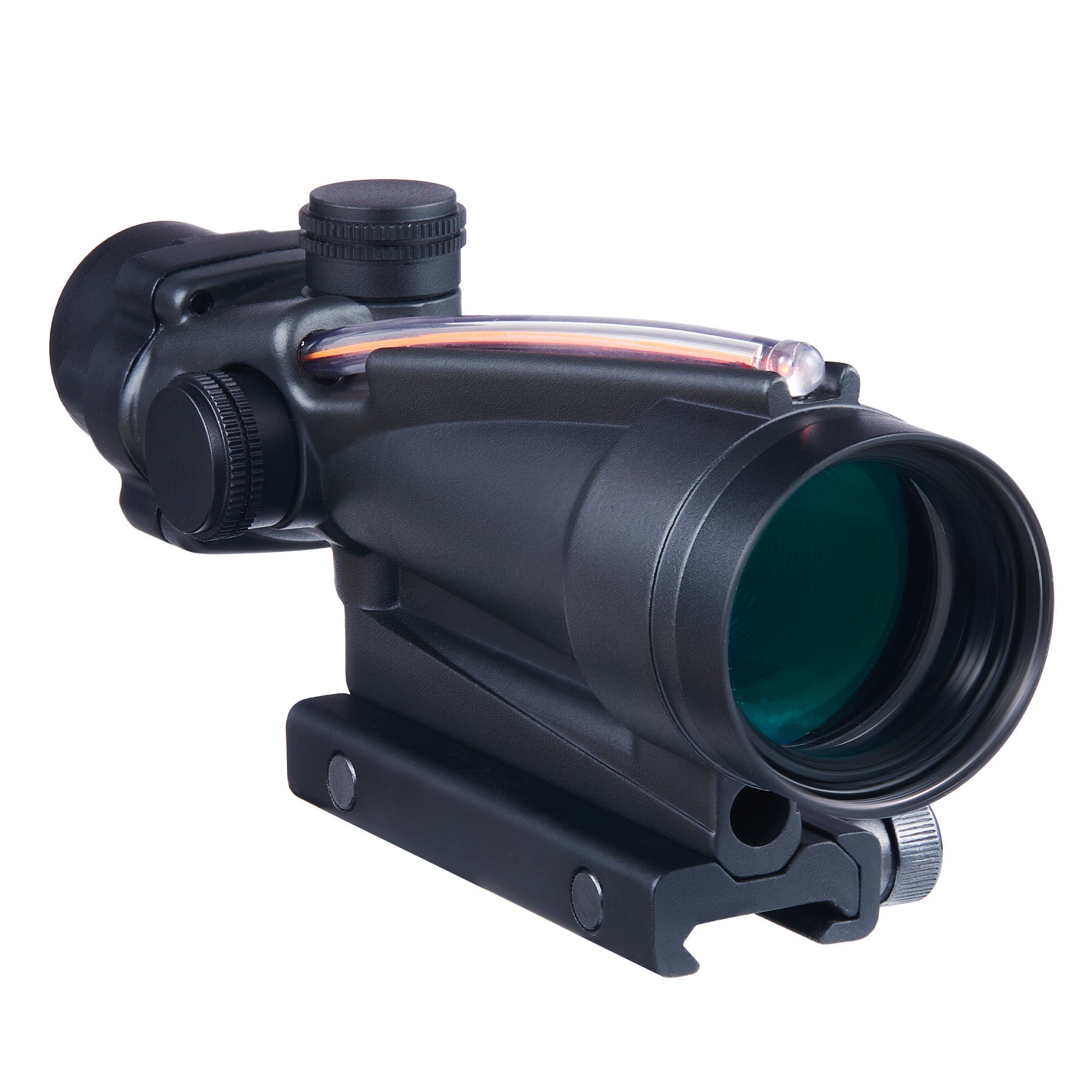
- Pistol Scopes: If you opt for a traditional scope, make sure it is a dedicated pistol scope. Rifle scopes are designed to be used right up next to your eye. A pistol scope is engineered with a massive amount of eye relief so you can see a clear image at arm's length. Keep the magnification low (around 2x or 3x)—anything higher will amplify your natural hand shakiness too much to steady onto a target.
Silencers (Moderators)
Because PCP pistols kick out quite a bit of power, they can be considerably louder than tiny CO2 guns. Attaching a silencer via a standard thread or an aftermarket adapter makes a massive, noticeable difference. It is highly recommended if you want to keep the noise down and avoid annoying your neighbors.
11. Single-Shot vs. Magazines
How you feed ammo into your pistol depends heavily on the model:
- Single-Shot: Pellets are loaded individually right into the back of the barrel by sliding a rear cover open. If you mount a scope to the gun, space can get tight, meaning you might want to buy an inexpensive plastic pellet loader to help position the pellet.
- Multi-Shot Magazines: These use rotary magazines (often holding around 9 rounds). You load the pellets into the magazine first, then slot it into the gun for rapid follow-up shots. Some models will even lock the bolt open when the magazine is empty to prevent you from accidentally "dry firing" without ammunition.
Many multi-shot pistols also come with a single-shot tray. Target shooters often prefer loading pellets one by one to guarantee that the soft lead skirts aren't slightly deformed by a magazine mechanism.
FAQs
What is a PCP air pistol?
A PCP (Pre-Charged Pneumatic) air pistol is an airgun powered by compressed air stored in an onboard reservoir. Unlike spring or CO₂ guns, it does not generate power at the moment of firing; instead, it releases metered bursts of high-pressure air to propel a pellet.
PCP pistols are known for high accuracy, low recoil, and strong shot-to-shot consistency. They are commonly used for target shooting, pest control, and competitive airgun disciplines.
CO₂ vs PCP vs Spring Airguns: A Simple Comparison for Beginners
How does a PCP pistol work?
A PCP pistol stores compressed air in a cylinder (usually 3,000–4,500 psi). When the trigger is pulled, a hammer strikes a valve, releasing a controlled amount of air behind the pellet and pushing it down the barrel.
Many PCP pistols include a regulator, which ensures each shot receives the same air pressure. This is what gives PCP systems their excellent consistency compared to spring or CO₂ guns.
Is PCP more powerful than CO2?
Yes—PCP airguns are generally more powerful than CO₂-powered guns. CO₂ pressure is limited by ambient temperature and typically produces lower and less consistent energy levels.
PCP systems operate at much higher pressures, allowing for significantly higher muzzle energy, better efficiency, and more stable performance across all shots.
What does PCP air pistol mean?
PCP stands for Pre-Charged Pneumatic. A PCP air pistol is an air-powered handgun that uses stored compressed air rather than springs, gas cartridges, or combustion.
The term simply describes the power system: air is pre-filled into the gun before shooting, rather than being generated during firing.
What are the disadvantages of PCP air guns?
PCP airguns require external equipment such as hand pumps, compressors, or high-pressure tanks, which increases overall cost and complexity. They also need regular maintenance of seals and air systems.
They are not “grab-and-shoot” like spring guns, and improper filling or neglecting pressure limits can damage the gun. The upfront investment is significantly higher than other airgun types.
Is a license needed for a PCP air gun?
In most parts of the United States, no license is required to own a PCP air gun. However, laws vary by state and city, and some areas have restrictions on discharge or hunting use.
Always check local regulations before purchasing or using one, especially for pest control or outdoor shooting.
Is .177 or .22 more powerful?
.22 is more powerful than .177 because it uses a heavier pellet that carries more energy on impact. Even at similar velocities, the increased mass results in higher foot-pounds of energy.
.177, however, is flatter shooting and often more accurate at longer ranges in target disciplines.
Is .177 or .22 better for squirrels?
.22 is generally better for squirrels because it delivers more impact energy and better terminal performance. This reduces the chance of wounding and increases effectiveness at short to moderate ranges.
.177 can still work, but it requires more precision and shot placement.
What caliber is better for air guns?
The .177 is best for target shooting, .22 is best all-around, and .25 or larger is better for hunting and pest control.
Most users find .22 to be the most balanced choice between power, accuracy, and versatility.
What is the killing range of a .177 air rifle?
A .177 air rifle is typically effective for small game within 10–40 yards depending on power level and shot placement. High-end PCP .177 rifles can extend this range slightly with proper conditions.
Beyond that, energy drops significantly and accuracy becomes more wind-sensitive.
Is .177 or .22 better for killing rats?
.177 is often preferred for rats because it offers higher velocity and flatter trajectory, making headshots easier at distance. It is also quieter in many setups.
However, .22 provides more impact energy and is more forgiving if shot placement is not perfect.
What caliber air gun is best for deer?
In most regions, airgun hunting of deer requires high-powered .30 caliber or larger PCP rifles with sufficient foot-pounds of energy (often 80–150+ FPE depending on local law).
Smaller calibers like .177 or .22 are not suitable or legal for deer hunting in most jurisdictions.
What caliber is most accurate at 1000 yards?
At 1000 yards, precision rifle cartridges like 6.5 Creedmoor, .300 Winchester Magnum, or .338 Lapua Magnum are commonly used.
Airguns are not realistically capable of consistent 1000-yard accuracy due to limited energy, pellet design, and environmental drift.
Is .308 or .270 better for deer?
Both are excellent deer calibers. .308 offers heavier bullets and better short-to-mid range energy, while .270 typically offers flatter trajectory and slightly longer effective range. Choice often comes down to recoil preference and hunting terrain.
How far can you shoot a deer with an air gun?
Ethical airgun hunting distances for deer typically range from 20–75 yards depending on caliber and power level. Only high-powered .30+ PCP rifles are suitable. Shot placement and energy retention are far more important than maximum distance.
What is the flattest shooting caliber out to 500 yards?
For centerfire rifles, calibers like 6.5 Creedmoor and .243 Winchester are known for flat trajectories out to long distances. They combine high ballistic coefficients with manageable recoil, making them popular for precision shooting.
Why do snipers use .308 instead of 30-06?
.308 Winchester is shorter, more efficient in modern rifle actions, and generally offers better consistency with modern bullet designs. It also produces less recoil than .30-06.
While .30-06 has similar performance, .308 became the military and tactical standard due to logistics, barrel efficiency, and compatibility with compact rifle platforms.
Is a .38 or .357 more powerful?
The .357 Magnum is more powerful than .38 Special. The .357 cartridge operates at higher pressure and delivers higher velocity and energy.
A .357 revolver can also typically fire .38 Special rounds, making it more versatile as well as more powerful.