Filters

Filters

$
to
$
3 products
Sort by
Sort by
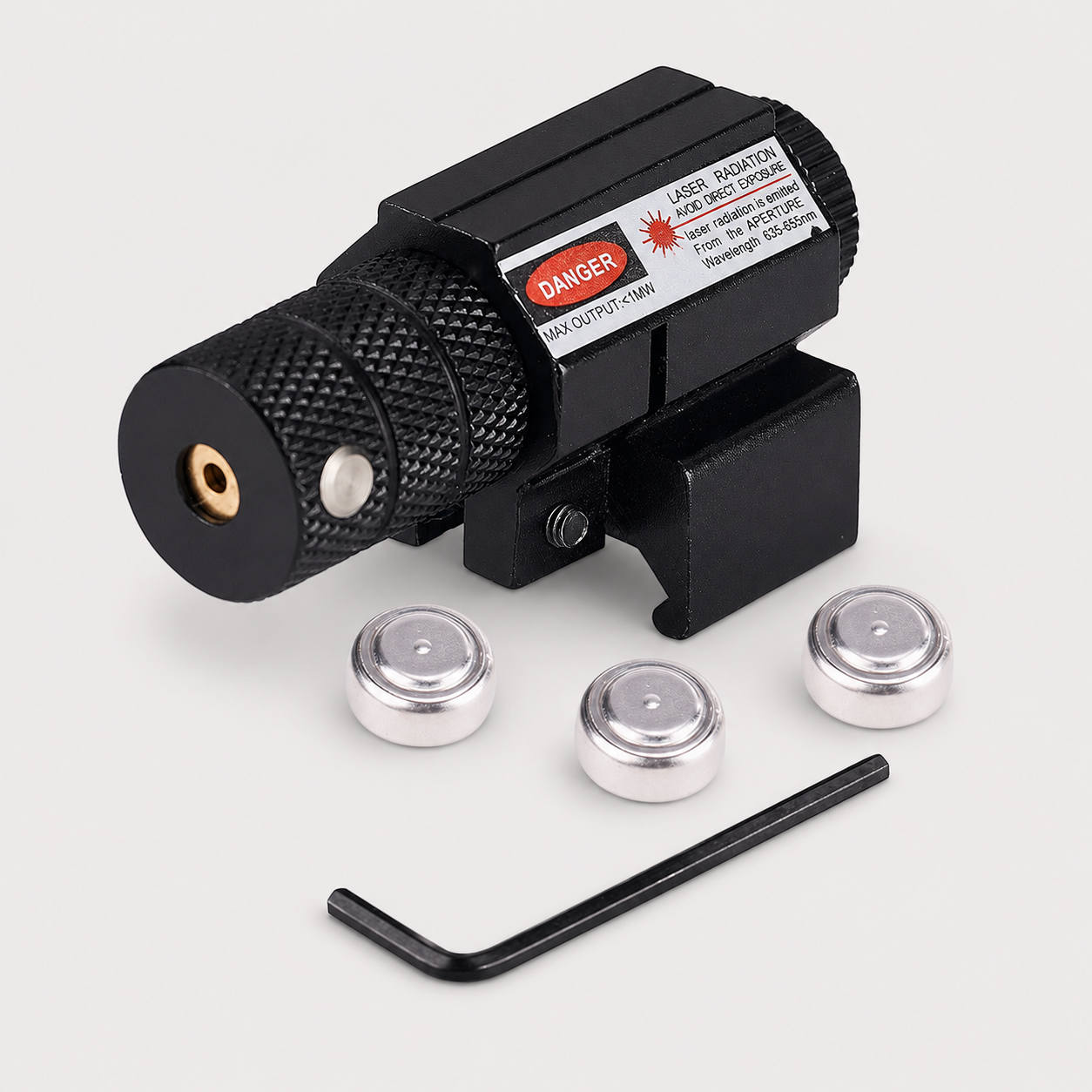
Pinty Compact Tactical Red Laser Sight with Picatinny Mount
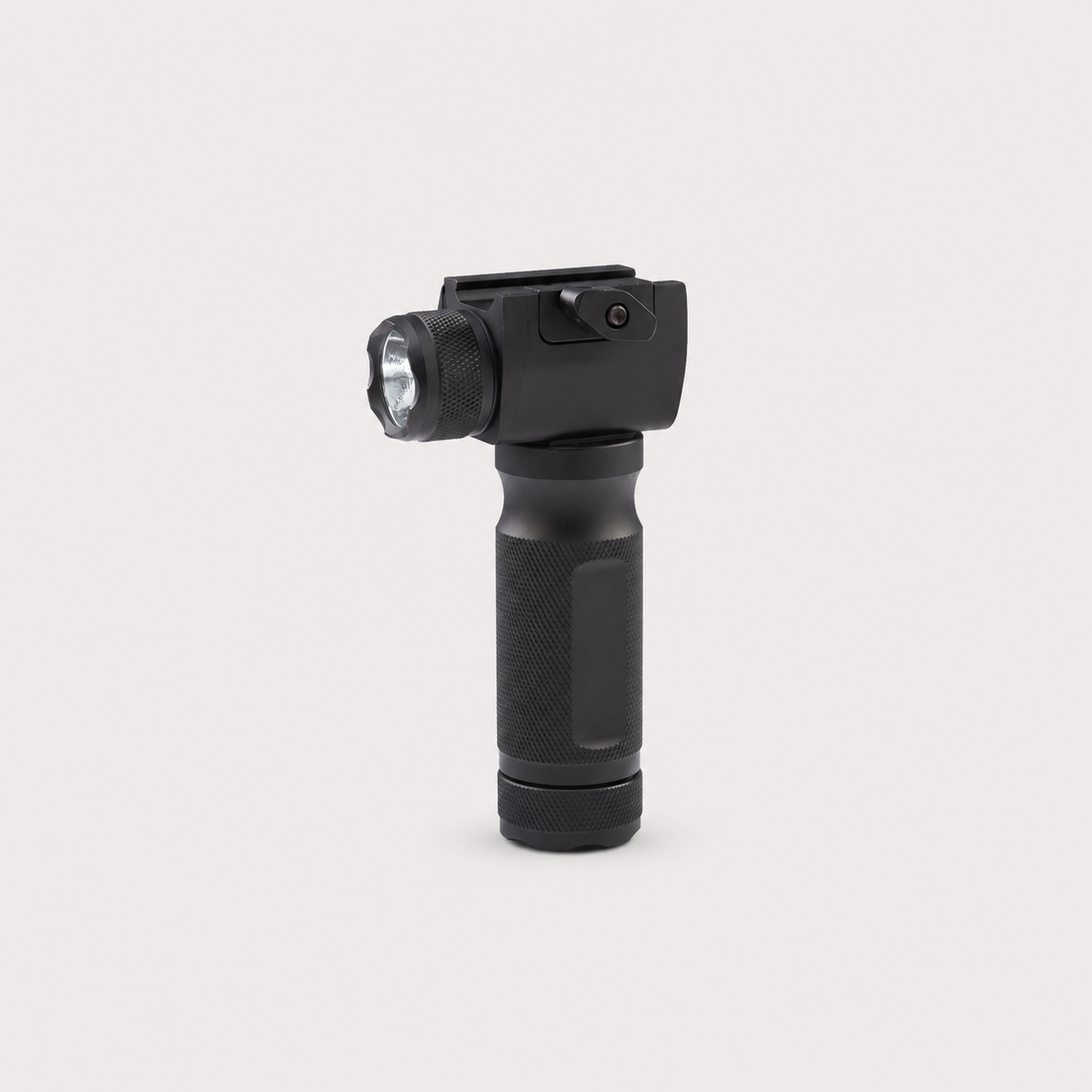
Tactical Foregrip with Flash Light & Red Laser
3-In-1 Tactical Foregrip with Flash Light & Green Laser
Sale price$63.99 Regular price$79.99

2 colors available

.223 REM / 5.56 LASER BORE SIGHTER

How to Choose a Laser Bore Sighter?

Choosing the right laser bore sighter is an important step for any shooter who wants to zero a firearm quickly, accurately, and with less wasted ammunition. Whether you are setting up a rifle, pistol, or shotgun, a bore sighter helps align your optics with the barrel before you ever fire a shot, saving both time and cost at the range. 

However, not all laser bore sighters are the same—differences in design, compatibility, laser color, and attachment method can significantly affect performance and convenience.

Universal vs. Caliber-Specific

One of the first decisions when choosing a laser bore sighter is whether you want a universal or caliber-specific model.

Universal (Magnetic) bore sighters

Universal (Magnetic) bore sighters attach to the muzzle using a magnetic base or external fixture. Because they sit outside the barrel, they are not limited by chamber dimensions, making them compatible with rifles, pistols, and shotguns across multiple calibers. This versatility makes them a cost-effective choice for shooters who own multiple firearms. Another advantage is that they are less dependent on tight chamber tolerances, which can sometimes improve consistency and alignment accuracy. However, proper placement is essential—if the device is not centered or firmly attached, readings may be less reliable.

Caliber-specific (chambered) bore sighters

Caliber-specific (chambered) bore sighters, on the other hand, are shaped like a cartridge and inserted directly into the firearm’s chamber. This design allows for quick setup and generally ensures a snug fit, which many users find convenient and precise. However, their biggest limitation is that each unit only works with one specific caliber. If you own multiple firearms, you may need several bore sighters.

Red vs. Green Laser Bore Sighter 

Laser visibility plays a major role in usability, especially in different lighting conditions.

Green lasers are significantly brighter and easier to see in daylight or at longer distances. This makes them ideal for outdoor shooting environments or when you need high visibility on bright surfaces. The trade-off is power consumption—green lasers typically require more energy and therefore drain batteries faster.

Red lasers are more budget-friendly and energy-efficient. They perform very well in indoor environments, low-light conditions, or short-range sighting tasks. While not as visible as green lasers in bright daylight, they are often sufficient for basic zeroing and home use.

Attachment Type

The way a bore sighter attaches to the firearm affects both convenience and accuracy.

Muzzle-inserted models use expanding arbor systems that fit inside the barrel. This method helps ensure precise alignment with the bore axis, which can improve consistency when zeroing optics. However, correct sizing is important—an improper fit can reduce accuracy or damage the barrel crown if used incorrectly.

Magnetic or external models attach to the muzzle using magnets. These are extremely easy to install and remove, making them very user-friendly in the field. The key requirement is that the device must sit perfectly flat and centered on the muzzle; any tilt or misalignment can affect accuracy.

Battery Type

Battery choice is often overlooked but important for long-term convenience.

It is generally better to choose models that use standard, easily replaceable batteries such as AAA or LR44. These are widely available and inexpensive, making replacements simple during range sessions or field use. 

In contrast, bore sighters that rely on proprietary or uncommon batteries can become inconvenient if replacements are hard to find, especially when you need quick adjustments.

Caliber & Firearm Specific Laser Bore Sighter Selection

Choosing a laser bore sighter based on caliber and firearm type is essential for achieving accurate alignment and reducing the time needed for zeroing. Different firearms have different chamber designs, barrel lengths, and intended uses, so selecting the right category ensures better compatibility and more reliable results.

Rifle / General Caliber Applications

For rifles, laser bore sighters are commonly used to pre-align optics before live firing, especially for hunting and precision shooting. 

Popular chambered options include the .223 laser bore sighter, widely used in AR-15 platforms and lightweight varmint rifles, as well as the 5.56 laser bore sighter, which is designed for standard NATO 5.56x45mm rifles and is often compatible with .223 setups. 

For larger-caliber hunting and long-range rifles, the .308 laser bore sighter is a common choice due to its balance of power and precision, while the .30-06 laser bore sighter remains a traditional option for big-game hunting rifles that require longer-range accuracy.

Handgun / Small Caliber Applications

Handguns require compact bore sighters that match shorter barrels and closer shooting distances. The 9mm bullet laser bore sighter is the most widely used option, suitable for both training and defensive pistols. 

For smaller calibers, the .22 cal laser bore sighter is ideal for rimfire pistols and beginner-friendly training setups due to its low recoil and affordability. 

In addition, the .177 laser bore sighter is commonly used for air pistols and lightweight training firearms where precision at short range is the primary goal.

Shotgun / Special Applications

Shotguns require bore sighters designed for smoothbore barrels and wider shot dispersion patterns. A shotgun laser bore sighter helps establish a basic point of aim before pattern testing with live ammunition. 

The most common configuration is the 12 gauge laser bore sighter, which is widely used for hunting, sport shooting, and home defense shotguns. Since shotguns rely more on spread than pinpoint accuracy, bore sighting mainly serves as a starting reference rather than a final zero.

Specialty Firearms & Air Rifles

Some firearms require specialized solutions due to their unique chamber systems or operating mechanisms. A .50 cal muzzleloader laser bore sighter is designed for black powder and muzzleloading rifles, where traditional chamber insertion methods do not apply. 

Similarly, a laser bore sighter for air rifle is used for pneumatic and spring-powered air rifles, helping shooters establish initial alignment before fine-tuning accuracy through pellet testing.

Red vs Green Laser Bore Sighter

When choosing between a red and green laser bore sighter, the main differences come down to visibility, battery life, cost, and intended shooting environment. Both options serve the same purpose—helping you align your firearm optics before live firing—but they perform differently depending on lighting conditions and use cases.

Red Laser Bore Sighter

A red laser bore sighter is the most common and budget-friendly option. It uses simpler diode technology, which makes it cheaper to produce and generally more energy-efficient. Because of this, red lasers usually offer longer battery life and more consistent performance across a wide temperature range.

However, red lasers are less visible in bright daylight, especially at longer distances. They perform best in indoor environments, low-light conditions, or short-range zeroing situations. For shooters who mainly sight in their firearms at indoor ranges or during early morning/evening sessions, red lasers are often more than sufficient.

Green Laser Bore Sighter

Green laser bore sighters are known for their superior visibility. The human eye is naturally more sensitive to green light, making the beam appear brighter and easier to see, especially in daylight or outdoor environments. This makes green lasers particularly useful for outdoor zeroing or when working at longer distances.

The trade-off is higher power consumption. Green lasers typically drain batteries faster and can be more expensive due to more complex internal technology. They may also be more sensitive to temperature changes compared to red lasers, depending on the model.

Red vs Green Laser Bore Sighter: Key Differences

In real-world use, the choice often comes down to your shooting environment. If you frequently zero your firearm outdoors or need maximum visibility in bright conditions, a green laser bore sighter provides a clear advantage. On the other hand, if you prioritize battery life, affordability, and mostly shoot in controlled lighting conditions, a red laser bore sighter is usually the more practical choice.

FAQ

A laser bore sighter works by projecting a straight laser beam from the centerline of a firearm’s barrel, giving you a visual reference of where the barrel is pointed. It is designed to help you roughly align your optic or iron sights with the bore before live firing.

There are two main types. A chambered (cartridge-style) bore sighter is inserted directly into the firearm’s chamber and uses the chamber’s alignment to position the laser along the barrel axis. A muzzle-mounted or magnetic bore sighter attaches to the end of the barrel and projects the laser straight forward from that position.

Once activated, the laser dot appears on a target or wall at a short distance, typically around 10–25 yards. You then adjust your scope or sights so the reticle matches the laser point. This gets your firearm “on paper,” meaning your first live shots should land close enough to the target for fine-tuning.

A laser bore sighter is a tool used to help align a firearm’s sights or scope with the barrel before live firing. It projects a straight laser beam from the centerline of the bore (or muzzle), showing where the barrel is pointing so you can roughly match your optic or iron sights to that point.

It comes in different types, such as chambered models that look like a cartridge and fit into the chamber, and muzzle-mounted or magnetic models that attach to the end of the barrel. Once activated, the laser creates a visible reference point on a nearby target, usually at short distances like 10–25 yards.

A laser bore sight may seem inaccurate because it only shows where the barrel is pointing, not where a bullet will actually hit. Even a small misalignment from loose fit, improper seating (chambered type), or a tilted muzzle-mounted unit can shift the laser off center. Weak batteries or poor-quality units can also affect stability. In addition, bore sighters are meant for short-range alignment (about 25 yards or less), so using them at longer distances can exaggerate errors.

A laser bore sighter is accurate for rough alignment, not for final zeroing. It can usually get your point of aim close enough that your first live shots land on or near the target (often within a few inches to a foot at 25–50 yards, depending on setup quality), which helps save ammo and time during initial sight-in.

Yes, you can technically laser bore sight at 100 yards, but it’s not ideal. Bore sighting works best at closer distances—around 25 yards for rifles—where the laser is easier to see and alignment is more accurate. At 100 yards, small misalignments become exaggerated and the laser is harder to use effectively. It’s better to bore sight close, then confirm and fine-tune at longer range with live fire.

Yes—laser bore sighters do work. A laser bore sighter is designed to roughly align your optic or iron sights with the barrel, so your first live rounds land on paper instead of missing the target completely. In practice, they are very effective for getting “on target fast” and can significantly reduce wasted ammo and time during initial setup.

Choosing between a red and green laser bore sighter depends mainly on your shooting conditions and priorities. 

A green laser is generally better for visibility because the human eye perceives green more easily, making it much brighter and easier to see in daylight or outdoor environments, especially at longer distances. This makes it a strong choice for shooters who frequently zero their firearms outside or need clearer reference points in bright conditions. However, green lasers tend to be more expensive and consume battery power faster. 

In contrast, a red laser bore sighter is more affordable, energy-efficient, and offers longer battery life, making it ideal for indoor use, low-light settings, or short-range sighting tasks, though it can be harder to see in bright daylight.

Laser bore sighting works well at short distances, where it can quickly get your shots on paper and reduce ammo waste during live zeroing. 

For most rifles, the standard starting distance is around 25 yards (75 feet), which provides a reliable baseline alignment between your optic and barrel. Some shooters also use 50 yards for rifles when they want a slightly more refined initial zero, especially for higher-powered optics, but 25 yards is usually easier and more practical for first adjustments. 

For pistols, a closer range of about 10–25 yards is typically preferred because of their shorter barrels and intended engagement distances. Starting closer helps ensure your first live shots are visible on the target, making it easier to fine-tune adjustments afterward.

Laser bore sighters are worth it if you want faster setup, less ammo waste, and easier initial alignment—but they are a convenience tool, not a replacement for proper zeroing at the range.