

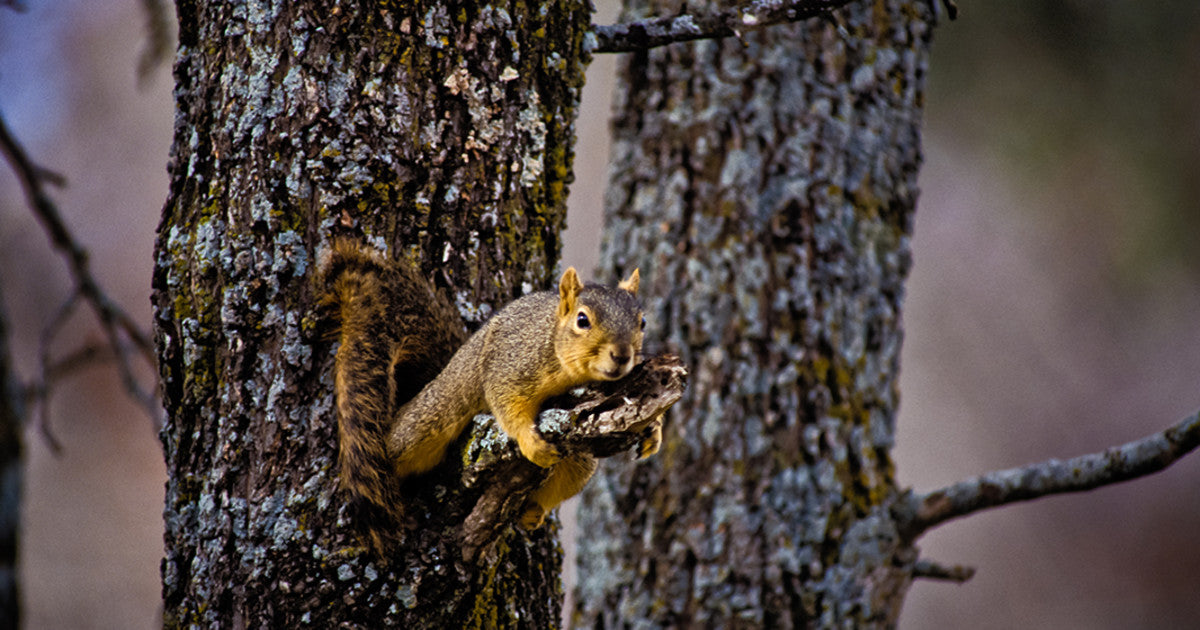
There is something wonderfully simple about squirrel hunting with an airgun. Just an airgun, a handful of pellets, a good pair of eyes, and enough patience to let the woods tell you what is happening.
But simple doesn't mean easy.
If there is one lesson that carries over from successful airgun hunting again and again, it is this: know your quarry. Understanding the animal you are hunting can make the difference between sitting in the right place at the right time and spending an entire morning wondering where everything went.
This month, we are going to concentrate on the Eastern Gray Squirrel. In the next installment, we'll turn our attention to a very different animal—the California Ground Squirrel. They are both squirrel-sized quarry, but their behavior, habitat, movement, and personalities are different enough that hunting them effectively requires a different approach.
That is exactly what makes airgun hunting so much fun.

A Squirrel Is Not Just a Squirrel
The Eastern Gray Squirrel is an adaptable little animal. It is comfortable in mature forests, wooded edges, parks, farms, orchards, and suburban environments where food and cover are available.
For the airgun hunter, that adaptability is important. Gray squirrels spend considerable time above ground, moving through trees and along branches in search of food. They are constantly evaluating their surroundings. A squirrel may appear completely unconcerned one moment and disappear behind a tree the next.
And that is where understanding behavior becomes useful. Squirrels are creatures of routine.
They develop feeding areas, travel routes, preferred trees, and favorite hiding places. They don't necessarily follow the same schedule every day, but their movements are rarely completely random. Once you begin watching rather than simply looking for something to shoot, patterns start to emerge:
- Maybe there is a particular oak that gets visited regularly.
- Maybe a squirrel crosses the same fence line every morning.
- Maybe there is a tree where the squirrels disappear whenever something spooks them.
Those observations are more valuable than simply knowing that squirrels are somewhere in the neighborhood.

Watch Before You Hunt
One of the best things an airgun hunter can do is spend time in the field without immediately trying to take a shot.
Squirrels can be surprisingly vocal. Their alarm calls, movement through leaves, chewing, and activity in the branches can reveal their presence before you ever see them.
Look for disturbed leaves beneath trees, chewed nuts, feeding areas, and other signs of activity. Pay attention to where squirrels travel between cover and feeding areas.
Then ask yourself a simple question: If I were a squirrel, where would I go?
That question can completely change the way you approach a property. Instead of wandering around looking for a squirrel, you begin positioning yourself where squirrels are likely to appear. That is hunting.
The Importance of the Right Airgun & Optics
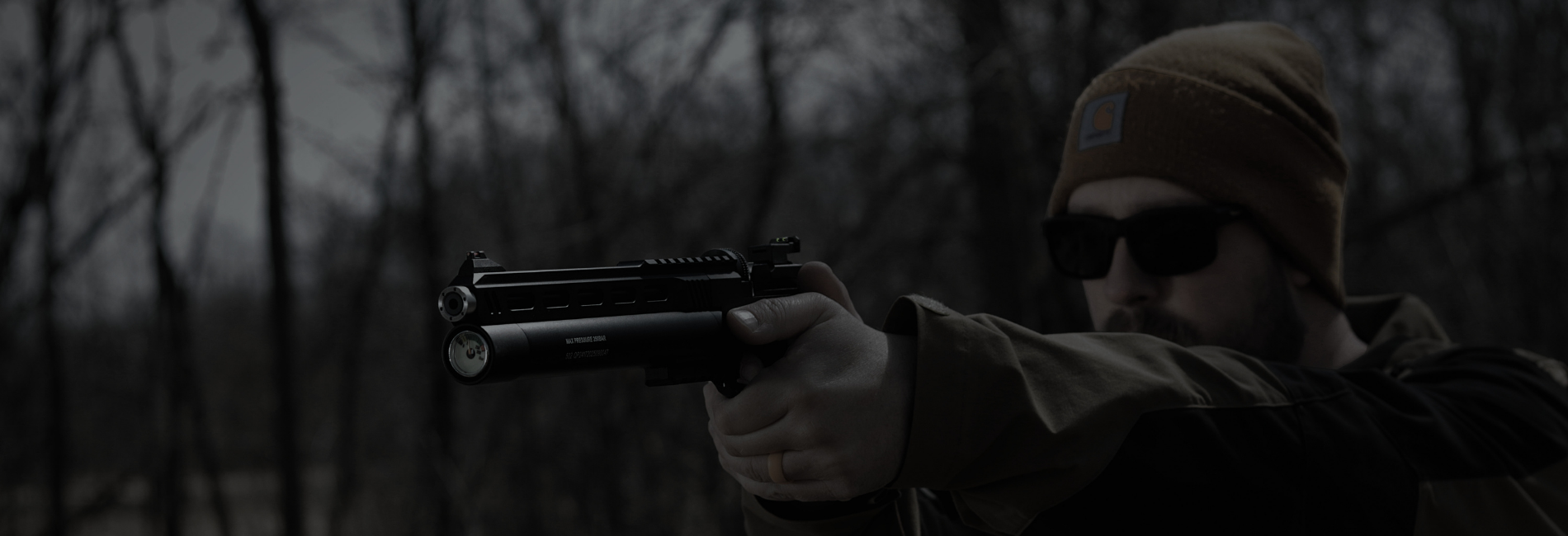
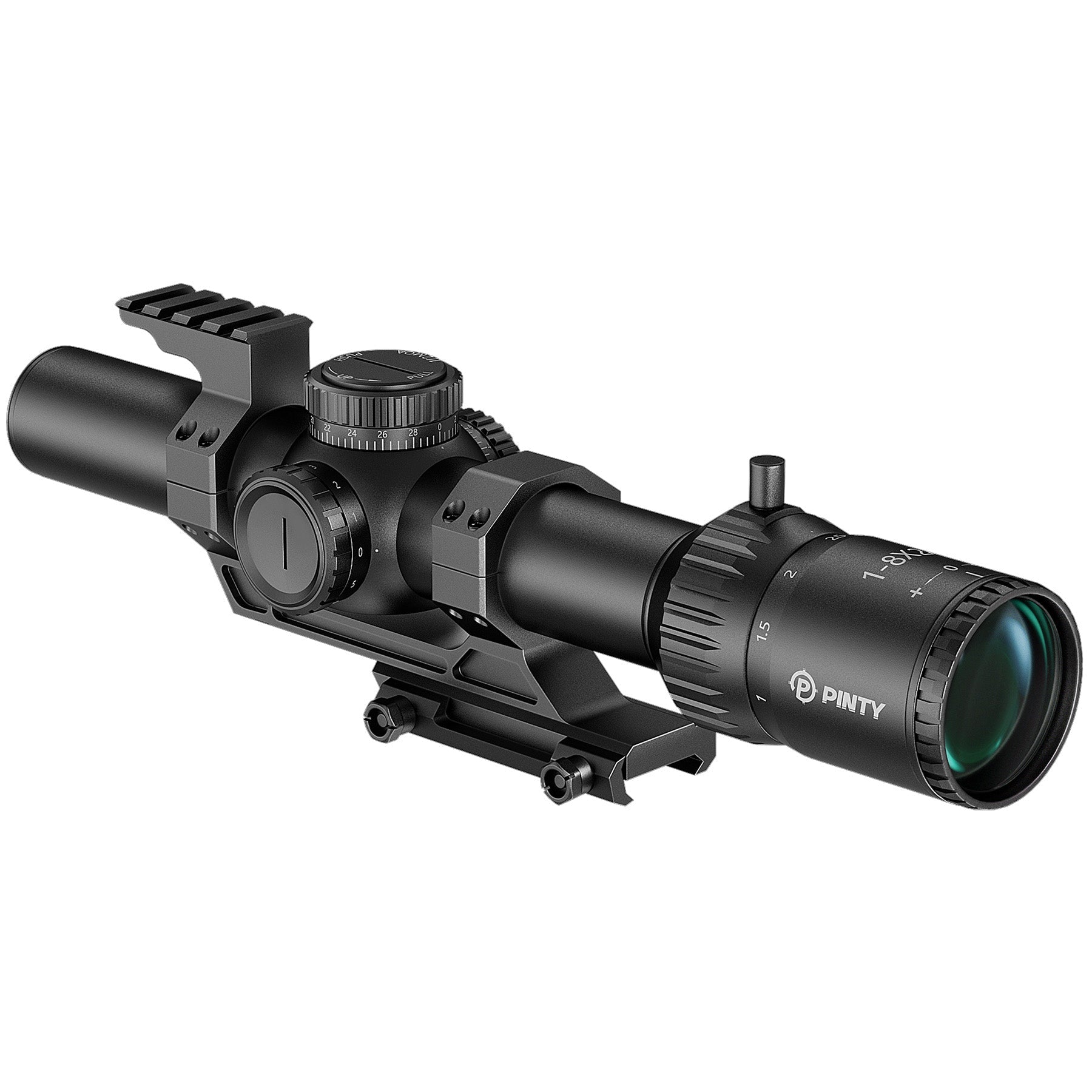
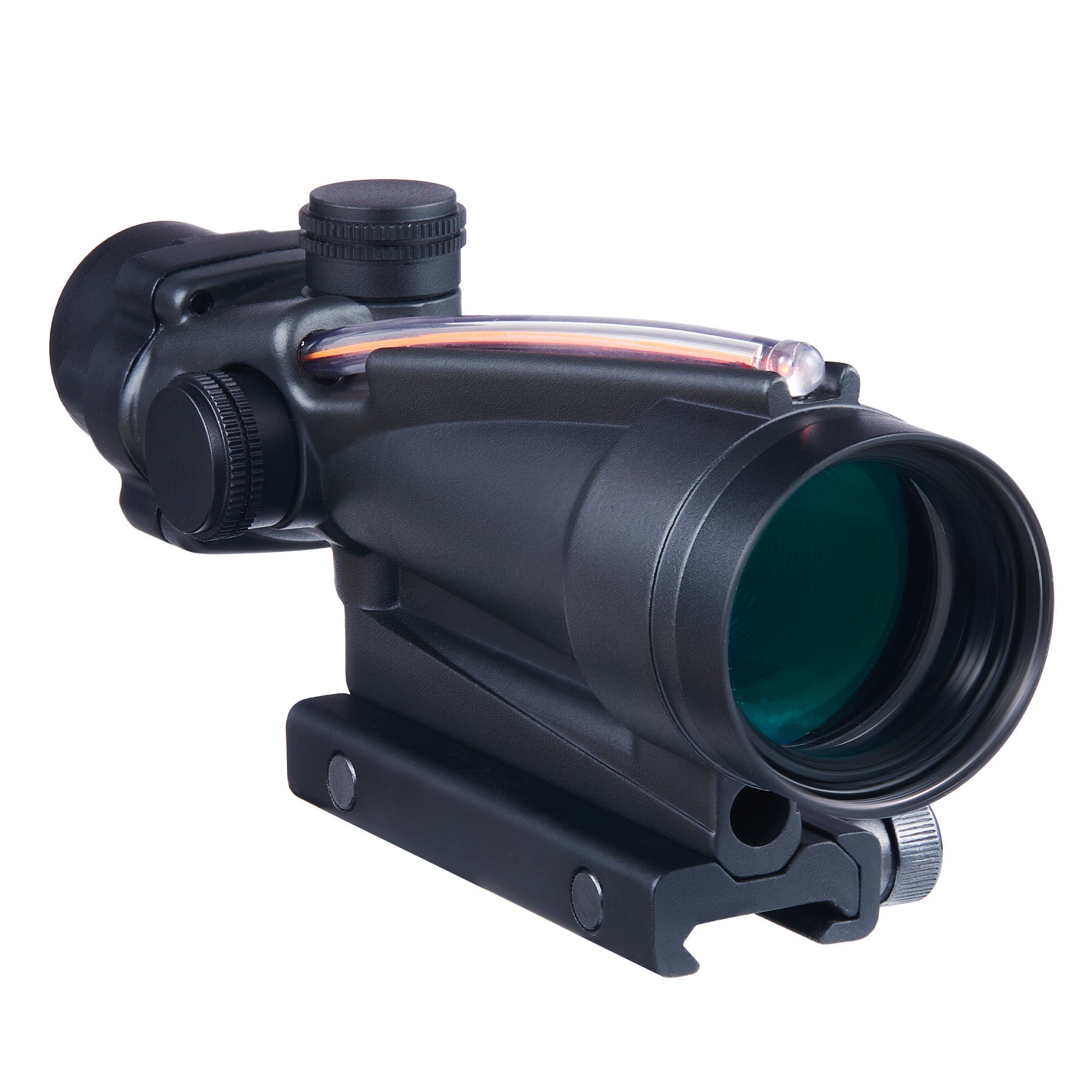
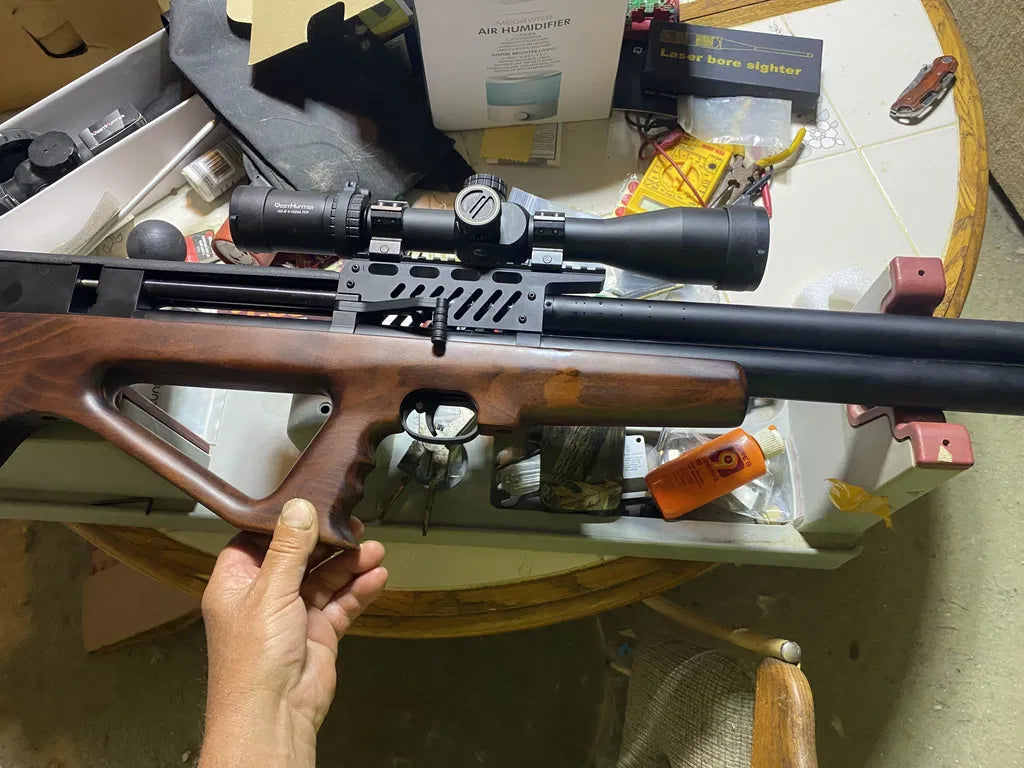
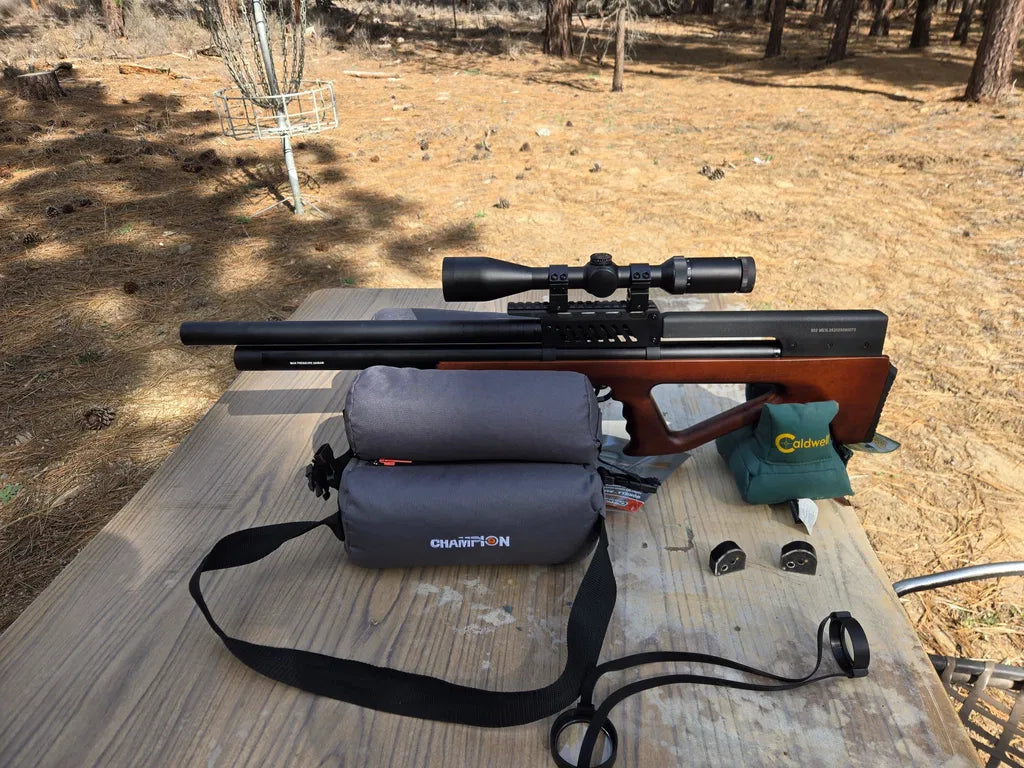
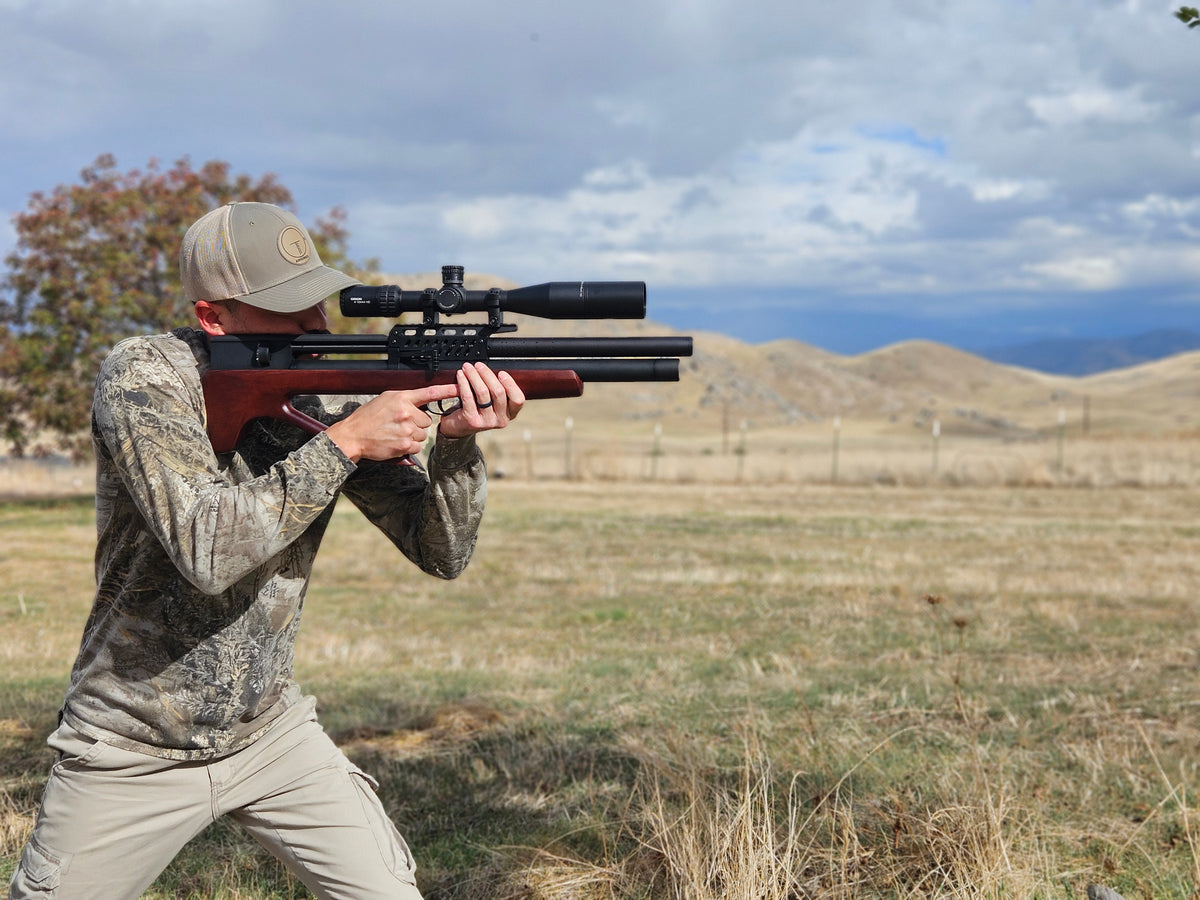
On my coastal California farm, I rely on precision equipment like the Pinty Thumper and Pinty Timber for effective squirrel population control. For squirrel-sized quarry, airguns in the neighborhood of 15 to 30 ft/lbs of energy are perfectly suited to the job when paired with reliable Pinty rifle scopes for crisp target acquisition within their effective range.
Both .177 and .22 caliber can fit this role very well.
There is also a practical reason I prefer pellets for this type of hunting rather than chasing maximum performance with slugs. A conventional pellet delivers plenty of performance for squirrel-sized game while generally limiting the amount of unnecessary projectile travel compared with higher-energy ammunition that may be capable of traveling much farther.
That doesn't mean a pellet magically makes a shot safe. It doesn't. Every projectile needs a suitable backstop, and every shot needs to be considered in the context of what is beyond the animal. The responsibility belongs entirely to the shooter.
Know Your Effective Range
This may be one of the most important rules in airgun hunting: Know your effective range and stay inside it.
The maximum distance your airgun can physically send a pellet is not your effective hunting range. Those are two completely different things.
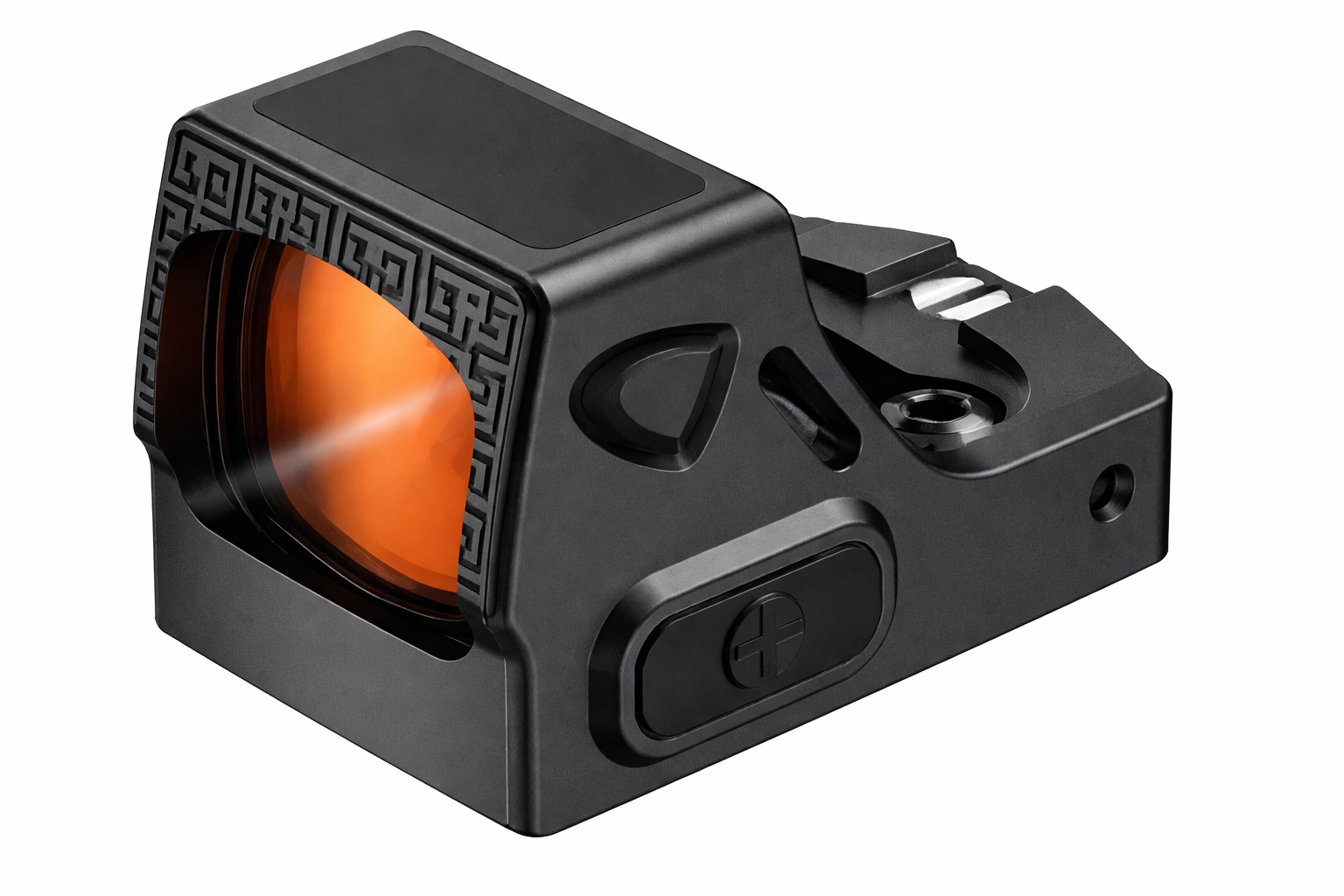
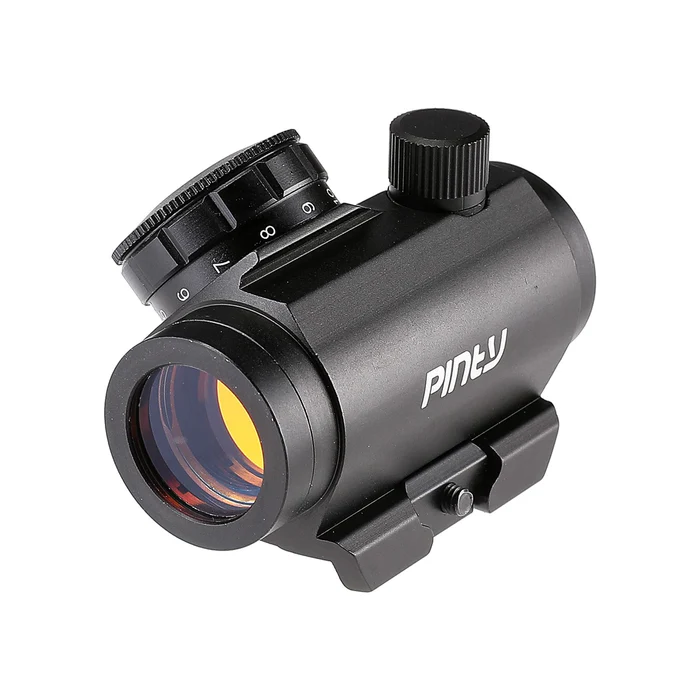
Your effective range is the distance at which you can consistently place an accurate shot on the intended target under the conditions you are actually hunting in. Whether you prefer a magnified optic or quick-acquisition Pinty red dot sights for close-range timber setups, staying within your comfort zone is vital.
- Wind matters.
- Shooting position matters.
- Pellet selection matters.
- Your familiarity with your setup matters.
- The animal's position matters.
And the ability to make a clean, precise shot matters most of all.
A squirrel sitting motionless at a known distance may present an excellent opportunity. The same squirrel moving rapidly through branches at a much greater distance may not. There is no shame in passing on a shot. In fact, knowing when not to shoot is one of the things that separates thoughtful hunting from simply pulling a trigger.

Squirrels Have Excellent Survival Skills
Gray squirrels have survived for a very long time by being suspicious. They notice changes, movement, unusual sounds, and when something doesn't belong.
That means the hunter has to think about concealment and movement. Don't assume that because a squirrel cannot see your face, it cannot see you. A slow movement can be invisible to an animal at a distance. A sudden movement can announce your presence immediately.
The same goes for sound. Crunching leaves, knocking equipment against a tree, or moving carelessly through brush can ruin an otherwise perfect setup.
Airguns encourage patience because they don't demand the same kind of aggressive movement associated with covering large areas quickly. Use that to your advantage.
The Shot Is Only One Part of the Hunt
A successful hunt isn't simply about putting an animal on the ground. The goal is a quick, effective, humane kill. That responsibility rests entirely with the shooter.
That means:
- Understanding the capabilities and limitations of your equipment before hunting.
- Practicing from realistic field positions using dependable Pinty hunting accessories like sturdy bipods or resting bags.
- Knowing how your chosen pellet performs at the distances you intend to shoot.
- Refusing shots that don't provide a reasonable opportunity for a clean result.
A good airgun hunter doesn't need to prove anything by taking a difficult shot. There will always be another squirrel. There won't always be another opportunity to correct a bad decision.
Population Control With a Purpose
On a farm, squirrel hunting can serve a practical purpose beyond recreation. Wildlife and agriculture don't always coexist peacefully. Squirrels can consume crops, damage trees, raid feed, disturb gardens, and create problems around buildings and equipment.
Population control can therefore be part of responsible property management. But even when the purpose is practical, the hunting experience doesn't have to become overly serious.
That's one of the reasons I enjoy airguns. There is a tremendous amount of skill involved, but there is also something inherently enjoyable about quietly walking a property, watching wildlife, figuring out its habits, and making a precise shot when everything comes together.
Clean Up After Yourself
There is another responsibility that sometimes gets overlooked: Take the animal with you.
If you are hunting on someone else's permission or on public land, don't leave carcasses lying around where other people will encounter them. Nobody wants to take their family for a walk, ride a trail, enjoy a public property, or work around a farm only to stumble across somebody else's waste.
If you're going to take the animal, take responsibility for it. Retrieve it. Dispose of it appropriately or make use of it where practical and lawful.
Leave the property in a condition that demonstrates respect for the landowner, other users, and the animals themselves. That is simply good field etiquette.

The Real Advantage Is Knowledge
Equipping yourself with tools like the Pinty Thumper and Pinty Timber gives you a solid foundation, but the airgun is only part of the equation.
A hunter who understands squirrel behavior, habitat, feeding patterns, movement, concealment, range, and shot placement has a much better understanding of the entire process than someone who simply buys a powerful airgun and heads outside.
The equipment should match the quarry. The ammunition should match the equipment. The shooter should understand both. And the shot should be taken only when all of those pieces come together.
That is the fun of airgun hunting. It isn't necessarily about having the biggest gun, the longest shot, or the most horsepower. Sometimes it's about sitting quietly beside an oak tree and realizing that the squirrel you've been watching for twenty minutes has been watching you too. Then, just when you think you have figured him out, he disappears.
Welcome to squirrel hunting.



Share:
First Time Hunting This Fall? 7 Essential Tips for Beginners
First Time Using a Rifle Scope? How to Get a Clear Sight Picture | Pinty