

Regulated vs. Unregulated Airguns: Why Consistency Matters
Understanding how pressure regulators shape velocity curves, influence downrange precision, and change the way you shoot.
When shopping for a PCP airgun, shooters tend to focus on velocity, power, shot count, accuracy, and price. One specification that often gets overlooked, however, can have a tremendous effect on how an airgun performs over an entire fill: the regulator.
So what exactly does a regulator do, and why should you care? The short answer is simple:
A regulated PCP is designed to deliver a much more consistent pressure to the firing valve, which can produce a much more consistent velocity from shot to shot.
An unregulated PCP, on the other hand, works directly from the changing pressure in its air reservoir. As that reservoir pressure falls, the gun's velocity generally changes with it. That difference can matter considerably once you start shooting at longer distances.
Regulated PCP
- Maintains constant plenum pressure to valve
- Delivers a flat velocity curve through usable fill
- Minimizes vertical point-of-impact shift
- Ideal for long-range & competitive precision
Unregulated PCP
- Operates directly on changing main tank pressure
- Produces a natural bell-shaped velocity curve
- Requires shooter to learn its "sweet spot"
- Mechanically simple, highly reliable & budget-friendly
What Does a Regulator Actually Do?
Think of the air reservoir in a PCP as a large storage tank. It might be filled to 2,900 PSI, 3,625 PSI, or even higher depending on the rifle.
But the firing valve doesn't necessarily want to operate directly from that full reservoir pressure. A regulator creates an intermediate pressure zone between the main reservoir and the firing valve. The regulator maintains a relatively constant pressure in that area until the reservoir pressure falls below the regulator's set point.
The result is that the firing valve is working with substantially more consistent pressure. That consistency is the whole point.
A properly functioning regulated PCP can therefore maintain a relatively flat velocity curve for a significant portion of its usable air supply. Once the reservoir falls below the regulator's set pressure, however, the regulator can no longer maintain that pressure and the rifle begins behaving much like an unregulated gun. This is why even a regulated PCP can eventually show a velocity decline near the end of its fill.
What Happens With an Unregulated PCP?
An unregulated PCP doesn't have that intermediate pressure control. The firing valve is working against the pressure remaining in the main reservoir. As you fire shot after shot, the reservoir pressure decreases. That changing pressure affects the way the valve opens, how much air is released, and ultimately how quickly the pellet leaves the barrel.
The result is a velocity curve rather than a flat line. Typically, an unregulated PCP will have a portion of its fill where velocity is particularly consistent. Shooters often refer to this as the gun's "sweet spot."
Once you move outside that sweet spot, velocity begins to change more noticeably. This isn't necessarily a bad thing. In fact, an unregulated PCP can be extremely accurate. It simply requires the shooter to understand the rifle's behavior. As Pyramyd AIR has explained in its discussion of regulated and unregulated PCPs, the firing valve has an operating range where it performs most efficiently, and the pressure curve of an unregulated rifle can produce a relatively consistent section of shots before velocity begins changing more significantly.

Why Does Velocity Consistency Matter?
This is where the discussion gets important. Suppose you sight your rifle at 50 yards. Your scope is zeroed for a particular pellet traveling at a particular velocity. Now imagine that velocity changes substantially as the air pressure in the rifle changes. The pellet's trajectory changes with it.
The result can be a change in point of impact, particularly in the vertical direction. You can make a perfect shot, hold exactly where you should, and still see the pellet hit higher or lower than expected because the pellet isn't leaving the barrel at the same velocity.
That's why velocity consistency becomes increasingly important as distance increases. At 15 or 20 yards, a small velocity difference may be difficult to notice. At 50, 75, or 100 yards, the difference can become much more obvious. And that's before we even start talking about wind, pellet variation, shooting position, and other variables.
Comparing Real-World Platforms
The Diana Stormrider
The Diana Stormrider is a particularly interesting rifle to discuss because there has been confusion over different versions and generations of the platform. The current Stormrider is a regulated PCP. Diana's current documentation identifies an integrated regulator, with the rifle using a 100 cc reservoir and a maximum fill pressure of 200 bar (2,900 PSI). That regulator gives the Stormrider a significant advantage when the goal is repeatable shot performance.
But there's an important lesson here: Don't assume that every Stormrider you encounter is configured exactly like the current model. Airgun manufacturers change specifications, markets receive different configurations, and older versions can differ from newer versions. That's one reason the chronograph is such an important tool for the airgunner. Don't simply read the box. Shoot the gun and measure what it actually does.
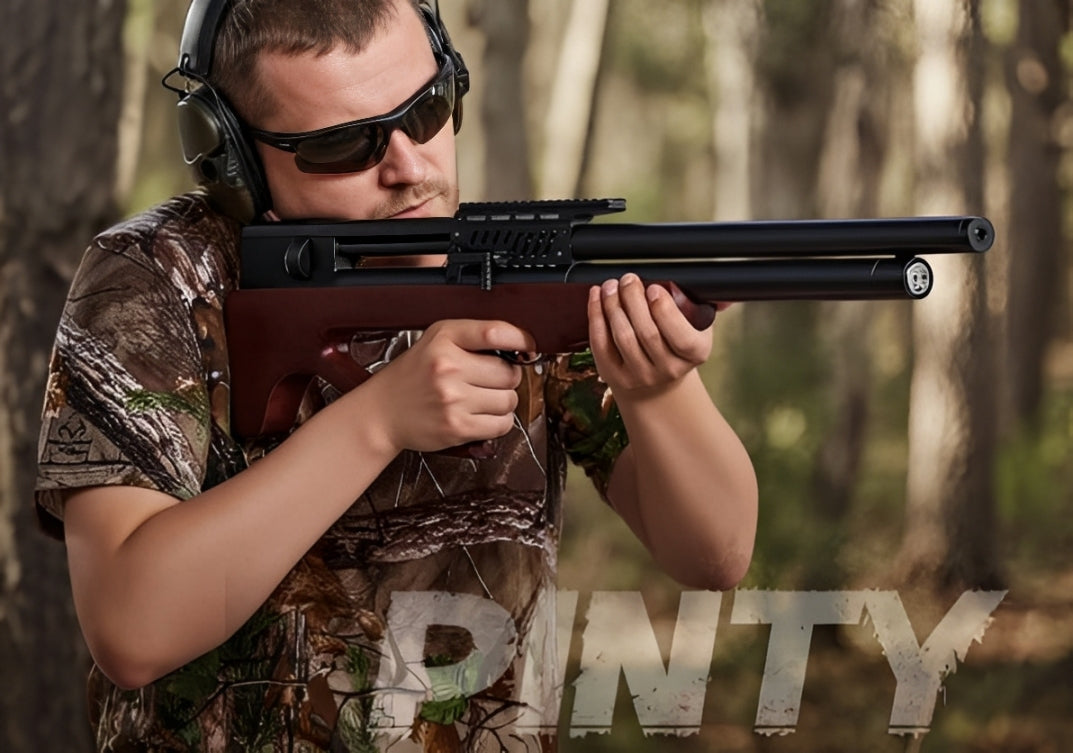
The Pinty Vanguard
The Pinty Vanguard provides another interesting example. Pinty currently identifies the Vanguard as having a built-in regulator. Pinty's own information describes the regulator as maintaining consistent pressure to the firing system until the reservoir reaches the regulator's set point.
That means the Vanguard isn't a good example of an unregulated PCP versus the Stormrider. Instead, the two rifles demonstrate something perhaps even more useful: Having a regulator is only part of the equation.
When evaluating modern PCP air rifles, the quality of the regulator, its pressure setting, the hammer and valve relationship, the air volume available to the valve, pellet selection, and overall tuning all influence the actual shot string. A rifle can have a regulator and still produce velocity variation. Likewise, an unregulated rifle can have an extremely useful and accurate portion of its pressure curve.
“ The word 'regulated' should be viewed as an important feature—not an automatic guarantee of perfect performance. ”
The Chronograph Doesn't Lie
If you really want to understand your PCP, put a chronograph in front of it. Don't shoot three shots and call it good. Shoot an entire string. Record the velocity of every shot. You may discover that the rifle behaves very differently from what you expected.
A regulated rifle should generally show a relatively stable velocity over its regulated portion of the fill. An unregulated rifle will generally show a more pronounced velocity curve. The important measurements include:
Those numbers tell you far more about a rifle's consistency than the advertised maximum FPS.

Why This Matters for Accuracy
Here's the part that sometimes gets misunderstood: A regulator doesn't magically make a rifle accurate.
A good barrel, good pellet, consistent ammunition, proper trigger control, good shooting technique, and a stable platform still matter. What the regulator does is remove one variable from the equation. If every pellet leaves the barrel at approximately the same velocity, the shooter has one less variable affecting trajectory. That can make a significant difference when you're trying to put multiple pellets into the same hole—or trying to make a precise shot at distance.
The more demanding the shooting becomes, the more valuable consistency becomes. That's particularly true for field target, benchrest, long-range shooting, and hunting where precise shot placement matters.
Unregulated Doesn't Mean Bad
It's also important not to turn this into a regulated-good/unregulated-bad argument. That's simply not accurate.
Unregulated PCPs have been around for a long time and can shoot exceptionally well. In fact, an experienced shooter can learn the velocity curve of an unregulated rifle and deliberately operate it inside its most consistent pressure range.
The advantage is that the shooter has to understand the gun. You may need to monitor the pressure gauge, learn how many shots you can take before velocity begins to fall, or choose to refill the rifle before reaching the bottom of its useful pressure range. For a casual plinker, that may not matter at all. For a competitive shooter, it can matter enormously.
The Real Takeaway
When comparing PCP airguns, don't simply ask "How many FPS does it shoot?"—ask "How consistently does it shoot?" And don't stop at "Is it regulated?"—ask "What does the chronograph say?"
Understanding the difference between regulated and unregulated PCPs makes you a better airgun buyer—and ultimately, a better shooter.






Share:
Pinty Striker Compact Bullpup MKII: What’s New & What Shooters Say
PCP Air Pistol vs. Bullpup PCP Rifle: Which Is Right for You?