

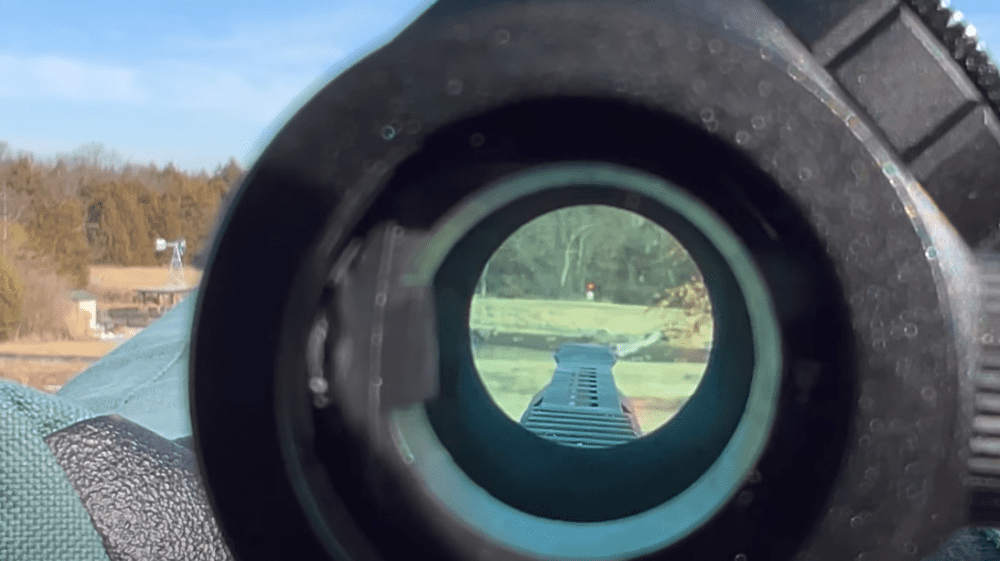
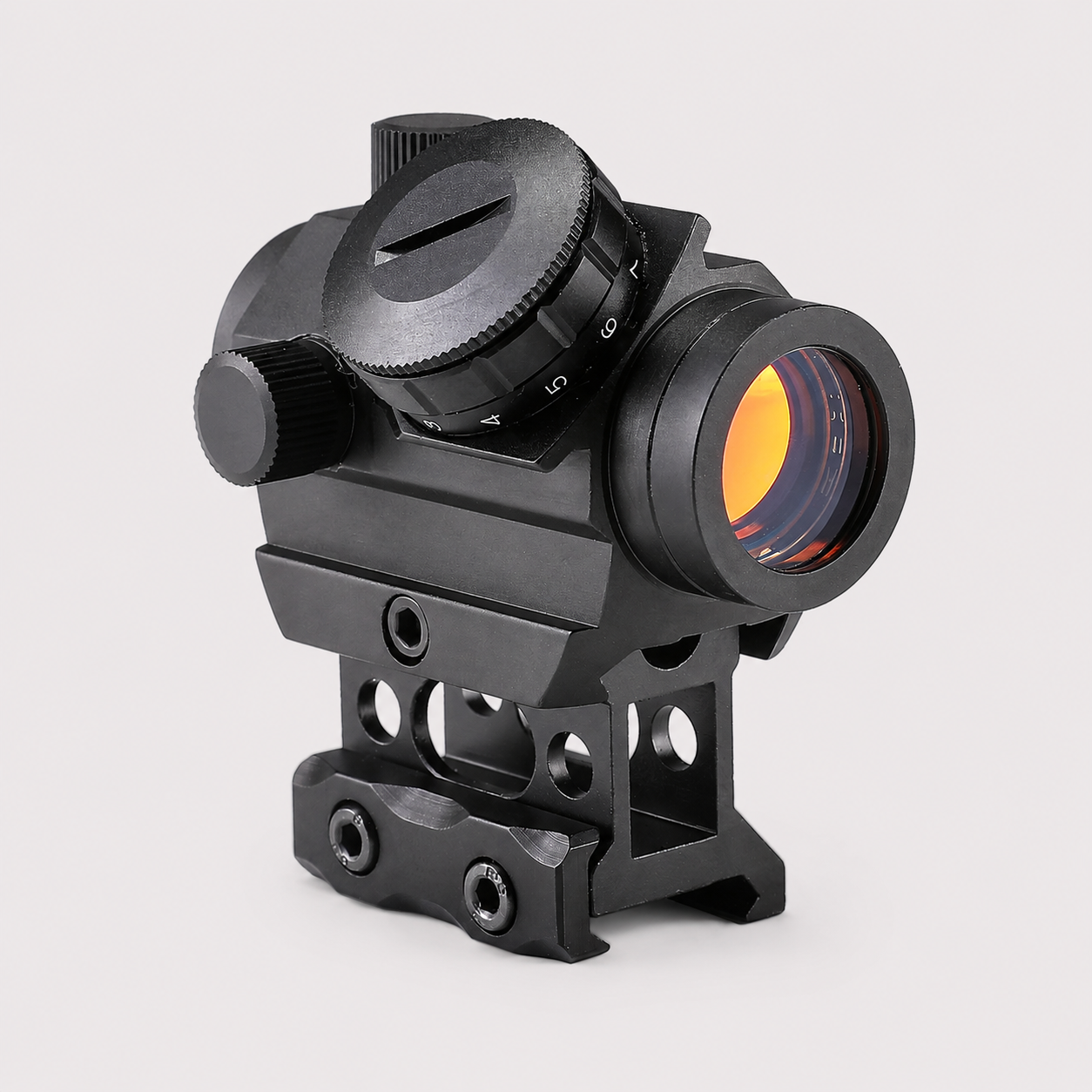
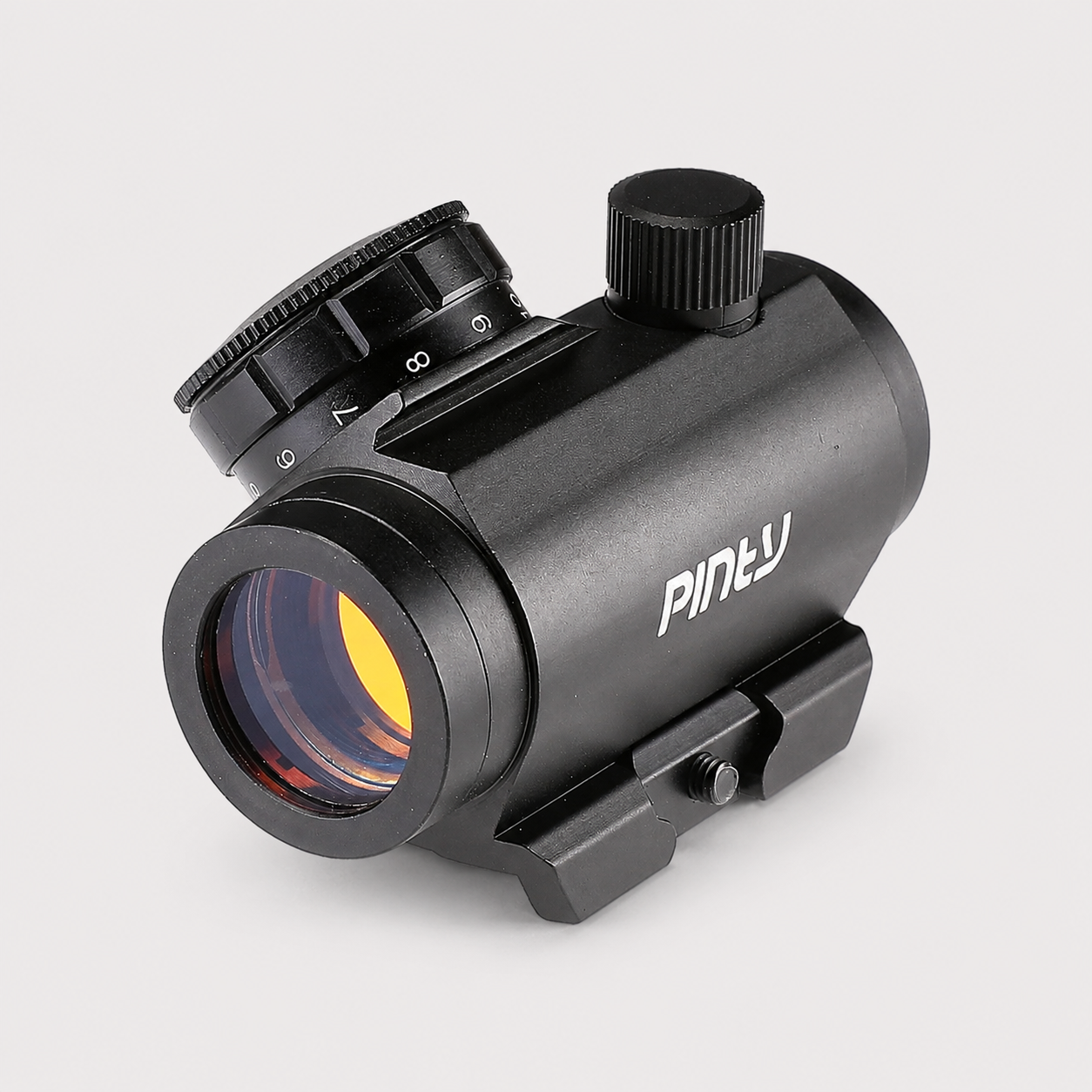
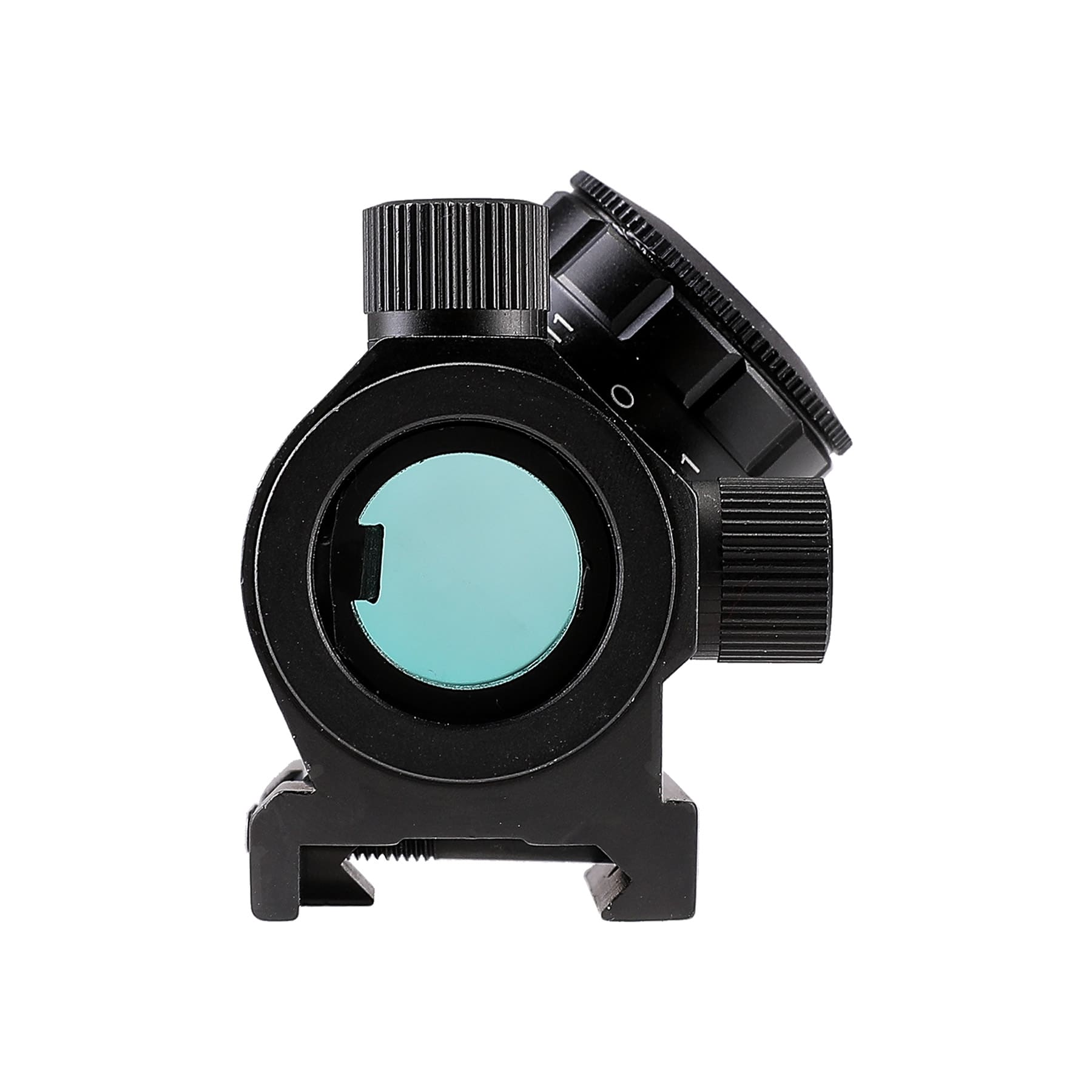
When choosing a red dot optic for a handgun, everyday carry (CCW), or home-defense pistol, you aren't just choosing a brand, you are choosing how your brain and eyes interact with a glowing target marker under stress.
The debate between 2 MOA and 3 MOA is the most common crossroads for shooters. However, to make the absolute best choice for your pistol, you also need to understand how these sizes stack up against massive 6 MOA dots, complex Circle-Dot reticles, and the physical reality of eye conditions like astigmatism.
What is MOA?
Before picking a side, we need a quick refresher on what MOA actually means. MOA stands for Minute of Angle, a unit of measurement for angular distance.
In practical terms, 1 MOA covers roughly 1 inch of a target at 100 yards. As distance changes, the physical area covered by that dot scales proportionally.
5 Most Common Red Dot Reticle Types
|
Distance |
2 MOA Dot Covers |
3 MOA Dot Covers |
|
100 Yards |
2.0 inches |
3.0 inches |
|
50 Yards |
1.0 inch |
1.5 inches |
|
25 Yards |
0.5 inches |
0.75 inches |
|
10 Yards (Typical CCW) |
0.2 inches |
0.3 inches |
Is 3 MOA better than 2 MOA?
The answer depends entirely on your platform. On a rifle or carbine where you might shoot past 100 yards, a 2 MOA dot is usually preferred. But for a pistol, a 3 MOA dot is frequently considered better by instructors and defensive shooters.
Because a pistol has a short sight radius and is fired at arm's length, your window of view (the optic window) is relatively small. A 3 MOA dot gives you a slightly larger, brighter flash of color that your eye can register quickly during a rapid draw stroke.
Choosing the Best MOA for Pistol Red Dot Sights
|
Distance |
2 MOA Dot Visual Impact |
3 MOA Dot Visual Impact |
|
at 100 Yards |
( • ) Covers 2 inches. Leaves plenty of target visible for precise, long-range holds. |
( ● ) Covers 3 inches. Slightly bolder, beginning to obscure smaller targets. |
|
at 25 Yards |
(·) Covers 0.5 inches. Extremely crisp; ideal for clean B8 bullseye shooting. |
(•) Covers 0.75 inches. Bolder anchor, faster to track during heavy handgun recoil. |
|
at 7 Yards (CCW) |
( ) Covers 0.14 inches. Pinpoint spec; requires a highly consistent draw stroke to index. |
(·) Covers 0.21 inches. Provides a highly visible, quick-to-acquire flash of color under stress. |
Which One Wins the Battle?
Go with the 2 MOA if your priority is squeezing out every ounce of accuracy, shooting past 50 yards, or running a magnifier on a long gun. It forces you to be a more precise shooter.
Go with the 3 MOA if you are putting this optic on a defensive pistol or an everyday carry (CCW) setup. When adrenaline spikes, your brain wants a bigger, brighter visual anchor to overlay on the threat immediately, and the 3 MOA delivers that speed without sacrificing practical accuracy.
2 MOA vs. 3 MOA: Pros & Cons
|
Dot Size |
Pros |
Cons |
Best Application |
|
2 MOA (The Precision Surgeon) |
• Maximum Target Visibility: Covers less of the target (only 2 inches at 100 yards), allowing you to see fine details. • Superior at Distance: Enables much tighter shot groups at 50, 100, or more yards. • Magnifier Compatible: Pairs perfectly with 3x or 4x flip-to-side magnifiers without blooming into a massive blob. |
• Slower Eye Acquisition: Can take a fraction of a second longer for your eye to track during high-speed target transitions. • Easier to Wash Out: A tiny dot can occasionally get lost or drowned out under blinding midday sun or high-lumen weapon lights. • Unforgiving Draw: Requires a highly consistent, practiced draw stroke to index instantly on a pistol. |
• Rifles & Carbines • Precision Rimfire • Competition/Target Handguns • Long-range shooting (50+ yards) |
|
3 MOA (The Balanced Generalist) |
• Faster Presentation: A slightly larger, bolder dot that your eye registers more quickly when punching the gun out. • Excellent Visibility: Highly resilient against washing out in bright sunlight or intense white light conditions. • The Perfect Hybrid: Strikes the ultimate compromise between close-quarters defensive speed and acceptable medium-range accuracy. |
• Slight Loss of Precision: Covers more of the target (3 inches at 100 yards), which can obscure smaller bullseyes. • Sub-optimal for Magnification: Sub-optimal when paired with high-power magnifiers, as a 3x magnifier turns it into a hefty 9 MOA dot. |
• Everyday Carry (CCW) • Duty/Service Pistols • Home-Defense PCCs • Close-to-medium range (0 to 50 yards) |
2 MOA vs. 3 MOA vs. 6 MOA
If you are struggling to choose between 2 and 3 MOA, it helps to look at the far end of the spectrum: the 6 MOA dot.

2 MOA: The Surgeon
The 2 MOA dot is the precision shooter's dream, earning its reputation as "The Surgeon" of reticle sizes. This size is ideal for competition pistols, formal target shooting, and crossover optics that might transition between a handgun and a rifle. Because it covers very little of the target, it allows you to consistently shoot the exact centers out of bullseyes at extended distances. However, the trade-off for this pinpoint precision is speed; because the dot is so small, it requires an excellent, highly consistent draw stroke and perfect presentation to find instantly in your window.
3 MOA: The Balanced Generalist
Stepping up slightly, the 3 MOA dot acts as "The Balanced Generalist" and is widely considered the gold standard for a duty or defensive pistol. It strikes a flawless compromise between raw speed at close quarters and acceptable accuracy at moderate distances ranging from 25 to 50 yards. It gives your eye a slightly larger, more intuitive anchor to track during heavy handgun recoil without completely obscuring your target when you need to slow down and take a precise shot.
6 MOA: The Speed Demon
For those prioritizing raw acquisition speed above all else, the 6 MOA dot reigns supreme as "The Speed Demon." To put its size into perspective, it covers a clean 0.6 inches of your target at a typical 10-yard defensive distance. This makes the dot incredibly bright, virtually impossible to miss upon drawing, and exceptionally easy to track across the window during rapid fire. For these reasons, it is heavily favored by competitive USPSA and IDPA shooters competing in carry optics divisions, as well as anyone dealing with aging eyes or severe astigmatism.
3 MOA vs 6 MOA Red Dot Reticles
The CCW Factor: Everyday Carry Realities
For a Concealed Carry Weapon (CCW), your primary focus is speed to first hit under extreme stress.
When your adrenaline spikes, your fine motor skills deteriorate. Finding a tiny 2 MOA dot inside a small micro-compact optic window (like a Holosun 407K or Shield RMSw) can be challenging if your grip presentation isn't 100% perfect.
A 3 MOA or larger dot is highly recommended for CCW because it is more forgiving of an imperfect draw context (e.g., shooting from an awkward position, one-handed, or on the move). Furthermore, a larger dot is less likely to be completely drowned out by a high-output weapon-mounted flashlight or direct, mid-day sunlight.
3 MOA vs. Circle-Dot Reticles
When moving beyond standard dot sizes, the choice often comes down to a traditional single aiming point versus a multi-reticle system—most famously exemplified by the Circle-Dot configuration (typically a 2 MOA center dot surrounded by a large 32 MOA outer ring, as visualized in the image.

While both systems are highly effective for pistol applications, they cater to fundamentally different visual preferences and shooting styles.
3 MOA Dot
You Prefer a Clean, Uncluttered Sight Picture: A single 3 MOA dot offers a minimalist presentation. There are no extra rings or hash marks to block your view of the target, making it much easier to track small, moving targets or focus entirely on a specific zone of a threat.
You Find Multi-Reticle Systems Distracting: Many shooters experience visual "noise" when using a circle-dot reticle inside a compact or micro-compact pistol window. Because the glass on a concealed carry optic is relatively small, a large 32 MOA ring can occupy a massive portion of your field of view, causing some users to over-focus on the reticle rather than threat-focusing on the target.
You Want Predictable Battery Life: Projecting a single 3 MOA dot requires significantly less power from the emitter than lighting up a complex ring-and-dot matrix. If maximizing battery longevity without relying heavily on auto-off features is a priority, a standard dot is the more efficient choice.
Circle-Dot Reticle
You Want a "Cheat Code" for Speed: Under extreme stress or from unconventional shooting positions (like shooting from retention, one-handed, or while on the move), your draw presentation might not be perfectly aligned. With a single dot, an imperfect draw means the dot is hidden somewhere outside the window. With a Circle-Dot, the massive 32 MOA outer ring is so large that it will almost always appear somewhere in the glass, serving as an instant visual funnel that guides your eye directly to the center.
You Want the Best of Both Worlds: The circle-dot behaves like a hybrid optic. For close-quarters, high-speed defensive encounters (0 to 7 yards), you can simply place the large outer ring on the mass of the target and break the shot—simulating the incredible acquisition speed of a massive 6 MOA or 8 MOA dot. However, if you need to make a precise hostage-rescue or long-range shot, you still have that crisp, tiny 2 MOA center point to work with.
You Have Trouble Tracking the Dot During Recoil: For newer red dot shooters, the dot often completely disappears from the window during the slide's violent cycle. The sheer height and width of the outer circle help your peripheral vision keep tabs on the reticle as the gun tracks upward and settles back down, allowing for faster follow-up shots.
Astigmatism Factor: Red Dot Distortion
If you have an astigmatism (an imperfection in the curvature of your eye’s cornea or lens), a red dot will rarely look like a perfect, crisp circle. Instead, it might look like a starburst, a comet, or a cluster of grapes.
This physiological quirk changes the rules of the MOA debate:
-
The 2 MOA: Many people think a smaller dot will blur less. In reality, because a 2 MOA dot is small, shooters often have to turn the brightness up to maximum to see it quickly. Cranking the brightness causes the light to "bloom," making the astigmatism starburst look significantly worse.
-
The 3 MOA & 6 MOA: A slightly larger dot allows you to run the optic at a lower, crisper brightness setting while maintaining high visibility. A 3 MOA or 6 MOA dot turned down to medium brightness often looks sharper to an astigmatic eye than a 2 MOA dot cranked to the max.
Green vs. Red
If you have severe astigmatism, consider a green dot instead of red. The human eye processes the color green more naturally, which frequently reduces perceived reticle distortion.
Which MOA is Best for a Pistol?
|
Reticle Option |
Best For... |
Key Advantages |
The Trade-offs |
Ideal Shooting Distance |
|
2 MOA Dot (The Surgeon) |
• Competition pistols • Precision bullseye shooting • Crossover optics (Rifle/PCC) |
• Maximum target visibility • Allows for extremely tight shot groups • Sharpest alignment past 25 yards |
• Slower to find under intense stress • Requires a highly consistent, perfect draw stroke |
25 to 100+ yards |
|
3 MOA Dot (The Balanced Generalist) |
• Everyday Carry (CCW) • Duty/Service pistols • Home-defense setups |
• Ultimate "do-it-all" versatility • Balanced blend of speed and precision • Resilient against bright daylight washouts |
• Slightly less precise at long ranges than a 2 MOA dot |
7 to 50 yards |
|
6 MOA Dot (The Speed Demon) |
• High-speed action shooting • Shooters with aging eyes • Heavy astigmatism sufferers |
•Lightning-fast target acquisition • Highly visible and tracks flawlessly in recoil • Can be run at a crisper, lower brightness setting |
• Will significantly obscure small targets past 25 yards • Poor choice for precision target shooting |
0 to 15 yards |
|
Circle-Dot Reticle (The Hybrid Matrix) |
• New red dot shooters • Dynamic defensive scenarios • One-handed/unconventional shooting |
• Built-in "cheat code" for an imperfect draw stroke • High-visibility outer ring for rapid close-quarters hits • Tiny center dot retained for precision |
• Creates extra visual clutter inside small windows • Higher battery consumption from driving more emitter power |
3 to 50+ yards |
FAQs
Is 3 MOA better for longer ranges?
No. For longer ranges, a smaller dot (like 2 MOA) is superior because it covers less of the target, allowing you to see fine details and place shots with extreme precision.
How big is a 2 MOA dot at 100 yards?
A 2 MOA (Minute of Angle) dot measures approximately 2 inches in diameter at 100 yards. Specifically, 1 MOA scales out to 1.047 inches per 100 yards, meaning a 2 MOA dot covers exactly 2.094 inches of your target at that distance. Because it scales proportionally with distance, that same 2 MOA dot will span roughly 1 inch at 50 yards and 4 inches at 200 yards.
What's a good MOA at 100 yards?
A "good" MOA at 100 yards depends heavily on the optic type and firearm platform you are running. For a magnifying rifle scope used in precision target shooting, a crisp 0.25 MOA or 0.5 MOA crosshair intersection is ideal for keeping your point of aim incredibly tight. If you are running an unmagnified red dot optic on a defensive carbine or pistol, a 2 MOA or 3 MOA dot is widely considered the sweet spot because it balances rapid visual acquisition with practical accuracy.
Is 10x enough for 1000 yards?
Yes, 10x magnification is entirely enough to hit a target at 1000 yards, provided the scope features tracking turrets and high-quality glass. For decades, the US Marine Corps and various military sniper systems successfully relied on fixed 10x optics (like the classic Unertl or Leupold Ultra) to engage silhouettes out to 1,000 yards. While modern precision shooters often prefer a variable scope cranking up to 15x or 25x to clearly distinguish small target zones, 10x magnification is historically proven for placing shots on torso-sized steel at that distance.
Can you shoot a 308 out to 1000 yards?
Yes, you can absolutely shoot a $.308$ Winchester round out to 1,000 yards, though it is widely considered the upper practical limit of the cartridge's ballistic performance. At that distance, a standard $.308$ bullet will go subsonic, causing it to lose stability and drop drastically, which requires the shooter to read the wind flawlessly and dial a massive amount of elevation holdover. While newer cartridges like the 6.5 Creedmoor cut through the air much more efficiently at extreme ranges, the heavy $.308$ remains a legendary, highly capable choice for 1,000-yard target disciplines if paired with a heavy match-grade bullet.
How many yards is a 3-9x40 scope good for?
A 3-9x40mm scope is traditionally considered a mid-range optic that excels at distances between 25 and 300 yards. It has earned its place as the most popular big-game hunting scope configuration because it pairs a wide field of view at 3x for close brush-shooting with enough magnification at 9x to clean up target details on a deer at 250 to 300 yards. While an experienced shooter utilizing dialable turrets can stretch high-quality 9x glass further, 300 yards is the standard practical ceiling for the average marksman.
Is it better to zero at 100 or 200 yards?
Choosing between a 100-yard and a 200-yard zero depends on your environment and how you intend to manage bullet drop. A 100-yard zero is the standard baseline for precision target shooters and flat-range carbines because it minimizes the impact of atmospheric wind distortion during your initial sight-in and gives you entirely upward trajectory adjustments. Conversely, a 200-yard zero is heavily favored by open-country hunters using standard rifle calibers; it creates a "maximum point-blank range" where the bullet flies slightly high at 100 yards and slightly low at 250 yards, allowing you to shoot straight at the vital zone of big game without dialing a single turret.

Share:
LPVO vs Red Dot with Magnifier: Pros, Cons & Key Differences
2 MOA vs 6 MOA Red Dot: Comparison Guide for Pistols & EDC Optics