

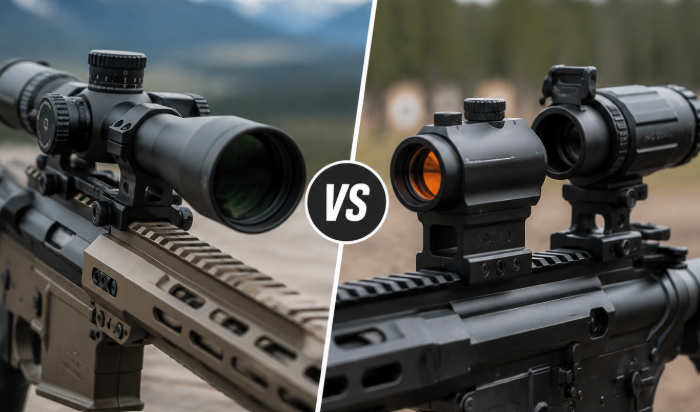
Choosing the right optic system for your rifle can feel like trying to find a one-size-fits-all vehicle. You want something that can handle a drag race but still climb over boulders. In the world of modern shooting, that debate usually boils down to two heavy hitters: the Low Power Variable Optic (LPVO) and the Red Dot Sight (RDS) paired with a flip-to-center Magnifier.
Both systems offer overlapping capabilities, but they approach the problem from completely opposite directions. To figure out which one belongs on your rifle, you have to break down the mechanics, the limitations, and the exact mission set you are training for.
Key Differences: LPVO vs. Red Dot + Magnifier

When you are configuring an air rifle for versatility, you will eventually find yourself staring at two distinct paths: a Low Power Variable Optic (LPVO) or a Red Dot Sight (RDS) paired with a flip-to-center Magnifier. Both systems claim to bridge the gap between close-quarters speed and mid-range precision, but they approach the problem from completely opposite mechanical starting points.
|
Feature |
LPVO (Low Power Variable Optic) |
Red Dot + Magnifier |
|
Primary Use Case |
Precision & distance (200–500+ yards) |
CQB, speed, & 0–200 yards |
|
1x Capability |
Uses true optical glass. Slower up close than a red dot. |
Unlimited eye relief, extremely fast both-eyes-open shooting. |
|
Reticle |
Etched glass (usable without batteries). Fine hash marks for precise distance holds. |
Projected dot (requires battery). Magnifying also magnifies the dot itself, covering small targets. |
|
Eye Box/Relief |
Very tight. You must align your head perfectly to see the picture. |
Very forgiving. You can aim from nearly any awkward angle or position. |
|
Weight |
Generally heavier due to complex glass, zoom mechanics, and heavy-duty mounts. |
Lighter overall. The magnifier can be detached or flipped aside instantly. |
|
Night Vision |
Difficult to use passively (behind the scope); requires an offset dot. |
Large windows make passive aiming with night vision incredibly easy. |
The Realities of 1x Magnification and Geometric Forgiveness
Many shooters assume that spinning an LPVO down to its "true 1x" setting turns it into a red dot. Physically, it doesn't.
An LPVO relies on a complex series of lenses inside a solid tube. This creates a restrictive eyebox and fixed eye relief. If your stock placement isn't perfect, or if you are forced to shoot from an awkward, compromised position (like underneath a vehicle or around a tight barricade), you will experience "scope shadow"—dark rings that cut off your sight picture.
A red dot sight, by contrast, uses a single plane of glass. There is no strict eye relief or tube alignment to worry about. If your posture is broken but you can see the dot floating inside the window, that is exactly where your round will impact. This makes the unmagnified red dot incredibly forgiving and unmatched for raw, close-quarters speed.
Reticle Functionality: Fine Lines vs. Bloated Dots
The way these rifle optics scale up in magnification drastically changes how you interact with a target at distance:
-
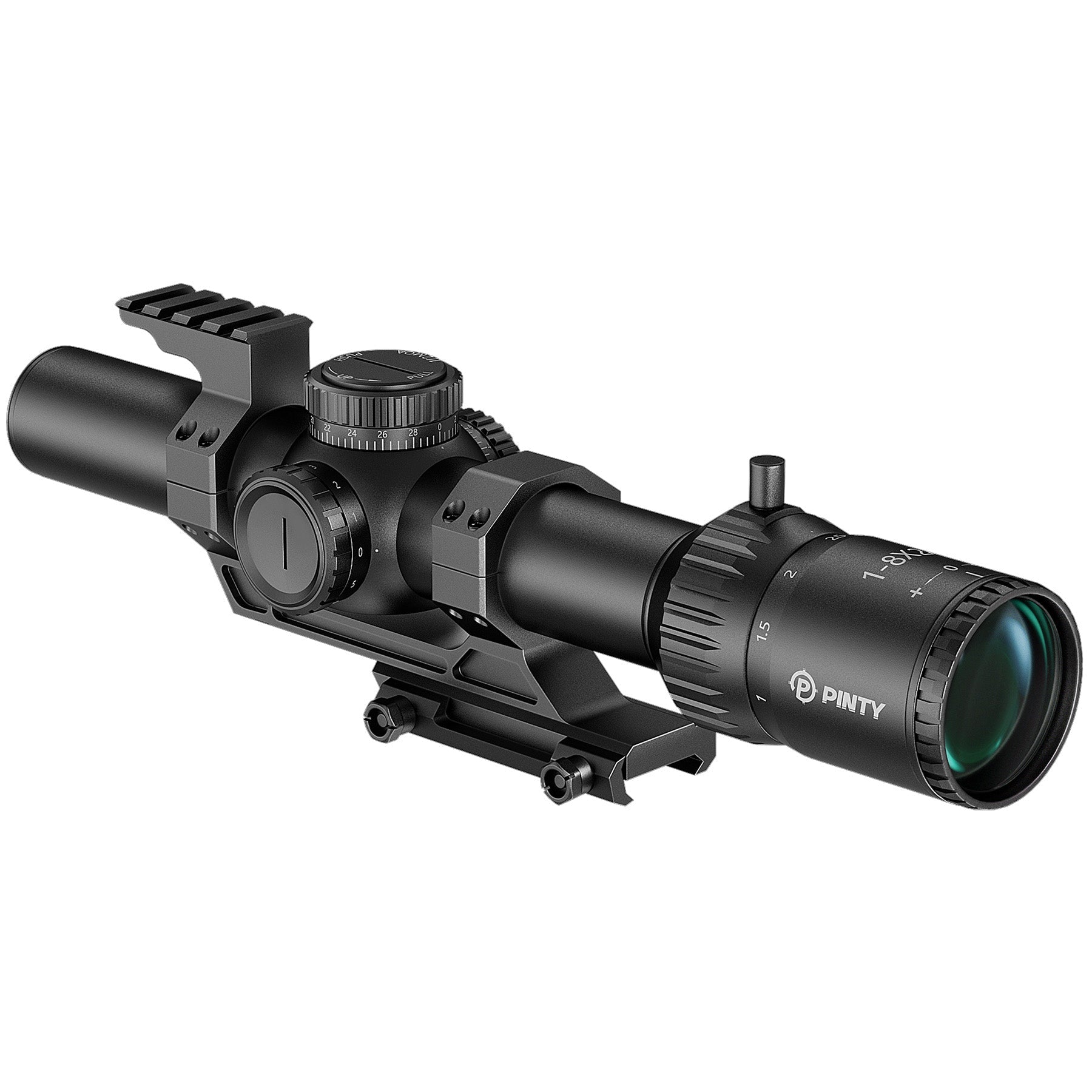
The LPVO utilizes an etched glass reticle (meaning it works even if your battery dies) featuring fine hash marks or a Bullet Drop Compensator (BDC). When you zoom in, the reticle stays crisp, allowing you to use precise holds for windage and elevation without obscuring small targets.
-
The Red Dot + Magnifier physically magnifies everything in the window. When you flip a 3x magnifier behind a 2 MOA red dot, you aren't just magnifying the target; you are also magnifying the dot to 6 MOA. At 300 yards, that bloated dot can completely cover a small target, making precise point-of-aim shots much more difficult.
Structural Flexibility and Night Ops
Weight and low-light capability are the final deciding factors for many modern setups. An LPVO is a permanent weight penalty on your rifle; its complex internal mechanics and heavy-duty mounts stay with you all day. A red dot and magnifier setup offers modularity—if you know you will be operating exclusively inside tight structures for a training evolution, you can detach the magnifier entirely to shed ounces.
Furthermore, if you use Night Vision Goggles (NVGs), trying to look through the rear glass of an LPVO passively is incredibly difficult, often forcing shooters to mount a secondary offset red dot just for night operations. A standalone red dot or holographic sight features a large, bright window that makes passive aiming with night vision seamless and immediate.
The Low Power Variable Optic (LPVO)
An LPVO is a scoped optic that typically scales from a true 1x magnification up to 6x, 8x, or even 10x. Think of it as a highly versatile, compact sniper scope designed for carbines.
Pros:
-
Superior Glass Clarity: LPVOs are built around high-quality traditional lens systems. This provides a crystal-clear image that allows you to truly Positive Identify (PID) targets at extended ranges—helping you distinguish between a threat holding a firearm and a civilian carrying a broom at 300 yards.
-
Advanced Reticles: LPVOs feature drop-down reticles (like BDC or mil-dot subtensions). If you need to dial or hold over for elevation and wind at 400 yards, you have a precise mathematical tool built right into your glass.
-
Night Vision/Thermal Compatibility: If you are running clip-on thermal or night vision devices in front of your optic, the structural engineering of an LPVO preserves image clarity without turning your sight picture into a grainy, blurry mess.
Cons:
-
The Eyebox and Scope Shadow: Because it is a traditional scope tube, your eyeball must maintain a precise relationship with the optical lens. If your face isn't perfectly squared away, you get scope shadow—dark rings that block your reticle and view.
-
Eye Relief and Parallax: You have a fixed distance you must maintain from the glass (eye relief). Furthermore, if you tilt the rifle or fail to align your eye perfectly through the center axis, parallax error can shift your point of impact.
-
Speed Penalty Up Close: While many LPVOs feature "true 1x" settings that mimic a red dot, the physical constraints of aiming through a long tube add variables. In close quarters, those variables cost fractions of a second.
The Red Dot + Magnifier Setup
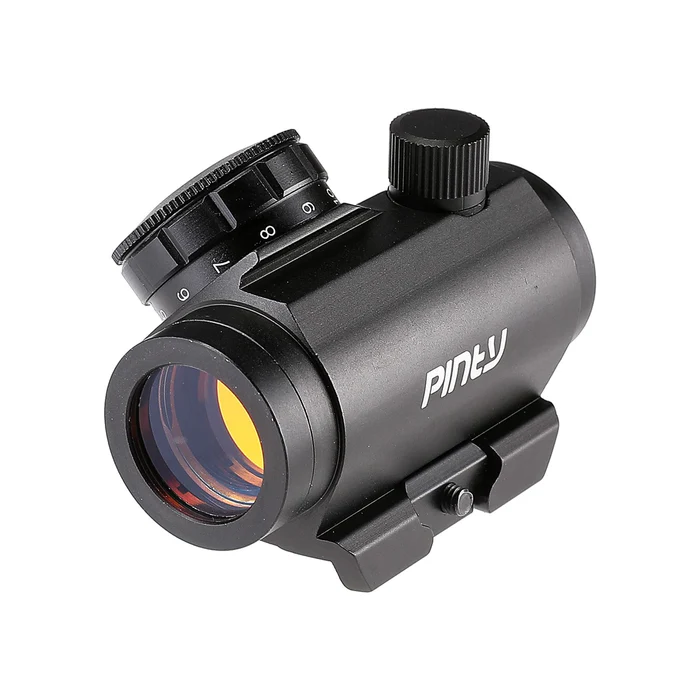
This system places a standard, non-magnified red dot or holographic sight as the primary optic, backed by a separate 3x or 4x magnifier on a flip-to-side or flip-to-center mount.
Pros:
-
Infinite Eye Relief: A red dot utilizes a single plane of glass. There is no strict eyebox. Even if you don't have a perfect shoulder purchase or if you are shooting from an awkward, compromised position, the dot floats in the window. If you see the dot on the target, you can take an accurate shot.
-
Speed in Close Quarters: For a primary assaulter or "number one man" entering a structure, tenths and hundredths of a second matter. Removing the variables of eye relief and scope shadow makes this system unmatched inside 50 yards.
-
Maximum Situational Awareness: Shooting a red dot allows you to easily keep both eyes open, maintaining full peripheral vision to track threats around your sight.
Cons:
-
Coarse Reticles: When you flip a 3x magnifier behind a red dot, you also magnify the dot itself. A 2 MOA dot becomes visually larger, which can obscure small targets at long distances. You generally lack the precise holdover trees found in specialized scopes.
-
Optical Stacking: You are looking through two separate pieces of chassis and glass. While highly effective out to 200 or 300 yards for mid-range marksmanship, it lacks the specialized low-light performance and crisp resolution of a dedicated LPVO tube when pushed to its limits.
How to Set Up an LPVO (The Right Way)
Because the LPVO can struggle in immediate, close-quarter contact, many shooters choose to mount a secondary micro red dot alongside it. However, how you mount it matters significantly.
The 45-Degree Offset vs. 12-Clock Top Mount
Many shooters experiment with a 45-degree offset mount on the side of their handguard. While it keeps the profile lower, it forces you to cant the rifle, breaking your natural shooting posture and mechanics right when a high-risk, close-up threat emerges.
Recommendation:
Mount the secondary red dot directly on top of your scope ring/mount (12 o'clock position). This keeps your shooting structure perfectly uniform. Even better, you can use the top red dot for "snap acquisition" at distance: use the upright dot to instantly find a far-off target, then simply drop your gaze down into the LPVO tube to take the precise, magnified shot.
The 80/20 Rule: Choosing Your System
There is no such thing as a perfect "one-size-fits-all" recce rifle. You cannot build an F1 race car that is also a rock-crawler; you must choose your compromise based on your primary role.
To make your choice, apply the 80/20 Rule: What is your primary responsibility 80% of the time, and what is your contingency 20% of the time?
|
Attribute |
LPVO System (with Top Red Dot) |
Red Dot + Magnifier System |
|
Primary Engagement Zone |
150 to 500+ Yards |
0 to 150 Yards |
|
80% Mission Focus |
Overwatch, Observation, PID, and Precision |
Entry, Close Quarters, Urban Streets, and Speed |
|
20% Contingency Capability |
Emergency Close-Quarters work via top dot |
Prone, deliberate shots out to 300 yards |
|
Mechanical Forgiveness |
Low (Requires perfect touchpoints/alignment) |
High (Allows tracking from awkward positions) |
FAQ
What is better, LPVO or red dot with magnifier?
An LPVO excels if your primary responsibility requires target identification, tracking, and precise shooting at mid-to-long distances (150 to 500 yards or more).
Conversely, a red dot with a magnifier is the superior choice if you spend most of your time operating in close quarters where maximum speed, wide peripheral vision, and mechanical forgiveness are your absolute priorities.
What are the disadvantages of using an LPVO?
The primary drawbacks of an LPVO stem from the physics of traditional rifle scopes: they are generally heavier, bulkier, and require stringent head-to-optic alignment.
This physical limitation creates an unforgiving eyebox and eye relief, meaning that if your stock placement isn't perfect or if you are forced to shoot from an awkward, compromised position, you will experience scope shadow (dark rings obscuring your view).
Additionally, they heavily rely on internal lens geometry, which introduces minor parallax errors and makes passive aiming through night vision goggles exceptionally difficult.
Is an LPVO as fast as a red dot?
No, an LPVO dialed down to a "true 1x" setting is fundamentally slower than a high-quality red dot sight. While a modern 1x scope glass can closely mimic a red dot, the shooter is still looking through a restrictive tube that demands proper head positioning.
A standalone red dot or holographic sight features a single plane of glass with infinite eye relief; if your shooting structure breaks down under stress but you can still see the dot floating anywhere inside the window, your round will connect, shaving off critical tenths of a second in close quarters.
Does the US military use LPVO?
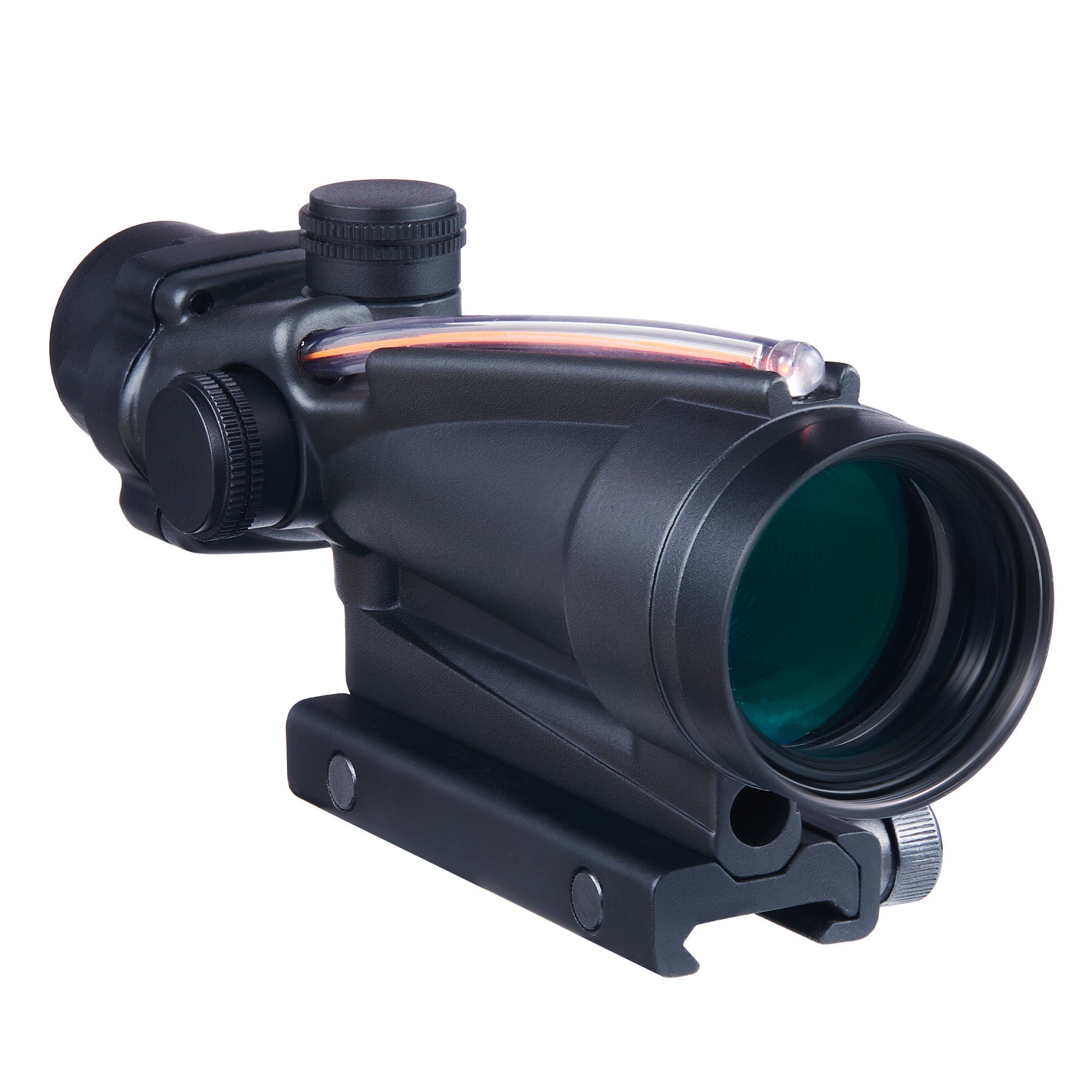
Yes, the U.S. military has widely adopted LPVOs to replace older fixed-power optics like the ACOG and standalone red dots for designated roles.
US SOCOM (Special Operations Command) heavily utilizes the Vortex Razor HD Gen III 1-10x on combat carbines like the M4A1 and the M5 rifle, while the broader U.S. Army fields the Sig Sauer TANGO6T 1-6x as their standard Squad Designated Marksman Rifle (SDMR) optic.
This widespread adoption allows frontline troops to maintain rapid close-range response while gaining the necessary magnification to confidently spot and engage threats out to 600 meters.
What sight do navy seals use?
Navy SEALs do not use a single, mandated optic; instead, they select their sight based on individual preference and specific mission requirements.
For close-quarters battle (CQB) and maritime interdiction, holographic sights like the EOTECH EXPS series or micro red dots like the Aimpoint Micro T-2 are highly favored due to their massive windows, speed, and exceptional performance under night vision.
For general reconnaissance or overwatch roles where target identification is paramount, SEAL operators will routinely field high-end LPVOs like the Vortex Razor HD Gen III 1-10x or precision scopes from Nightforce.
What magnification for a 300 yard shot?
For a 300-yard shot on a human-sized target, a magnification range of 3x to 6x is widely considered the sweet spot for military and tactical applications.
While a skilled marksman can accurately hit a target at 300 yards using a standard, unmagnified 1x red dot, flipping a 3x or 4x magnifier into place drastically improves target identification and precision.
If you are using an LPVO, dialing up to 6x provides a perfectly crisp view of the target while leaving enough field of view to track movement and read environmental wind conditions.
What distance is an LPVO good for?
An LPVO is highly effective across a massive envelope, spanning from 0 out to 600+ yards. While it can certainly handle emergency close-quarters work at 1x magnification, its real utility begins around the 150-yard mark and extends to the mechanical limits of the carbine's cartridge.
At these extended distances, dialing the scope up to 6x, 8x, or 10x allows the shooter to utilize the fine drop-down and windage holdovers etched directly into the glass, ensuring highly predictable point-of-impact accuracy.
Do police use LPVO?
Yes, law enforcement agencies and individual officers are rapidly transitioning to LPVO setups for their duty patrol rifles.
As real-world active shooter and perimeter scenarios evolve, patrol officers are increasingly expected to make highly accountable, precise shots in crowded, high-stakes environments where an absolute Positive Target Identification (PID) is required.
The ability to utilize a 1x setting for close-range building entries, while instantly scaling up to 6x to accurately assess a threat behind a distant vehicle barricade, makes the LPVO an invaluable tool for modern policing.
Do I need a red dot with my LPVO?
While you do not strictly need one, running a secondary micro red dot alongside an LPVO is highly recommended to mitigate the scope's close-range limitations.
Mounting a small red dot at the 12 o'clock position (on top of your scope mount) allows you to instantly track and engage unexpected, close-range threats without breaking your shooting posture or messing with your magnification ring.
Furthermore, this dual setup lets you use the upper red dot for "snap target acquisition" at a distance—aligning the dot onto a far-off target instantly before dropping your eye straight down into the magnified scope tube to take the shot.



Share:
The Pinty "Buster" PCP Air Pistol: Shockingly Cheap, Surprisingly Good
2 MOA vs. 3 MOA Red Dot: Which Reticle Size Is Best?