


Choosing between pcp vs break barrel air rifles is almost always a hurdle for any new airgunner. Both systems have a dedicated following because they solve different problems for the shooter.
However, the right approach is to take the time and understand what each air rifle offers, what its strengths/weaknesses are, and how well that matches what you want in an air rifle.
Understanding these differences will help you spend your money wisely and enjoy your time at the range. Each platform has specific strengths that cater to different styles of shooting.

PCP Air Rifles: Key Features and Advantages
A PCP air rifle uses a high-pressure air tank located under the barrel or in the stock to power each shot. These tanks are typically filled to pressures between 2,900 and 4,350 PSI using a hand pump or a compressor.
Because the air is already stored, you only need to pull a side lever or bolt to chamber a pellet. Also, you can stay on target and watch your pellet impact the mark through your optics.
Advantages of a PCP Air Rifle
- Multi-Shot Magazines: Most models use a circular magazine that allows for rapid follow-up shots.
- Superior Accuracy: The lack of internal movement during the shot cycle leads to much tighter groups at long range.
- Adjustable Power: Many modern rifles allow you to tune the air flow for different pellet weights.
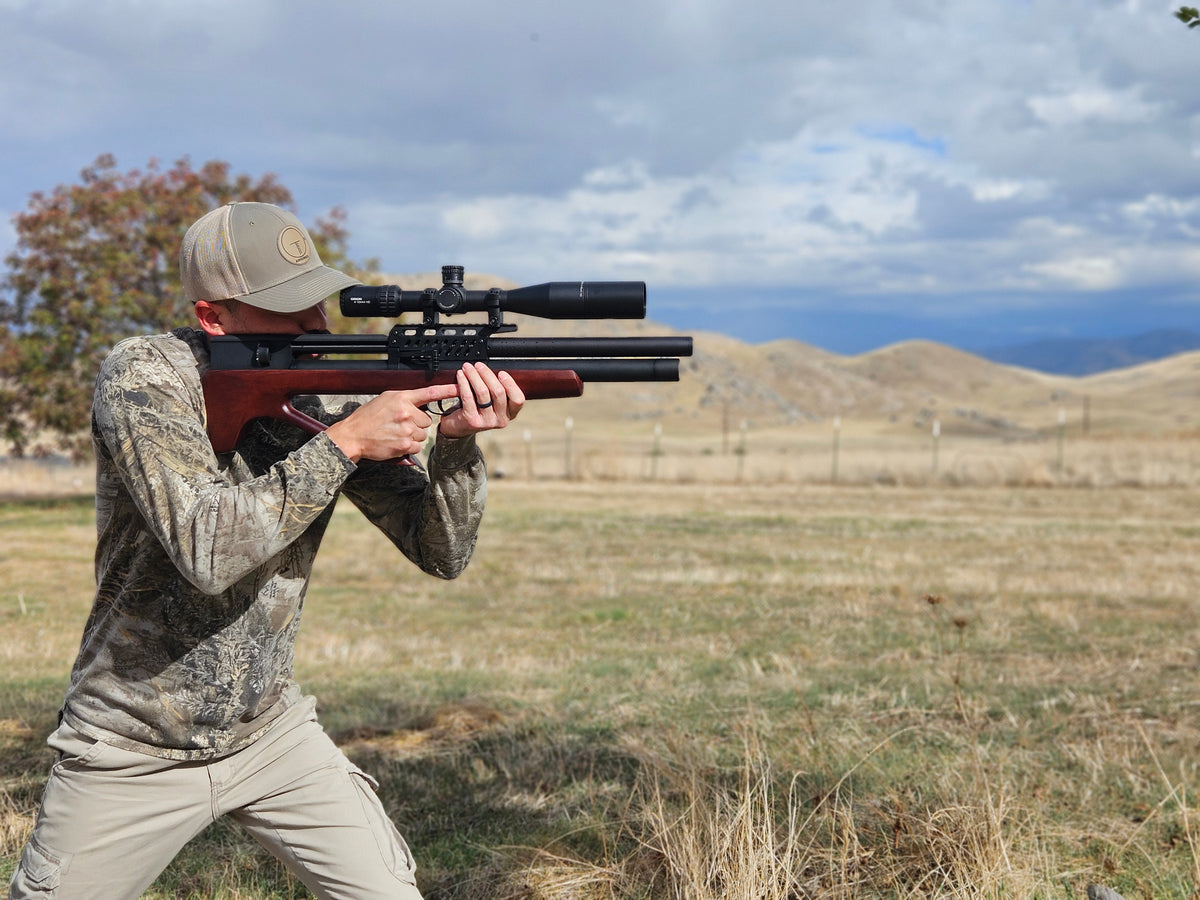
PCP air rifles are the go-to choice for competitive benchrest shooting and long-range small game hunting. You get a level of precision that feels more like a rimfire rifle than a traditional pellet gun. It's a sophisticated way to shoot that rewards the marksman who values consistency.
Explore PCP air rifles for hunting.
Break Barrel Rifles: Key Features and Advantages
A break-barreled rifle relies on a large internal spring or a gas piston to compress air at the moment you pull the trigger. You simply grasp the barrel and pull it downward until it clicks, which compresses the mainspring and opens the breech. It is the most common design for entry-level shooters because the gun is the only equipment you need.
Advantages of a Break Barrel Air Rifle
- Simplicity: There are fewer O-rings and valves to fail compared to a complex pneumatic system.
- Cost-Effective: You can buy a high-quality break barrel for a fraction of the cost of a full PCP setup.
- Reliability: These rifles can sit in a closet for years and still fire perfectly the moment you cock the barrel.
- Independence: You are not tethered to a dive shop or a noisy electric compressor.
Many shooters find the mechanical feedback of a spring-piston rifle to be very satisfying. It requires a specific technique called the artillery hold to master the unique recoil.
Once you learn how to handle the jump, you can achieve impressive results at moderate distances. It's a classic way to enjoy the sport without the technical overhead of a high-pressure system.

PCP vs Break Barrel Rifles: Key Differences
Comparing pcp vs break barrel air rifles shows two very different philosophies in airgun design, the most obvious being how each air rifle stores energy.
A PCP relies on a high-pressure air tank filled to 3,000 PSI or more. A break barrel, on the other hand, uses a physical spring that you compress manually for every single shot. This leads to a massive gap in how much effort it takes to shoot accurately.
Because there is no heavy piston slamming forward, PCP rifles are much easier to shoot from a bench or a bipod. A break barrel vs PCP comparison usually highlights the "recoil" or "jump" found in springers.
Explore more about what air rifles shoot.
PCP vs Break Barrel Air Rifles: Minor Differences
- Rate of Fire: PCP rifles often use magazines, allowing you to fire ten shots in seconds.
- Consistency: Regulated PCP air rifles provide the exact same air pressure for every pellet.
- Maintenance: Break barrels are simple and rugged, while PCPs have many O-rings that can eventually leak.
- Noise: Many modern PCP rifles come with integrated shrouds that make them much quieter than a mechanical spring.
- Portability is another area where these two platforms diverge quickly. You can grab a break barrel and a tin of pellets and walk into the woods for hours.
- With a PCP, you always have to keep an eye on your pressure gauge. If you run out of air in the field, your day is over unless you carry a heavy hand pump.
PCP vs Break Barrel: Pros and Cons Comparison
- PCP Pros: Extreme precision, no recoil, multi-shot magazines, and very quiet operation.
- PCP Cons: High initial cost, requires a pump or compressor, and has more potential leak points.
- Break Barrel Pros: Lowest cost of entry, no extra gear needed, and very rugged construction.
- Break Barrel Cons: Significant recoil, single-shot only, and requires more physical effort to cock.
The pcp vs break barrel power debate often comes down to how that energy is delivered to the pellet. A PCP can maintain high power across many shots without the mechanical vibration of a spring. Break barrels can be powerful, but that power often comes with a much harder "kick" that can be tough on scopes.

PCP vs Break Barrel: Which One Best Fits Your Needs?
Choosing between these two platforms depends on how you plan to spend your time. If you want a rifle for serious target competition, you will likely gravitate toward a pre-charged system. However, if you want a reliable tool for occasional pest control in the garden, a break barrel might be the better fit.
How much gear you want to manage also matters: Some shooters love the technical side of high-pressure air and compressors. Others just want to grab a rifle and a tin of pellets and start shooting immediately.
Choose a PCP if:
You should choose a PCP if you prioritize long-range accuracy and rapid follow-up shots. PCP air rifles, specifically models with bigger pressure tanks, are perfect for small game hunters who need to take out multiple targets quickly without spooking them.
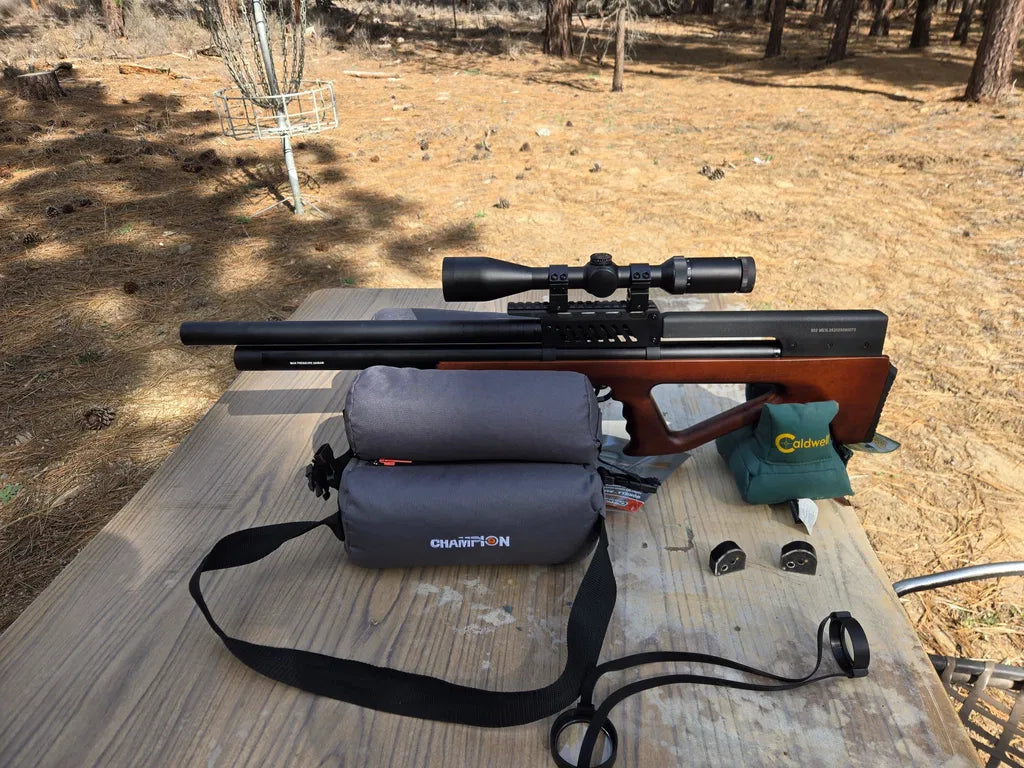
If you have the budget for a high-pressure pump or a compressor, the performance is unmatched. Pinty's Vanguard .177/.22 Cal Air Rifles, for example, feature high-velocity .177 (880 fps) for flat trajectories or hard-hitting .22 (760 fps). A built-in regulator ensures consistent precision.
The 100 cc tank delivers 25-30 shots, dual mags, and a sidelever enable fast follow-ups. Integrated silencer, adjustable hammer spring, and 11 mm dovetail rail complete the package.
Choose a break barrel if:
A break barrel is the right choice if you value simplicity and independence above all else. You never have to worry about a dead battery in a compressor or an empty carbon fiber tank. It is the ultimate "grab and go" rifle for casual plinking or property maintenance.
- The lower entry price makes it accessible for beginners who are just testing the waters of airgunning.
- You also avoid the long-term cost of O-ring replacements and specialized technical service. It is a rugged, reliable tool that lasts for decades with basic care.
 Final Thoughts on PCP vs Break Barrel Air Rifles
Deciding on pcp vs break barrel air rifles is a personal choice based on your goals. If you want the peak of modern precision and rapid fire, go with a PCP. It offers a smooth experience that makes hitting small targets at long range much easier for any shooter.
However, if you want a reliable tool that never needs a pump, the break barrel is king. It is a simple, rugged, and independent way to enjoy the sport of airgunning. Both platforms have earned their place in the cabinet of every serious marksman.
You may also be interested in how to fill a PCP air rifle, and whether that should be a consideration when choosing between a PCP and a break barrel.




Share:
How to Mount a Bubble Level on a Rifle Scope
How to Choose a PCP Air Rifle for Coyote Hunting