


If you've ever tried to put a high-power scope on a modern sporting rifle, you've likely run into a major space issue. Standard rings often don't leave enough room to push the optic forward for a comfortable view. This is usually where you find out you need a cantilever scope mount.
A cantilever is a specialized, one-piece mounting system that uses an offset base to push the scope rings out past the actual mounting point. This design is built to solve the unique geometry problems found on flat-top receivers with limited railspace.
It's the industry standard for a reason. By moving the optic forward, you're ensuring your rifle setup is both ergonomic and reliable for a long time.

Why Use a Cantilever Scope Mount?
You might wonder why you can't just use standard rings on a flat-top rifle. The reality is that your eye needs to be a specific distance from the glass to see a clear image. This is exactly why asking what a cantilever scope mount is becomes so important for your build.
Key Advantages
The biggest benefit is achieving proper eye relief without bridging your optic across the handguard. If you mount a scope half on the receiver and half on the rail, your zero will shift as the rifle heats up.
- Moves the optic forward for better eye relief on collapsible stocks.
- Keeps the mount entirely on the receiver for maximum stability.
- Reduces the risk of scope tube damage from misaligned rings.
- Provides a consistent height that's usually perfect for a lower third co-witness.
A cantilever scope mount allows the entire base to stay on the rock-solid receiver while pushing the glass forward, and also simplifies the mounting process because it's a single, rigid unit.
You don't have to worry about aligning two separate rings perfectly to avoid pinching the scope tube. This one-piece design offers superior strength and better return-to-zero capability if you ever need to swap optics.
Key Disadvantages
While they're great, these mounts can be a bit heavier than a set of lightweight individual rings. That extra material in the offset arm adds a few ounces to your overall rifle weight.
- Every ounce counts if you're building an ultralight mountain rifle.
- They also sit at a fixed height, which might not work for every shooter's facial structure.
You're generally stuck with whatever height the manufacturer decided on during production. This means you might need a cheek riser if the mount sits too high for your specific stock.
- Adds more overall weight to your rifle compared to lightweight rings.
- Offers less flexibility for height adjustments once the mount is purchased.
- Can be more expensive than a basic pair of Weaver or Picatinny rings.
- Limited utility on traditional bolt-action rifles with shorter rail space.
It’s all about trade-offs when you're setting up a precision carbine. Knowing these limits helps you decide if it’s the right move for your build.

Are Cantilever Scope Mounts Better than Scope Rings?
It really depends on the platform you're shooting today. If you're running a bolt-action hunting rifle, standard scope rings are usually the superior choice because the receiver is plenty long. You'll have all the space you need to slide the optic until the eye relief is perfect.
However, the game changes on a modern sporting rifle. A cantilever scope mount AR-15 setup is almost always better because the receiver is so short. If you try to use standard rings on a carbine, you'll likely find your nose pressed right against the charging handle.
- Stable mounting platform for high-stress use
- Simple installation process
- Eliminates ring alignment issues
- Sleek, professional look
Using a one-piece mount also adds structural rigidity that separate rings just can't match. This setup acts as a single bridge that keeps your optic from shifting under heavy recoil. You're getting a much more durable connection between your glass and your receiver.
A cantilever mount also hangs the front of your scope over the handguard without actually touching it. This clears up valuable real estate on your upper receiver for other essential gear. It's the most efficient way to maximize space on a compact tactical build.

Choosing the Best Cantilever Scope Mount for Your AR-15: Top Tips
Picking the right hardware is about more than just finding a pretty color. You've got to ensure the mount matches your optic's tube diameter exactly. Most modern LPVOs use a 30mm tube, but some older or high-power scopes might require 1-inch or 34mm rings.
You also need to check the forward offset distance for your specific stock setup. If you run your stock fully collapsed, you'll need a mount with a more aggressive cantilever to push the glass forward. This is how you avoid that awkward "turkey neck" position while aiming.
- Verify your scope's tube size before you buy
- Match the mount's height to your preferred cheek weld
- Look for high-quality aluminum construction
- Choose a mount with enough clamping surface area
Torque settings are another huge factor for a reliable build. You're going to want a mount that lists specific inch-pound requirements for the base and the ring caps.
Over-tightening can crush your scope tube, while under-tightening will cause your zero to wander. It's also worth looking for a mount that features an integrated bubble level, as this helps you keep the rifle perfectly vertical for long-range shots.
Best 30mm Cantilever Scope Mount from Pinty
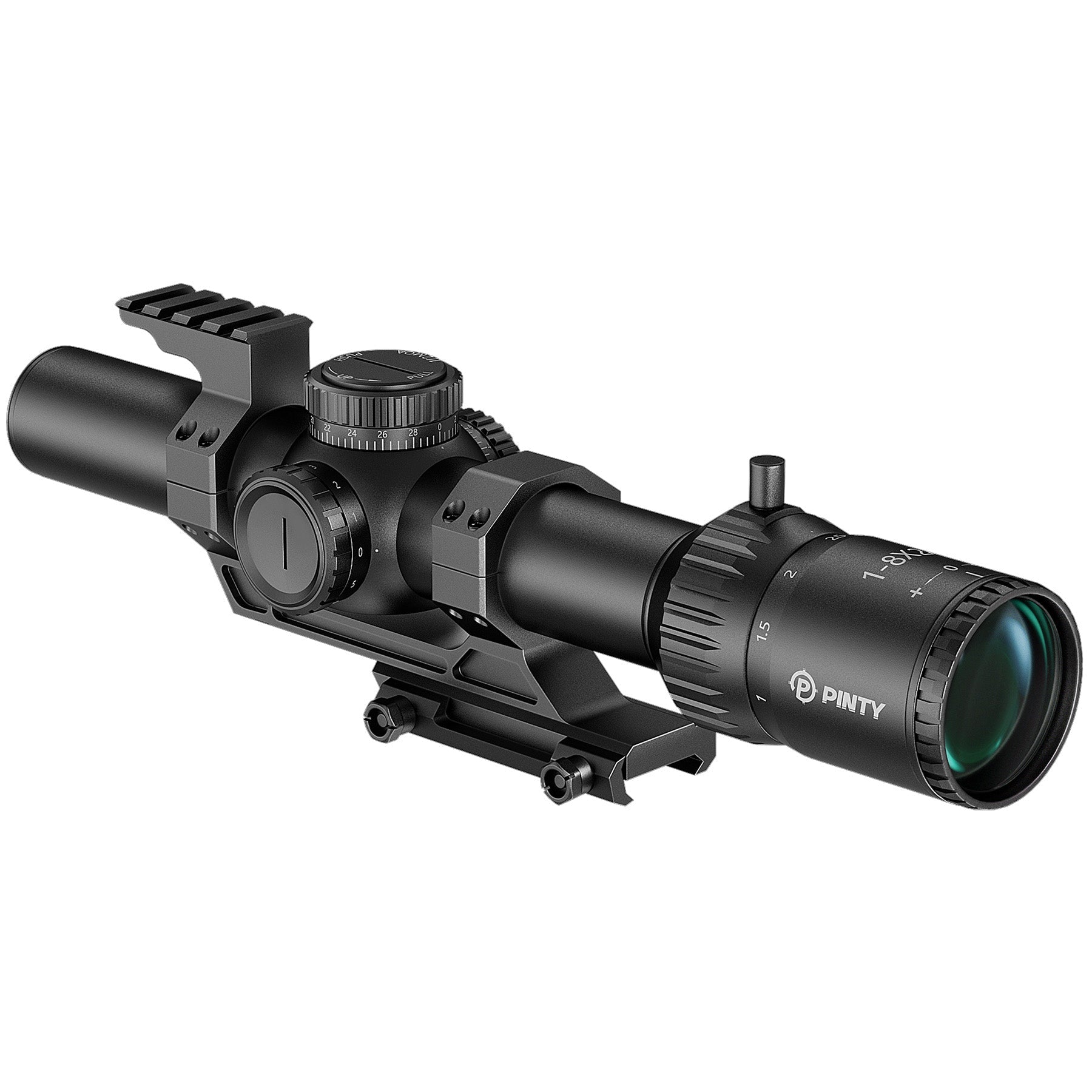
Pinty offers several rock-solid Cantilever scopes that won't break your budget. The designs focus on the core needs of every shooter, providing durability and a perfect 1.5-inch height for your AR. You'll find that these mounts are built from high-strength aluminum to handle the recoil of a 5.56 or even a .308 build.

The Pinty 30mm Cantilever Scope Mount is their flagship model for modern carbines, and it features a two-inch forward offset to give you that much-needed eye relief on a flat-top receiver.
This is the best cantilever scope mount for anyone looking to save money without sacrificing zero-holding reliability.
- Pinty 30mm Pro Mount: Features six-bolt rings for maximum clamping force on heavy optics.
- Pinty Quick-Detach Series: Includes adjustable levers for fast removal and reattachment.
- Pinty Slim-Line Mount: A lightweight, skeletonized design for those watching every ounce.
If you're using a standard LPVO, the 30mm cantilever scope mount is exactly what you'll need. It provides a clean, snag-free profile that won't catch on your gear while moving through the brush. Each mount uses a high-quality finish to resist scratches and environmental wear over time.
Final Thoughts on Cantilever Mounts
Choosing a Pinty mount means you're getting pro-level features at a price that leaves room for more ammo. These mounts take the guesswork out of your build by providing a stable, repeatable platform. It's the simplest way to finish your rifle and get out to the range for some real trigger time.
You may also be interested in how to use a bore sighter and how that can help you get more out of your rifle.




Share:
Red Dot Sights vs Laser Sights Explained
Regulated vs Unregulated PCP Air Rifles: What is the Difference?