

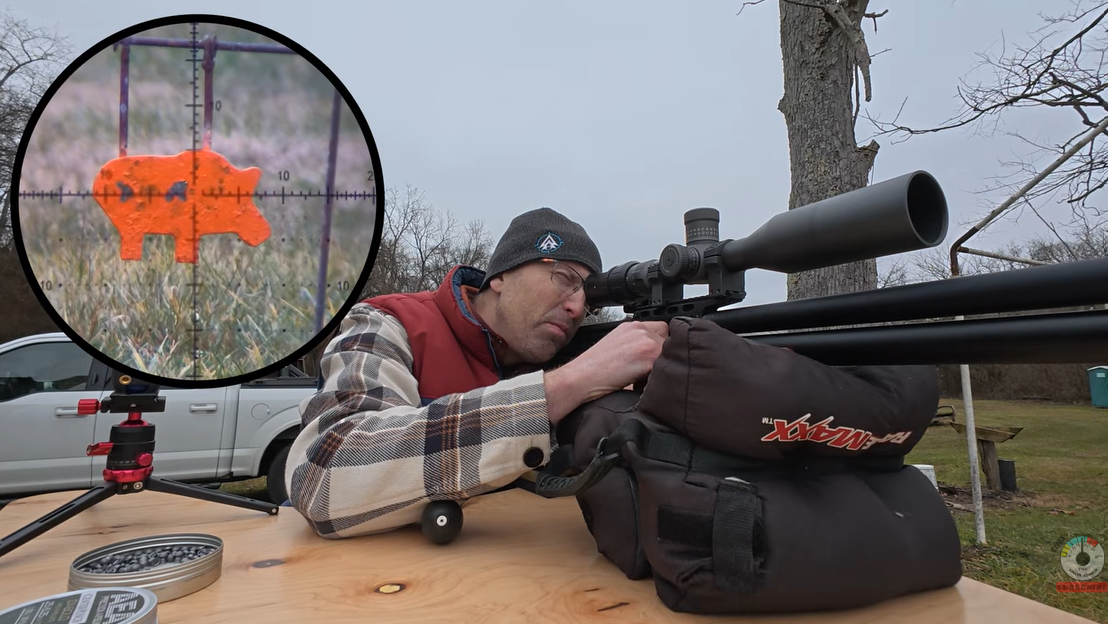
What’s going on air gunners? Today we’re putting the Pinty Striker in .25 caliber under the microscope to separate real-world performance from marketing hype. On paper, this budget PCP promises regulated consistency, respectable power, and a price tag that’s hard to ignore. But specs only matter if the rifle performs where it counts — on the chronograph and at the range.
We took the Pinty Striker through velocity testing, shot count testing, and 50-yard accuracy sessions to see whether this entry-level PCP actually deserves a place in your gun safe.
First Impressions of the Pinty Striker
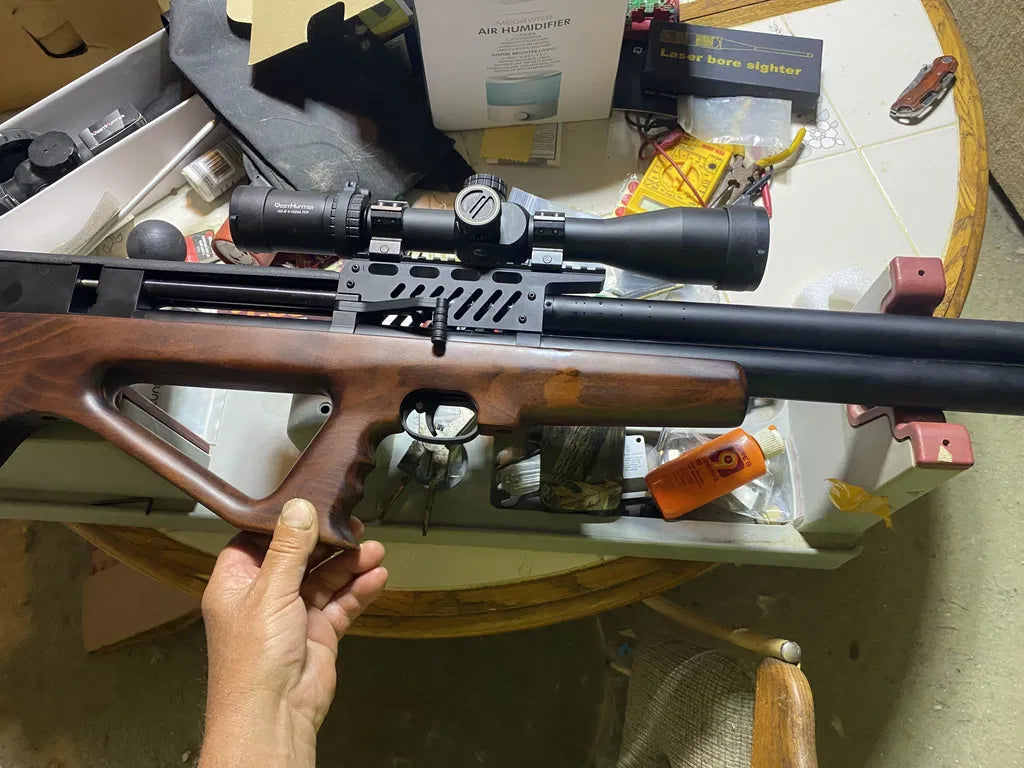
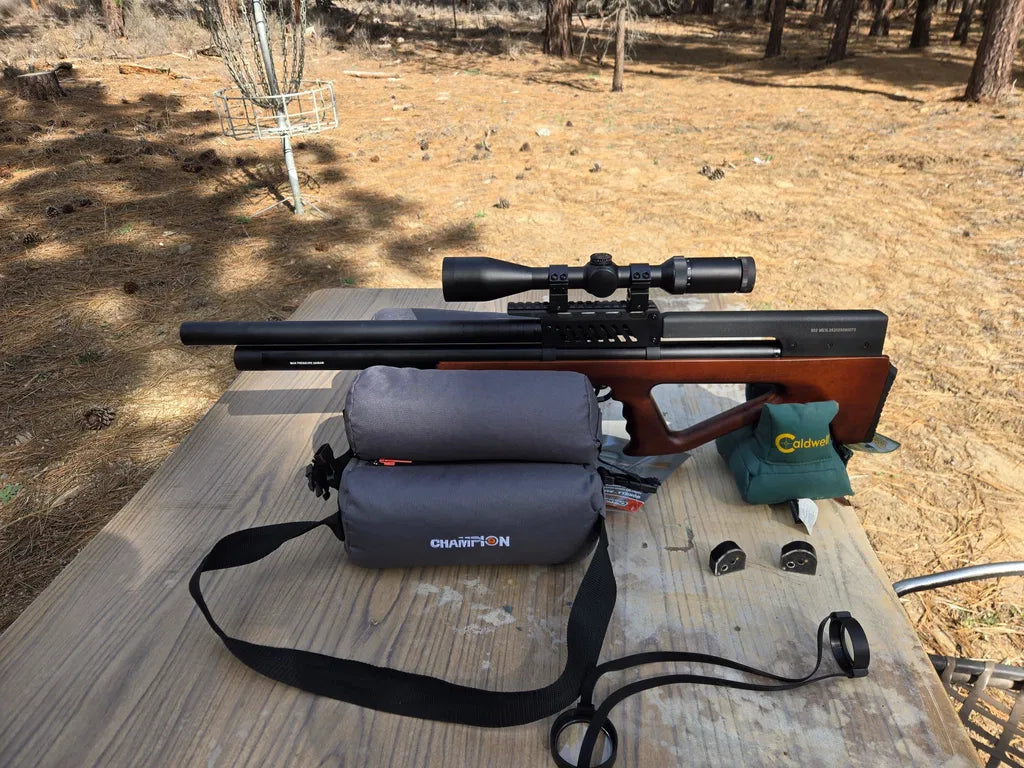
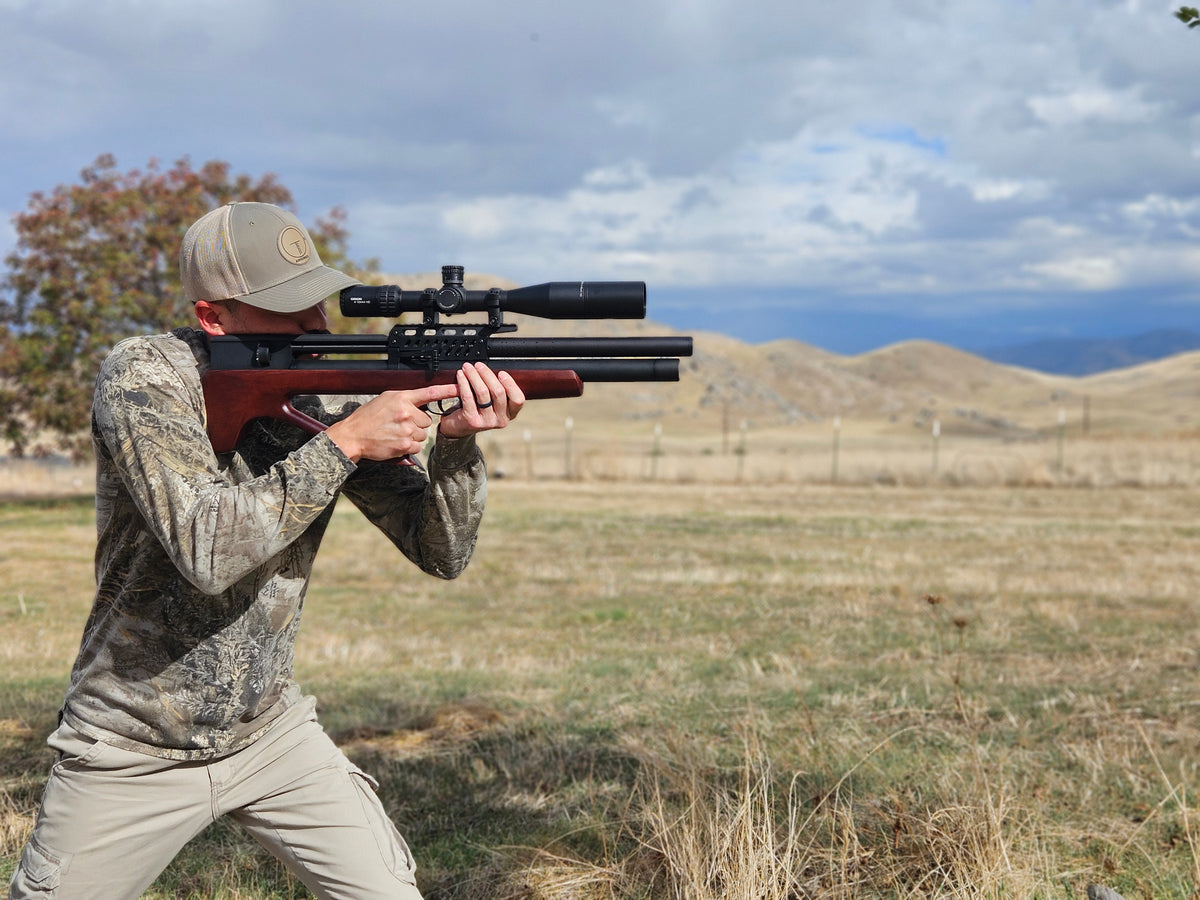
Right out of the box, the Pinty Striker gives off exactly what we expected from a budget-friendly PCP air rifle — lightweight, simple, and purpose-built for hunting and plinking.
The rifle is available in both .22 and .25 caliber, but our test rifle today is the .25 cal version. Pinty advertises velocities up to 800 FPS with around 40 joules of energy. During our testing, we actually saw even better numbers than expected.
Pinty Striker Key Specifications
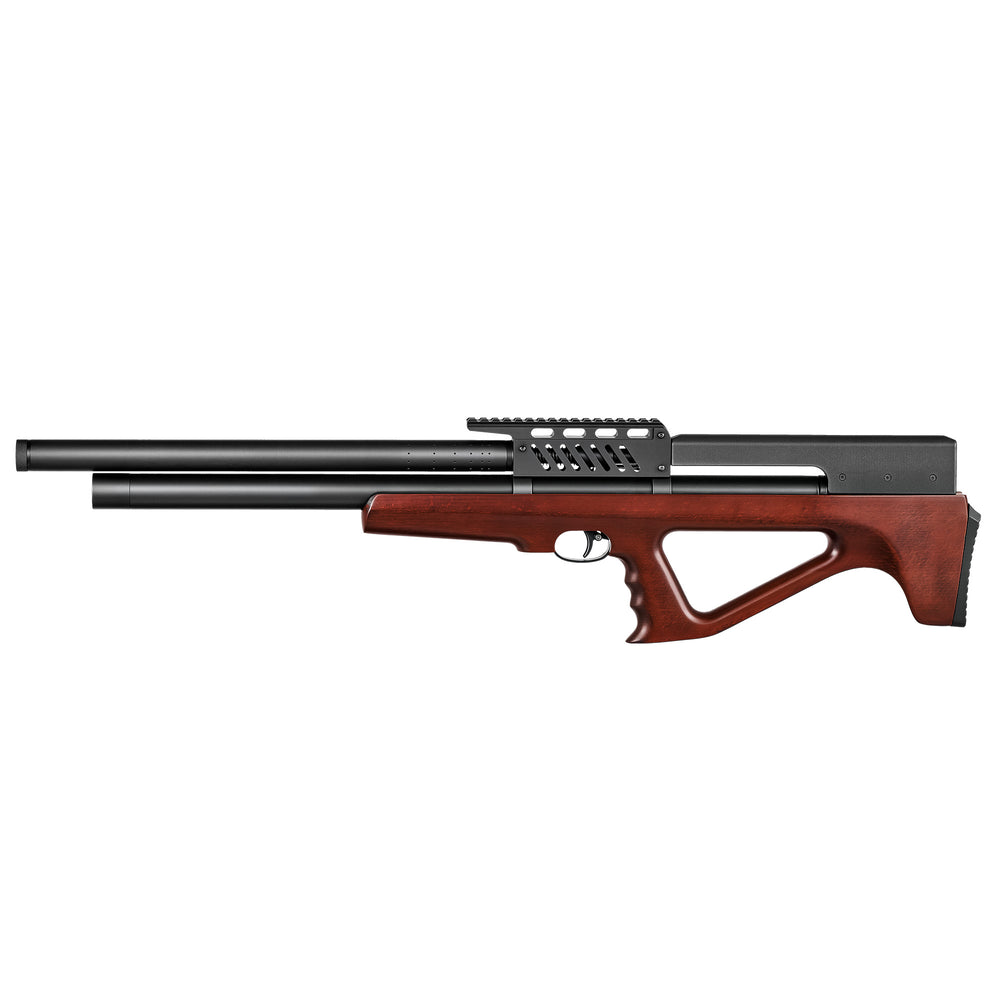
For a rifle in this price range, the overall handling is surprisingly good. The lightweight design makes it easy to carry through the woods for squirrel hunting or small game hunting.
Pinty Striker Fit and Finish
Let’s be honest — this is not a luxury PCP.
The synthetic components feel budget-oriented, and the wood stock is softer than higher-end walnut or laminate stocks. It dents and scratches fairly easily. But that’s not really the point of a rifle like this.
What matters most is whether the Pinty Striker can deliver consistency and accuracy at a price normal shooters can actually afford.
And surprisingly, it mostly does.
Ergonomics
Even as left-handed shooters, we found the rifle comfortable to shoulder. The cheek weld felt natural, and the magazine placement never became an issue.
The side lever is reasonably smooth for an entry-level rifle. It’s not premium-level smoothness, but again, considering the cost, it performs well enough.
Pinty Striker Trigger Performance
Out of the box, the trigger actually impressed us.
The trigger pull averaged around 1 pound 6 ounces, which is extremely respectable for a PCP in this category.
However, we did encounter one issue during testing.
Occasionally, the trigger would fail to engage completely, requiring us to re-cock the rifle. When this happened, we removed the magazine first to avoid double-loading.
It wasn’t a constant issue, but it happened enough that it’s something buyers should absolutely be aware of.
Pinty Striker Chronograph Testing Results
Now here’s where things got interesting.
Pinty’s marketing mentions “up to 90 shots per fill,” which immediately raised some eyebrows for us — especially for a regulated .25 caliber PCP.
So naturally, we broke out the chronograph and tested it ourselves.
We used JSB Exact King 25 grain pellets and recorded the following results:
Velocity Results
-
Average velocity: 889 FPS
-
Energy output: 44 ft-lbs
-
Regulated shot count: 31 shots
-
Standard deviation: 4.9 FPS
That standard deviation is genuinely impressive.
Anything under 10 FPS is considered solid performance for a PCP air rifle. Seeing a 4.9 FPS spread from a budget rifle like this honestly surprised us.
The built-in regulator clearly works.
Realistic Shot Count
The real regulated shot count landed around 31 usable shots — not 90.
To be fair, deeper into Pinty’s published specs, they eventually reference around 30 shots in .25 caliber. That lines up almost perfectly with our testing.
Still, the “90 shots” headline feels misleading unless you’re counting every weak, unregulated shot after the power curve drops off.
50 Yard Accuracy Testing
Numbers are great, but accuracy is what really matters.
We set up at 50 yards using JSB 25 grain pellets first, followed by AEA 29.5 grain pellets.
JSB Pellet Results
The first magazine through the rifle produced a surprisingly tight group — especially considering we did not clean the barrel beforehand.
That’s unusual for us because we almost always clean a new barrel before serious testing.
Even so, the JSBs grouped extremely well. Most shots clustered tightly together with only a couple drifting slightly outside the center.
For a budget PCP, the results were honestly impressive.
Testing With AEA Pellets
Next, we switched over to AEA 29.5 grain pellets.
The results were still respectable, but not quite as consistent as the JSBs.
We also experienced another trigger hang-up during this portion of testing, confirming that the issue wasn’t a one-time fluke.
Still, the rifle showed clear potential with heavier ammo.
Which Pellet Worked Better?
For our rifle:
-
JSB pellets delivered tighter consistency
-
AEA pellets produced decent groups but included a flyer
Some shooters may prefer the added weight of the AEAs for hunting applications, while others will appreciate the tighter precision from the JSBs.
Real-World Hunting Potential
This is where the Pinty Striker actually makes a lot of sense.
With roughly 44 ft-lbs of energy and good consistency, this rifle is absolutely capable of:
-
Squirrel hunting
-
Rabbit hunting
-
Pest control
-
Backyard target shooting
-
General range fun
Its lightweight design also makes it easy to carry during long hunting sessions.
For newer PCP shooters wanting to step into .25 caliber without spending premium money, the Striker fills an interesting niche.
Final Verdict – Is the Pinty Striker Worth It?
The Pinty Striker is not perfect.
The trigger occasionally hangs up. The stock feels budget-oriented. The overall finish isn’t premium.
But honestly?
For the price, this rifle performs far better than many shooters would expect.
✅ What We Liked
- Excellent regulator consistency
- Very low standard deviation
- Lightweight and easy to carry
- Respectable power output
- Good 50-yard accuracy
- Affordable entry into PCP shooting
❌ What Needs Improvement
- Trigger reliability
- Softer stock material
At the end of the day, the Pinty Striker punches above its weight class. If you’re looking for a budget-friendly .25 caliber PCP that can hunt small game and still perform well at the range, this rifle absolutely deserves consideration.
Would we call it an heirloom air rifle? No.
Would we call it surprisingly capable for the money? Absolutely.
Until next time air gunners, make sure those trigger pulls stay smooth and those pellets fly straight. We’ll see you right here again on Air Gun Advisor.



Share:
Pinty Buster PCP Air Pistol Reviews by Mountain Sport Airguns
Pinty PCP Airguns at SHOT Show 2026: My Hands-On Walkthrough