


In this review, I’m taking a close look at the Pinty Striker in .22 that was sent over for testing. I’ve spent real time with it in the field, through unboxing, setup, and live shooting, and I’m going to break down exactly how it performed under real conditions.
From my initial range sessions, this little bullpup surprised me in a good way. For a budget-friendly setup, it showed consistency, decent power, and accuracy that honestly exceeded what I expected at this price point.
If you’re looking to pick one up, it’s available directly through Pinty’s website, and I’ve got a discount code—AS15—which gets you 15% off, bringing the price down to roughly the mid-$200 range depending on offers.
Now, before I get into shooting results, let me walk you through the unboxing experience and what you actually get in the box.
Unboxing the Pinty Striker
When I first opened the box, everything was packed neatly and securely. Right away, I noticed this isn’t just a bare-bones budget rifle package—they actually include some thoughtful extras.
Inside the box, I found:
- Two 9-shot magazines
- A full-color instruction manual (with actual shooting tips and positions—nice touch for beginners)
- Maintenance kit with grease and O-rings
- Fill probe
- Spare valve parts (including a valve puppet and spring)
- A Halfx20 adapter with integrated baffle system
That last part actually stood out to me. Most rifles in this price range don’t include modular suppressor options out of the box, but this one gives you flexibility depending on how you want to run it.
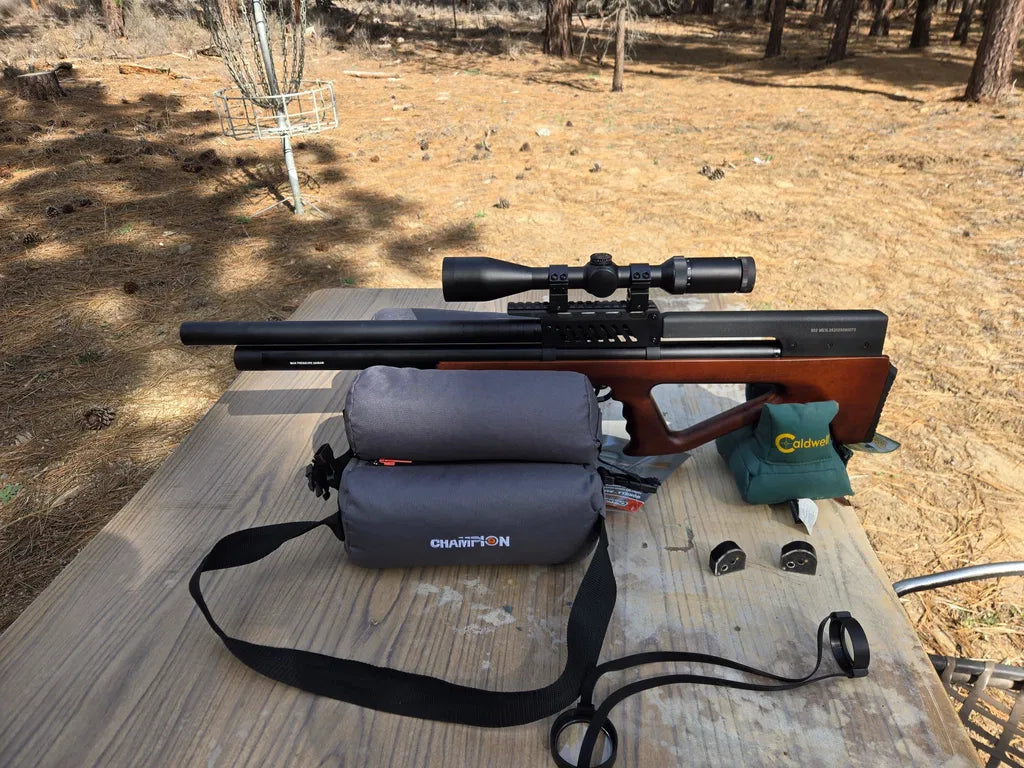
The pcp air rifle itself comes well-protected, and the charging handle is spring-loaded, which gives it a more refined feel than I expected at this level.
First Impressions & Build Overview
Once I got hands-on with the rifle, I went through it “tip to butt” to really understand the layout.
Key features I noticed:
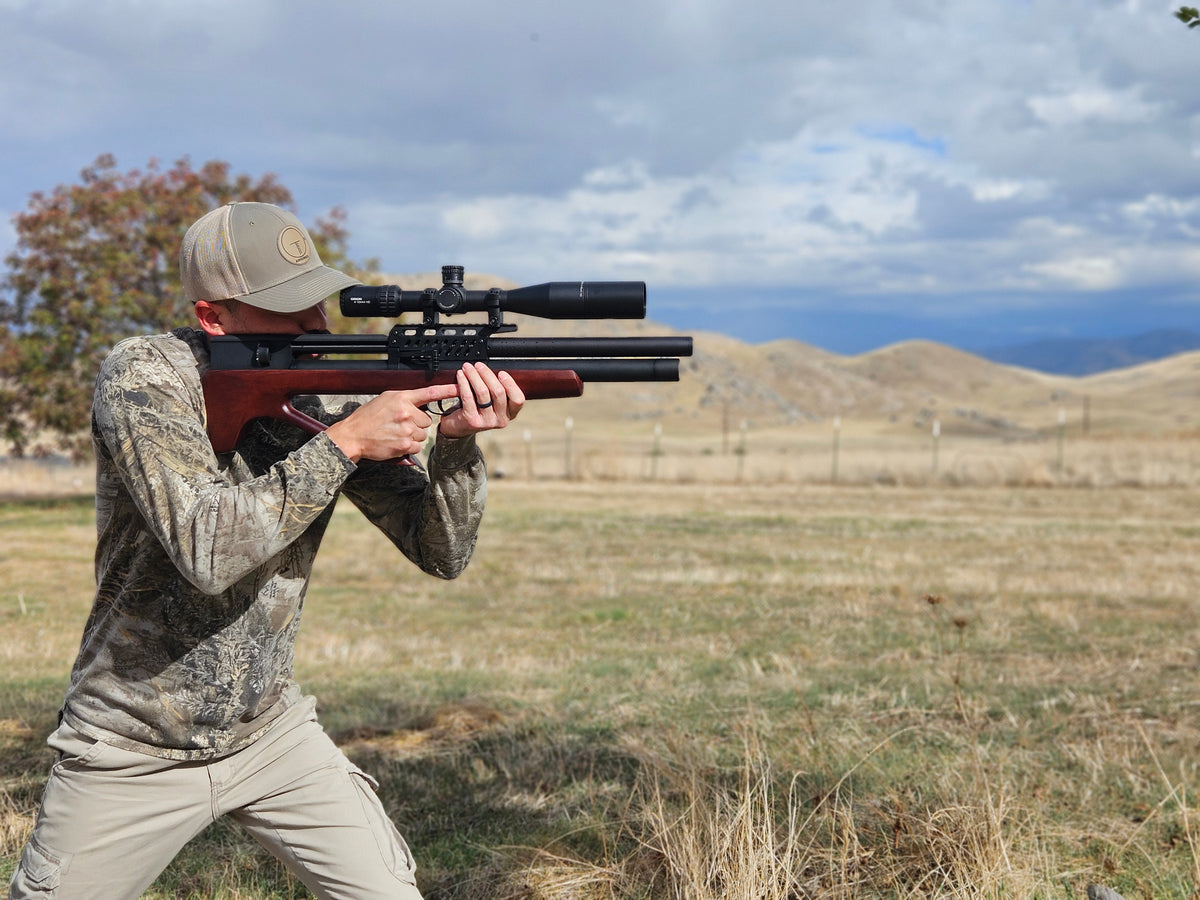
- Bullpup design keeps it compact and easy to handle
- Threaded muzzle option with included adapter
- Built-in baffled shroud (it’s already fairly quiet without extras)
- Glow-in-the-dark pressure gauge
- 250 bar rated air tube with regulator inside
- Wood stock with a solid, comfortable shoulder pad
- Side charging system that feels smooth and spring-assisted
- Crossbolt safety positioned near the trigger
- Decent trigger pull (around ~2 lbs by feel)
One thing I really appreciated here is the regulator setup. For a budget rifle, having consistent shot pressure is a big deal—and it shows later in the chrono results.
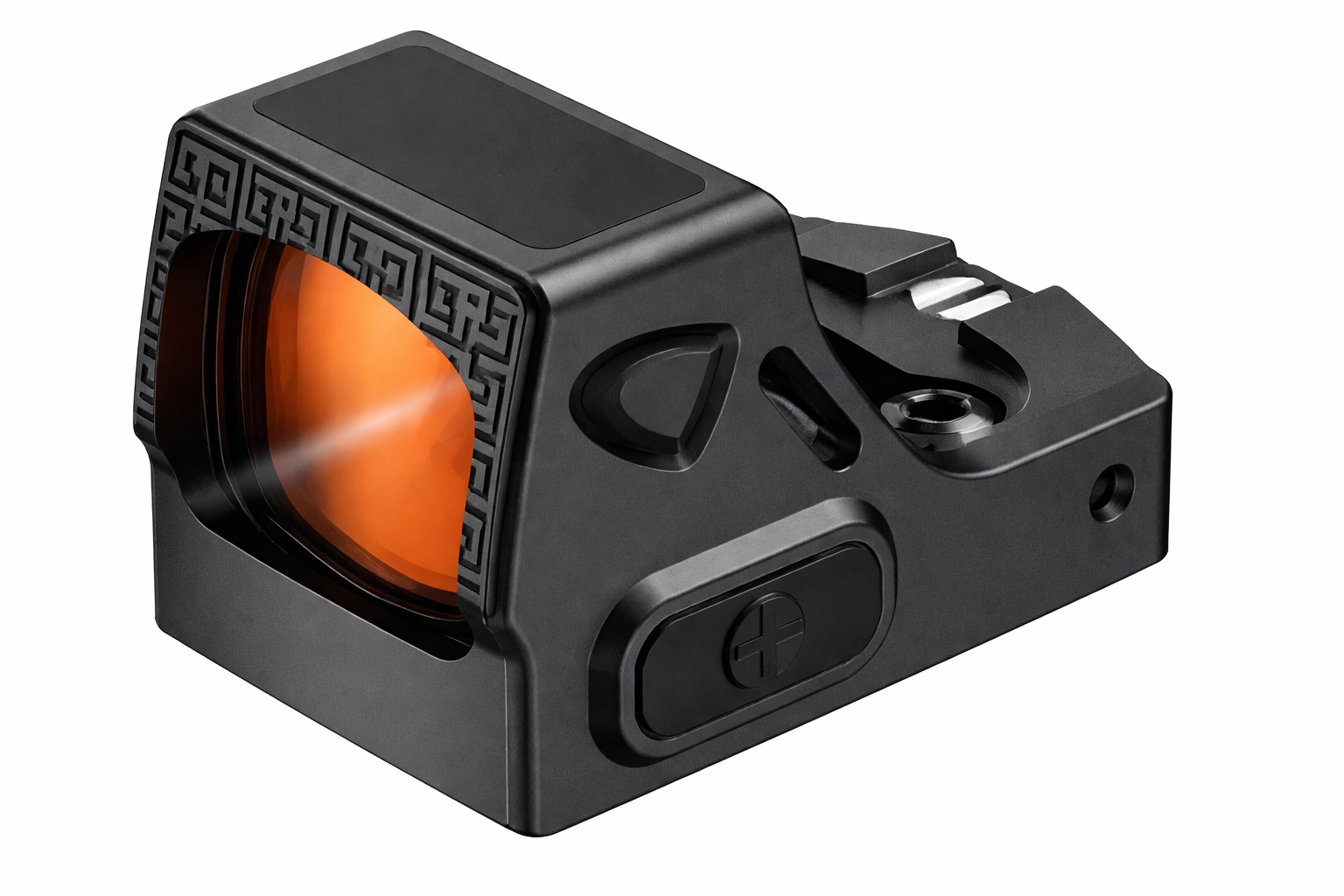
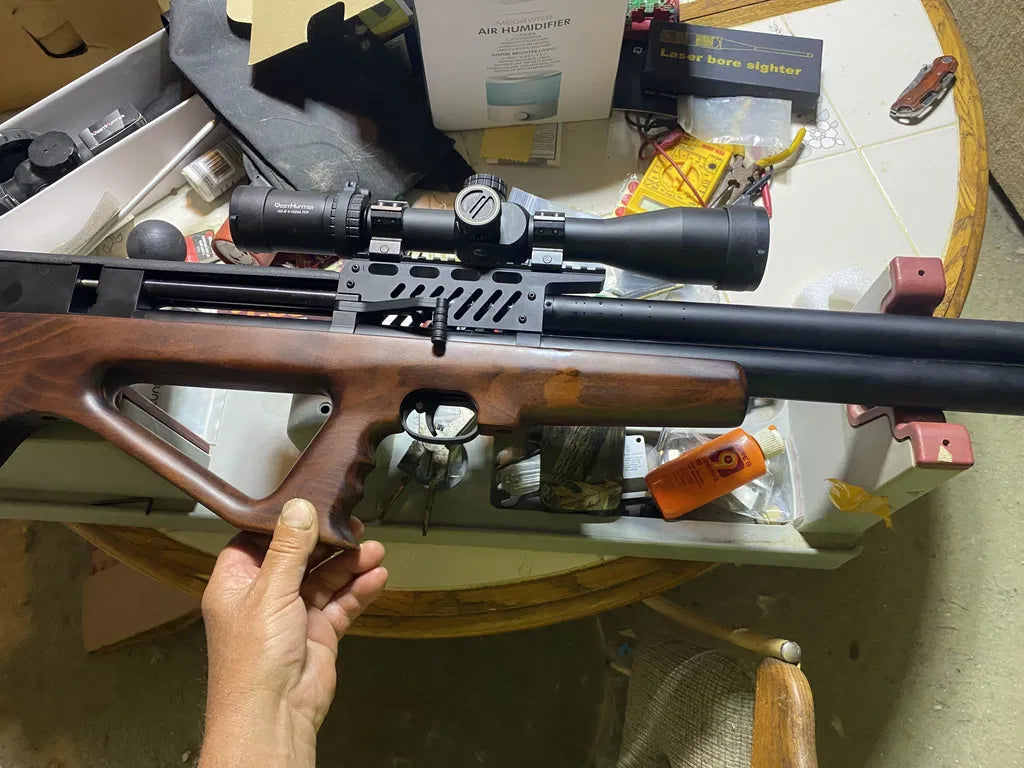
For optics, I mounted a CV Life red dot with a 5x flip magnifier. It’s not a traditional precision scope setup, but for woods walking and field shooting, it worked well.
Range Testing: 25 Yards Performance
I started my testing at 25 yards, shooting FX 18 grain pellets (similar to JSB 18gr), which are pretty standard for this kind of test.
Conditions weren’t ideal—cold weather around 34–35°F and noticeable wind. That’s actually good for real-world testing, since it shows how the rifle behaves outside of perfect bench conditions.
Chronograph Results:
- ~896–904 FPS
- ~32 ft-lbs of energy
- Extreme spread: ~10 FPS
- Standard deviation: as low as ~2.7–3.1 FPS
For a rifle in this price range, those numbers are genuinely impressive. That kind of consistency usually shows up in more expensive regulated platforms.
Accuracy at 25 yards:
My first 9-shot group came in around half an inch, which immediately caught my attention. The second group opened up slightly, closer to about an inch—but that was more on me rushing the shots.
Overall, the rifle clearly has the potential to shoot tight groups when I did my part.
Range Testing: Stretching Out to 50 Yards
Because the 25-yard performance was solid, I moved back to 50 yards to really see what it could do in wind with a simple red dot and magnifier setup.
Even at that distance, the rifle held together surprisingly well.
50-yard results:
- Consistent impact pattern with minimal vertical spread
- Grouping stayed around ~1 to 1.25 inches in windy conditions
- Still holding near ~900 FPS consistency during the string
For a budget bullpup shooting under real wind conditions with a red dot optic, that performance is honestly impressive.
At this range, I’d still consider it very usable for small pest control or target shooting within ethical limits.
Shot Count & Air Efficiency
Another thing that stood out was air efficiency.
From a partial fill around 250 bar, I got:
- Around 27 usable shots
- Very minimal pressure drop across the string
- Consistent velocity throughout
The regulator is clearly doing its job here. Even without an externally adjustable system, it feels well-tuned from the factory.
Pros & Cons: Is It Worth It?
After putting the Pinty Striker .22 through unboxing, setup, chrono testing, and real shooting conditions, here’s my honest take:
For a budget bullpup air rifle, this thing performs above its price class.
Final Verdict
If you’re looking for an affordable entry into regulated bullpup air rifles, the Pinty Striker .22 is a strong contender. It’s not trying to be a high-end competition gun—but for woods shooting, plinking, and general field use, it absolutely delivers. For the price point, I came away genuinely impressed.




Share:
Pinty PCP Airguns at SHOT Show 2026: My Hands-On Walkthrough
Pinty Buster PCP Pistol Tested – My First-Hand Shooting Impressions