

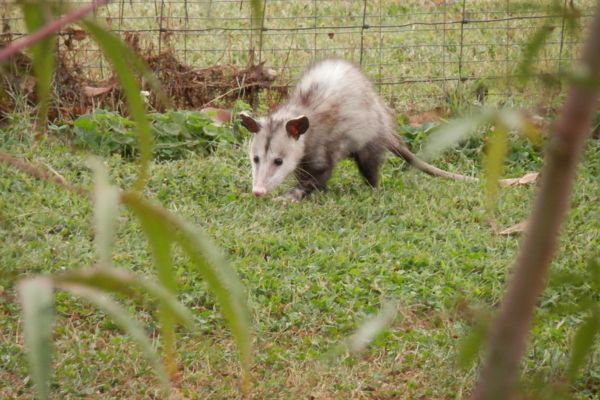
Modern PCP air rifles are powerful, accurate, relatively quiet, and far more capable than the BB guns many of us grew up with. This is why, if you live on a rural property or small homestead, and you are looking for a permanent solution for raccoons or possum issues, a PCP (Pre‑Charged Pneumatic) air rifle is probably the best, most responsible tool for managing nuisance wildlife.
But, with so many variations and models available nowadays, how do you decide which PCP air rifle is best for a homestead?
Let's walk you through how to choose the best PCP air rifle for homestead use. We will keep a focus on raccoon and possum control, and keep things easy and straight to the point.

Start with the Right Caliber (.22 Cal vs .25 Cal)
When choosing a PCP air rifle for a homestead (or for any other purpose), caliber is the first factor to consider, and most shooters, if not all, would agree that the best choice is between .22 Cal and .25 Cal PCP Air Rifles.
.177 caliber air rifles are excellent for target shooting and small pests, but they are not ideal for animals of this size.
Why .22 Cal and .25 Cal PCP Air Rifles are Ideal for a Homestead
Of the different types of PCP air rifles out there, the two most capable of humanely dispatching medium‑sized pests like raccoons and possums are the .22 Cal and .25 Cal. The .25 is definitely the more powerful of the two, but a .22 Cal should still be able to do a decent job, especially if you pair it with a good optic.
Most experienced homesteaders focus on .22 caliber and .25 caliber PCP air rifles because both .22 and .25 PCP air rifles offer:
- Enough power for ethical, humane kills on raccoons and possums
- Heavier pellets that transfer energy effectively
- Better penetration and stopping power compared to smaller calibers
- Accuracy at typical homestead distances (20–60 yards)
Choosing Between .22 Caliber PCP and .25 Caliber for Pest Control
When it comes to choosing between a .22 Cal Air rifle and a .25 Cal for raccoons and possums on a homestead, it is not so obvious that the .225 is automatically better. You have to consider your level of experience, the size of your property, your budget (both upfront and long-term), and other factors like air supply.
.22 Cal PCP Air Rifles: Pros and Cons
.22 Caliber PCP Air Rifles are best for newer shooters, smaller properties, and people who want a balance of power and affordability. With a good quality .22 Cal PCP air rifle, you should have all the features you need for successful pest control at a homestead.
With the .22 Cal Vanguard - 9 Pellet PCP air rifle, for example, you get high-velocity .177 (880 fps) for flat trajectories or hard-hitting .22 (760 fps), and a built-in regulator ensures consistent precision. The 100 cc tank delivers 25-30 shots, dual mags, and a sidelever enable fast follow-ups.
Pros of .22 Cal for Pest Control:
- Pellets are largely available
- They are less expensive in terms of cost per shot
- Flatter trajectory, and they are pretty easy to learn if you are new to them
- They are generally lighter and a little more maneuverable
Cons
The major downside with .22 Cal PCPs is that there is slightly less margin for error on larger raccoons.
Otherwise, a quality .22 PCP air rifle is often the sweet spot for first‑time buyers. It’s powerful enough for possums and raccoons while remaining approachable and cost‑effective.
.25 Caliber PCP Air Rifles: Pros and Cons
.25 Cal PCP Air Rifles are more powerful than the .22 Cal models: the pellets are heavier, with more impact, there is greater energy transfer, and they are overall better for larger properties and situations where the raccoons are notoriously large or tough.
If you want maximum knockdown power, then the .25 Cal PCP air rifle is undoubtedly the better choice.
Cons
The big setbacks with going for a .22 Cal PCP for hunting raccoons and possums on a homestead are that they are more expensive (both to buy and maintain), and may require a lot more time to learn( slightly more pellet drop).
However, if you value extra power and confidence, especially for nighttime pest control, .25 caliber can be a great choice-just expect slightly higher costs.

Other Factors to Consider When Choosing the Best PCP for Homestead
1. Budget vs. Long‑Term Value
PCP air rifles range from a few hundred dollars to well over a thousand. Usually, it is tempting to go cheap, but when you consider build quality, consistency and reliability, and ease of maintenance, a low-budget PCP air rifle might end up costing more in the long run.
Obviously, it is not necessary to go for an extravagant option either. A mid‑range PCP rifle often costs more upfront but saves money and frustration long‑term.
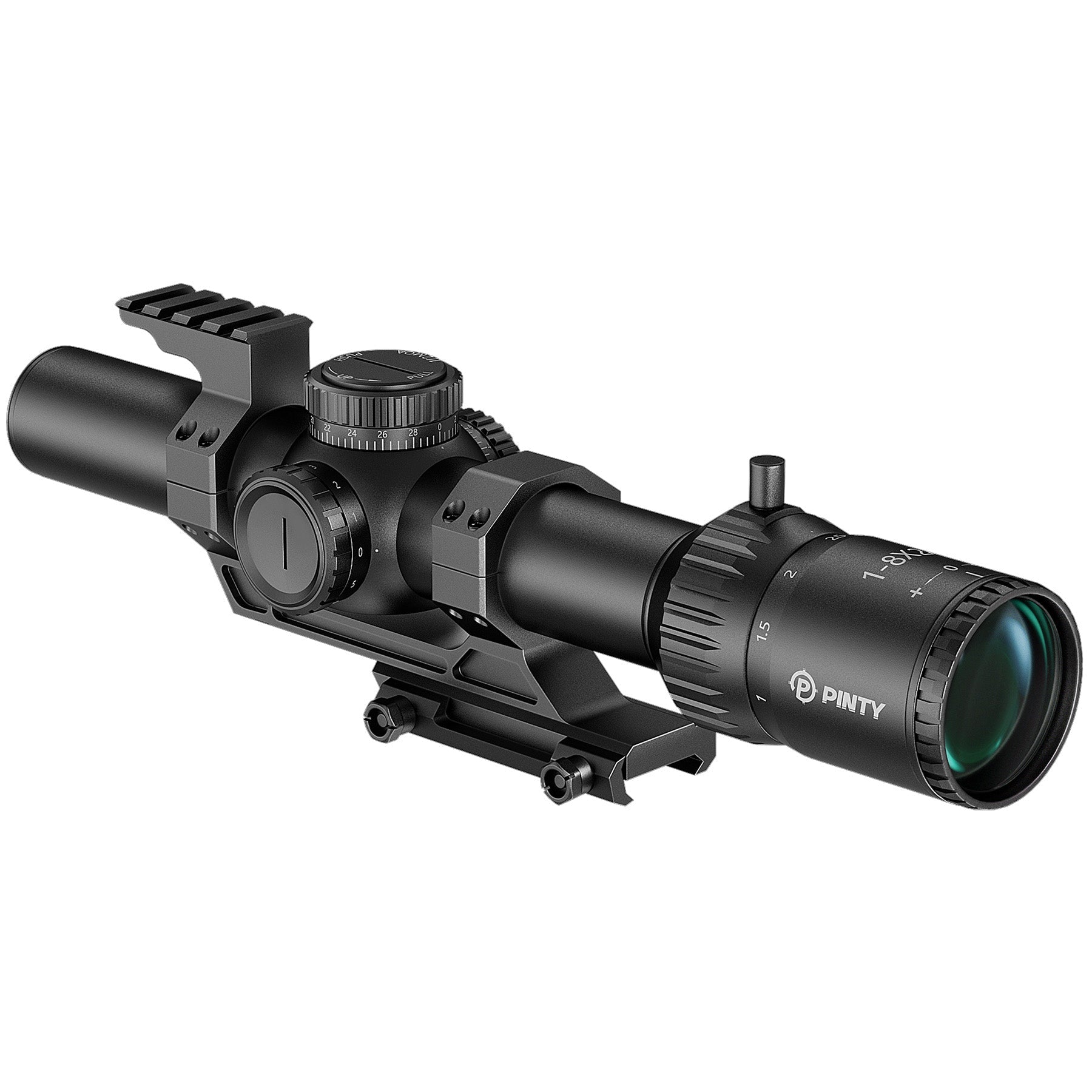
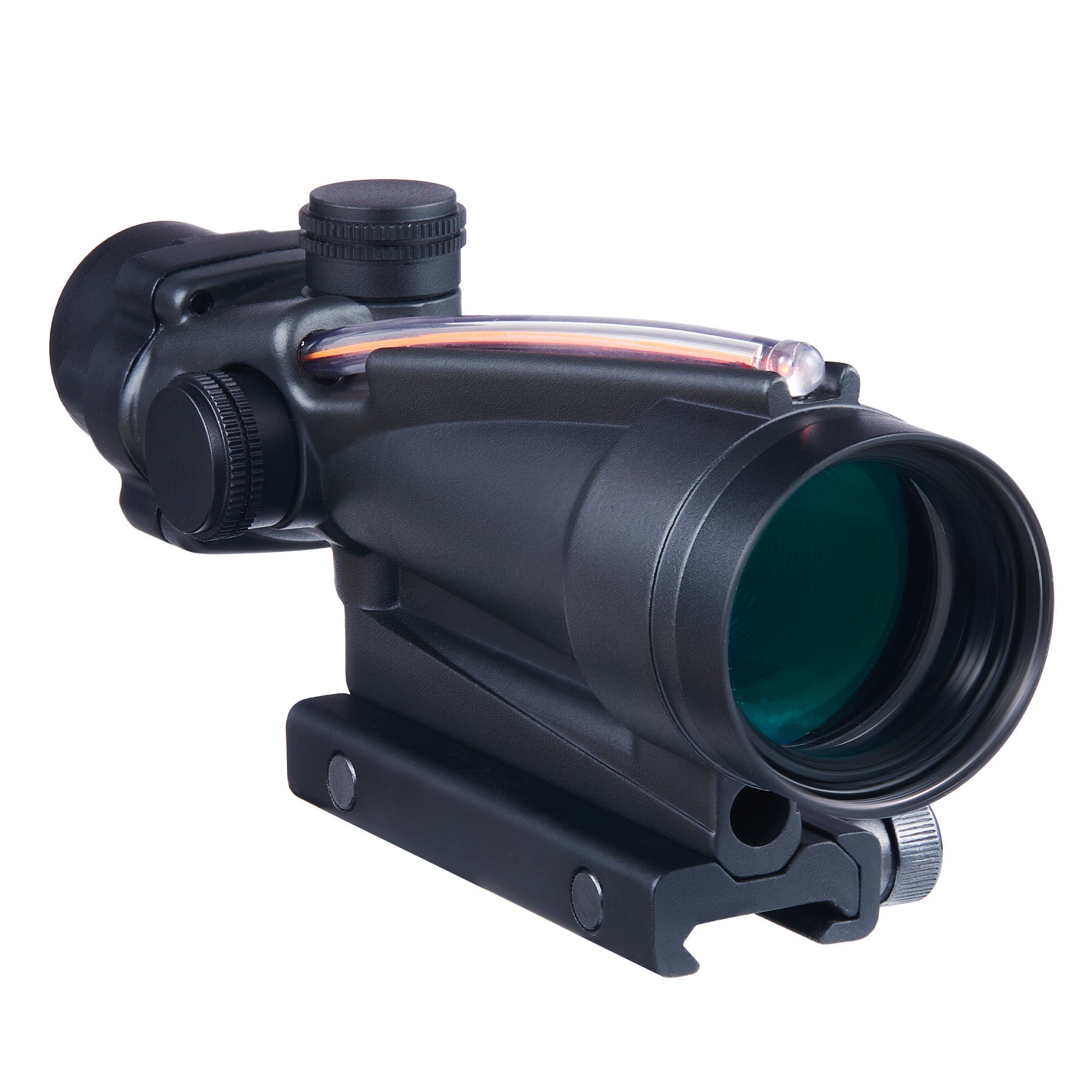
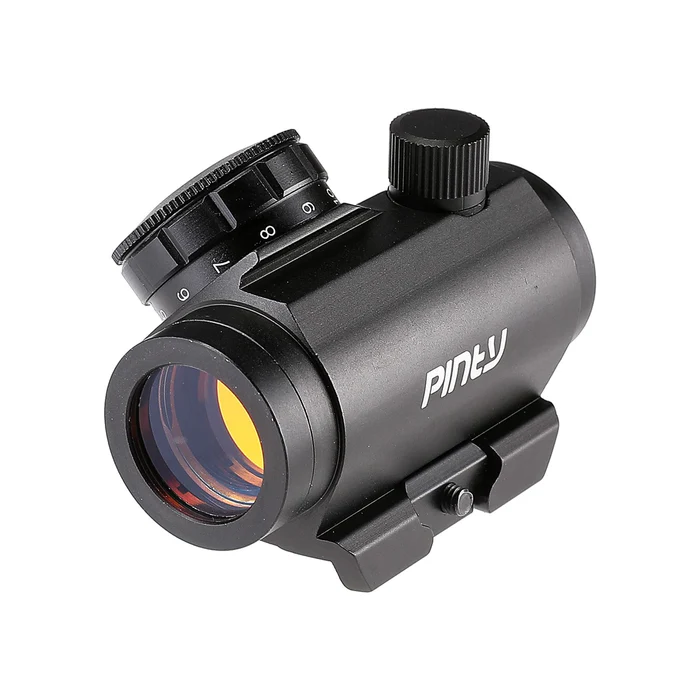
Hint: With Pinty’s PCP Bundles, you can save up to $129 on your PCP air rifle and get a free optic with your purchase!
3. The Hidden Cost: Air Supply
PCP rifles require compressed air, which means you’ll need one of the following:
- Hand pump (cheapest, but physical effort required)
- Electric air compressor (convenient, higher upfront cost)
- Scuba or carbon fiber tanks (fast and easy, but expensive)
This is a real part of ownership, and one many beginners overlook. Factor this into your cost before making a final decision
4. Noise Level
One major advantage of PCP air rifles is how quiet they are, especially compared to firearms. Many models even include shrouded barrels or moderators that make them neighborhood‑friendly.
If you have nearby neighbors or livestock, this matters too.
5. Ease of Use for Beginners
If you are a beginner, it is important to go for a PCP air rifle that is simple to master. Look for simple controls, good trigger feel, manageable weight, and readily available support and parts
PCPs are not complicated, but a beginner‑friendly design makes a difference.

Best PCP Air Rifles for Raccoons and Possums on Homestead
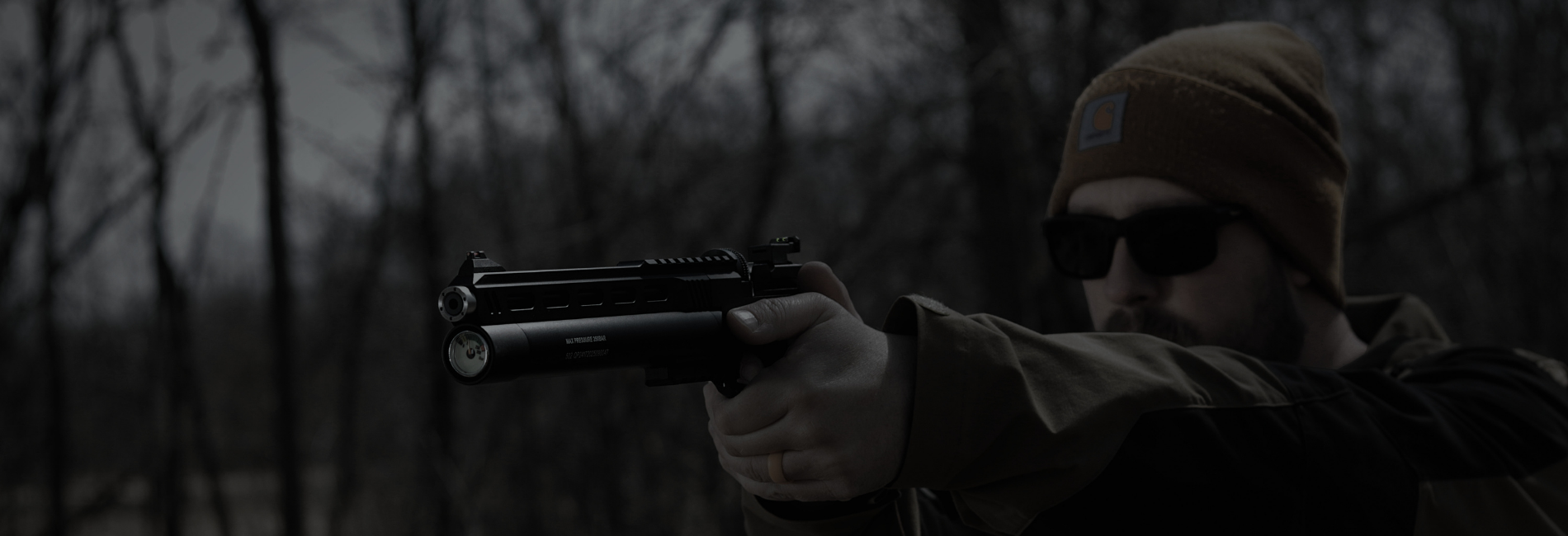
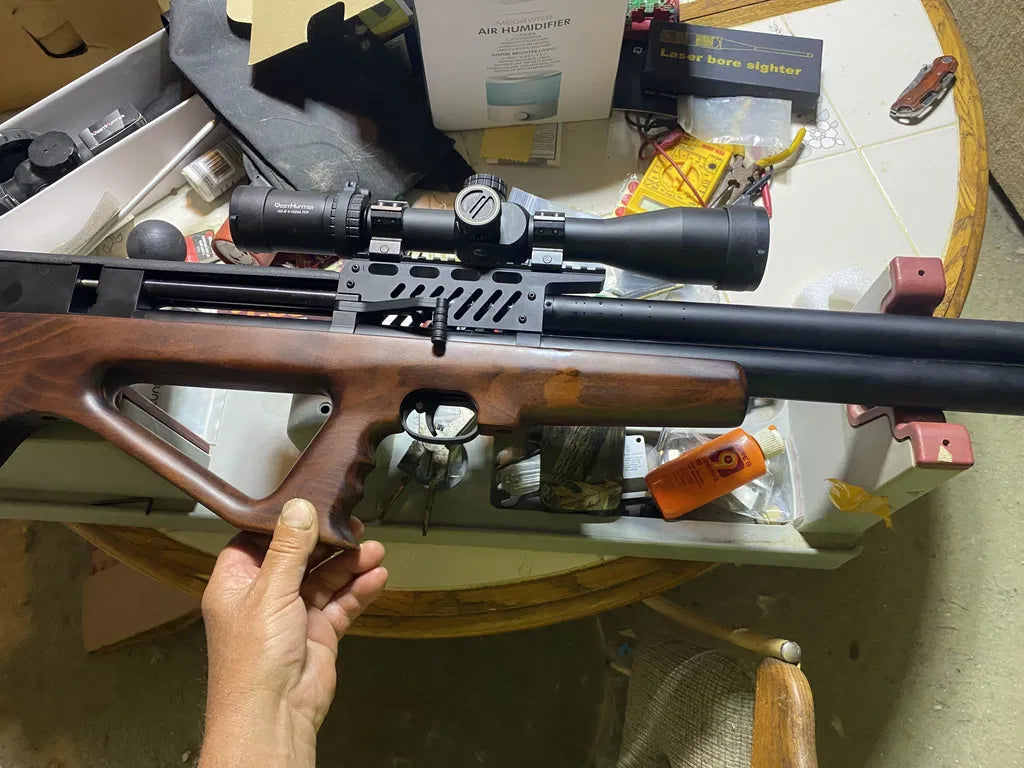
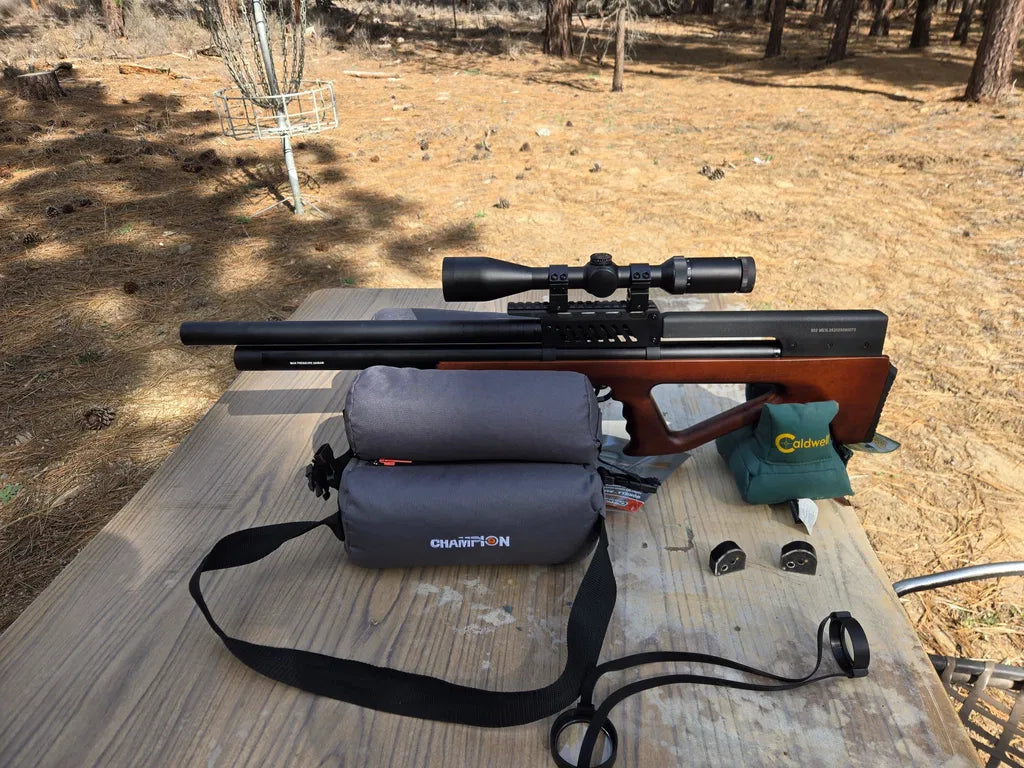
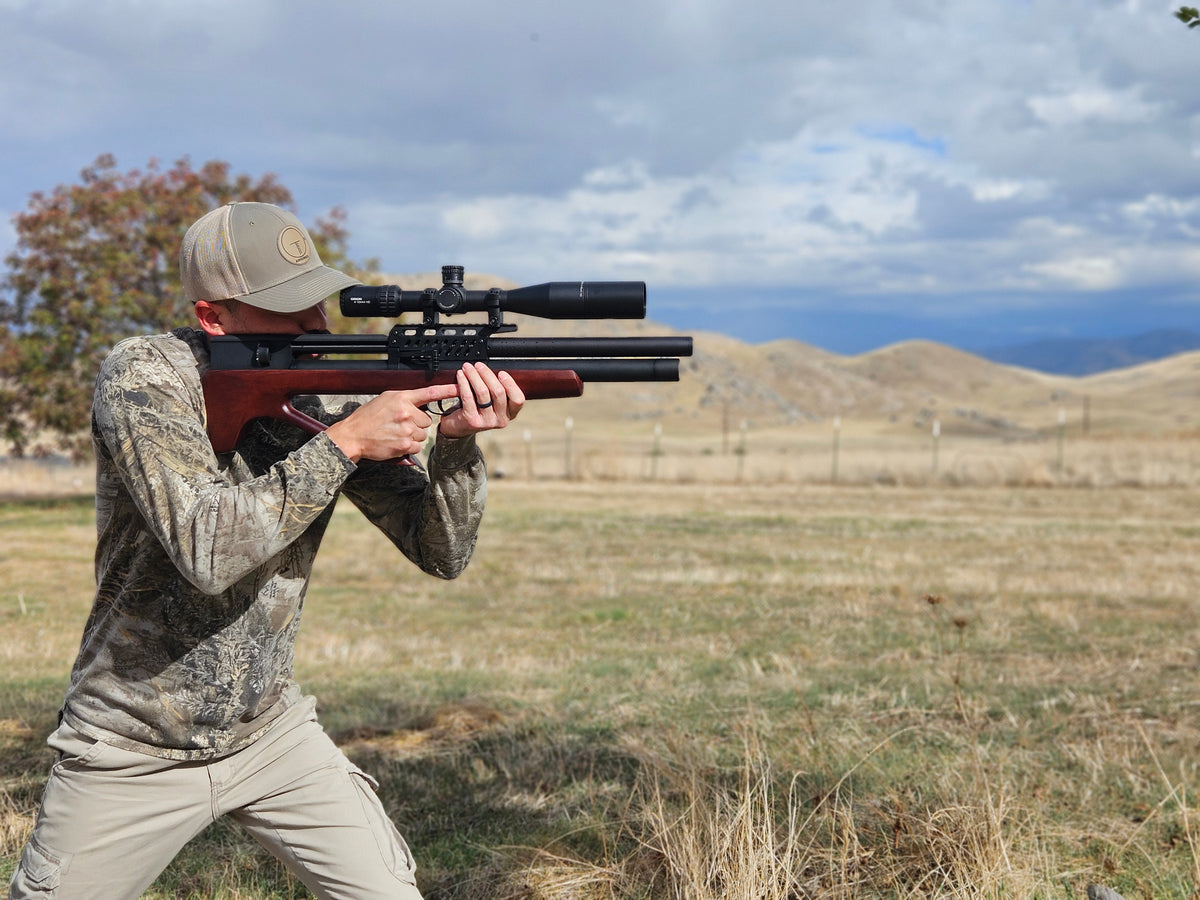
If you are looking for the perfect mid-range PCP air rifle for dealing with raccoons and possums at your homestead, the Pinty Striker 9 Pellet .22/.25 Cal PCP Air Rifles should be at the top of your list.
These two regulated air rifles are similar in that they deliver consistency, whether you are chasing small game with the high-velocity .22 caliber (up to 880 fps) or leveraging the heavy-hitting power of the .25 caliber (800 fps).
They both feature an integrated pressure regulator that ensures stable shot-to-shot performance, so you can count on tight groups every time, from the moment you sight in to the final shot.
With either of these two PCP air rifles, you get the following:
- You can load up the 310 cc air reservoir to 250 bar for about 30 powerful, consistent shots per fill
- Dual large magazines with a smooth sidelever make follow-up shots effortless.
- A 21 mm Picatinny rail, capable of accommodating scopes, lights, or a bipod for a more customized setup.
What this regulated PCP air rifle delivers is consistency: the high-velocity .22 caliber is great for small homesteads, while the heavy-hitting power of the .25 caliber (800 fps) would serve you better for a larger homestead. Pinty's regulated PCP air rifles deliver unmatched accuracy and consistency.

Firearms vs. PCP Air Rifles for Homesteads
Any time pest control is discussed, someone inevitably brings up the firearm vs PCP debate: “Why not just use a firearm?”
Honestly, this is a fair question, and one worth understanding, especially if you are a beginner. The truth is, firearms are powerful, proven tools, but power isn’t the only factor that matters on a homestead.
Remember, you have neighbors who may not like to be spooked all the time by noisy gunshots, and there is also the risk to consider. Here’s a table showing the nuances between choosing a .22LR and a .22 Cal PCP air rifle for pest control on a homestead.
.22 LR vs. .22 Cal PCP Air Rifle For Pest Control
| Factor | .22 LR Firearm | .22 Cal PCP Air Rifle |
| Overall Power | Significantly more powerful | Powerful enough for possums and raccoons |
| Effective Range | 100+ yards | 20-60 yards (ideal for homestead use) |
| Noise Level | Loud, even with hearing protection | Very quiet, often backyard-friendly |
| Safety and Over-Penetration | High risk: bullets travel far | Much lower risk; safer backstops |
| Legal Restrictions | Subject to firearm laws and permits | Often legal where firearms aren’t |
| Beginner Friendliness | Steeper learning curve | Easier for new shooters |
| Use Around Buildings and Livestock | Risky in close quarters | Better suited for barns, coops, sheds |
| Cost Structure | Lower rifle cost, ongoing ammo costs | Higher upfront cost, low per-shot cost |
| Community and Neighbor Impact | Can alarm neighbors | Minimal disturbance |
| General Opinion | Seen as more “serious” or traditional | Seen as quieter, safer, and more practical |
For many homesteaders, PCP air rifles hit the sweet spot: enough power without the downsides of firearms.
Final Thoughts on Choosing a PCP for Pest Control on Your Homestead
For homeowners new to shooting, PCP air rifles offer an excellent balance of power, safety, and practicality. Whether you choose .22 caliber or .25 caliber, the key is matching the rifle to your property, comfort level, and long‑term needs.
Take your time, learn your equipment, and practice ethical shot placement. Managing wildlife is part of homesteading, and choosing the right tool makes all the difference.



Share:
Not Sure What to Get This Christmas?
A Thoughtful Christmas Gift for Someone Who Loves Shooting Sports