

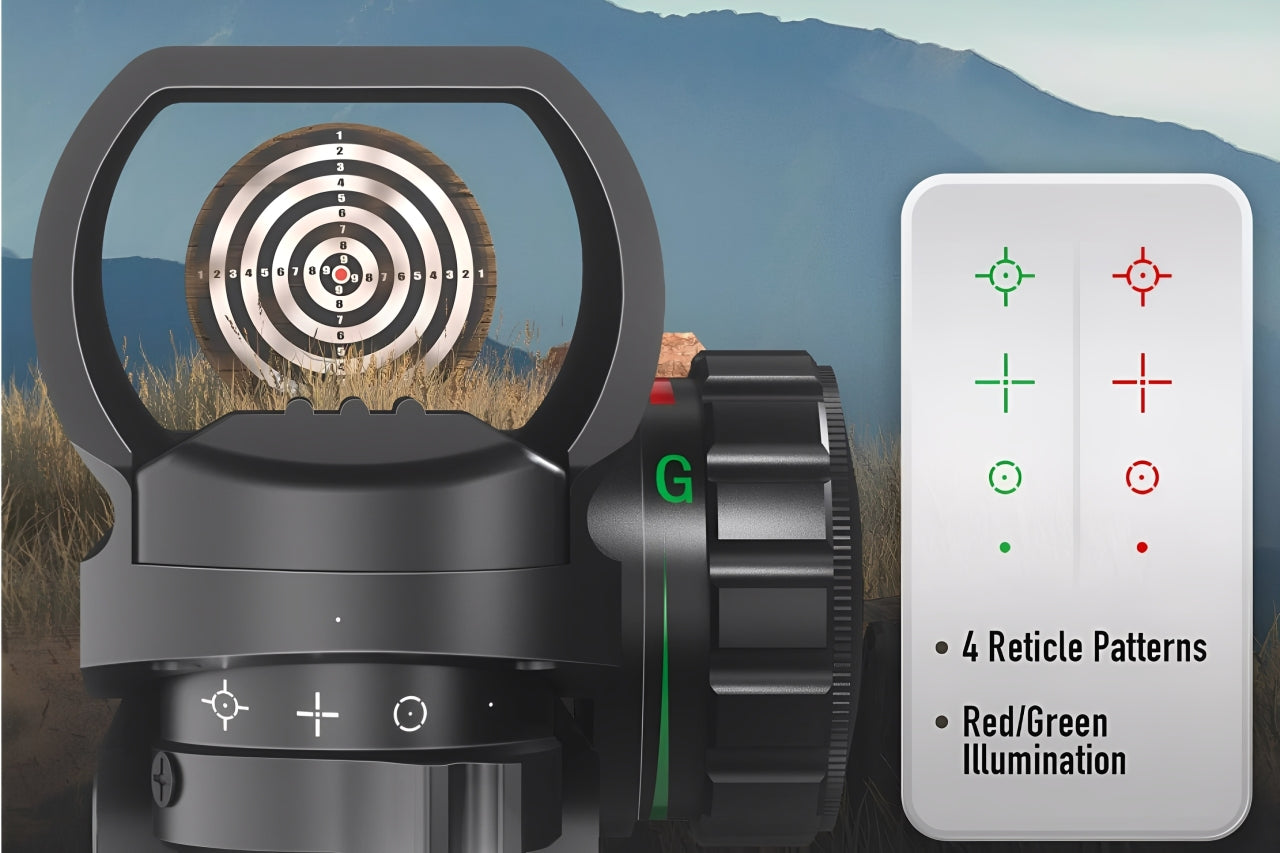
Some shooters treat them as totally different things: others use both names on the same product, but what is the real difference between a red dot sight and a reflex sight?
The confusion between red dot sights and reflex sights mainly arises because both are housed in different ways. It has been said that a reflect sight is just a red dot in a tube, and that is true. Red dot sights come in two main housing styles:
- Enclosed / tube-style red dots (look like small scopes)
- Open-style red dots, which are usually called reflex sights
So, both red sights (i.e., tube-style red dots) and reflex sights are red dot sights, and they both work in the same way (emitting a red dot). The difference is how they’re built and how protected they are.
This difference in design and appearance between red dots and reflex sights, however, makes a big difference when it comes to deciding between the two: the closed design of a red dot sight gives it some advantages over a reflex sight, and the open design of a reflex sight makes it vulnerable in some ways.

What Is a Red Dot Sight? Definition, Key Features, and Examples
“Red dot sight” is a general term used to describe a broad category of optics that function in a particular way, though they might not all look the same. Any optic that has the following four features is classified as a red dot sight:
- It projects an illuminated dot or reticle onto a lens
- It is non-magnified (almost always 1x)
- It allows both eyes open shooting
- It puts the reticle and the target on the same focal plane
These four characteristics make red dot sights unique and give them practical advantages in the field. With any red dot sight, you are not lining up a rear sight, front sight, and target anymore. You just put the dot on what you want to hit and pull the trigger.
This is why red dots are so much faster and easier to use, especially under stress, on moving targets, or at awkward angles.
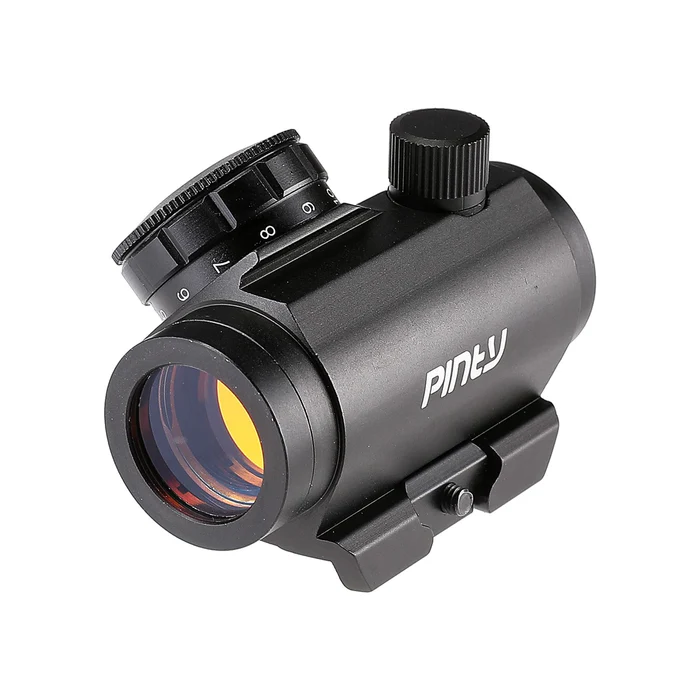
Pinty’s 1x40mm Red/ Green Dot Sight: Multicoated, Ultimate Brightness
Get fast target acquisition with this 40mm aluminum red/green dot sight. It offers 5 brightness levels in each color for visibility in any conditions, and you can toggle between red and green dots with 5 brightness levels each.
- Effortlessly fits 11mm dovetail and 20mm Picatinny/Weaver rails.
- Non-critical eye box allows rapid firing from any angle.
Made of durable aluminum, this red dot withstands heavy recoil. This is the red dot you need for hunting or for most shooting tasks that require a red dot.
What Is a Reflex Sight? Definition, Key Features, and Uses
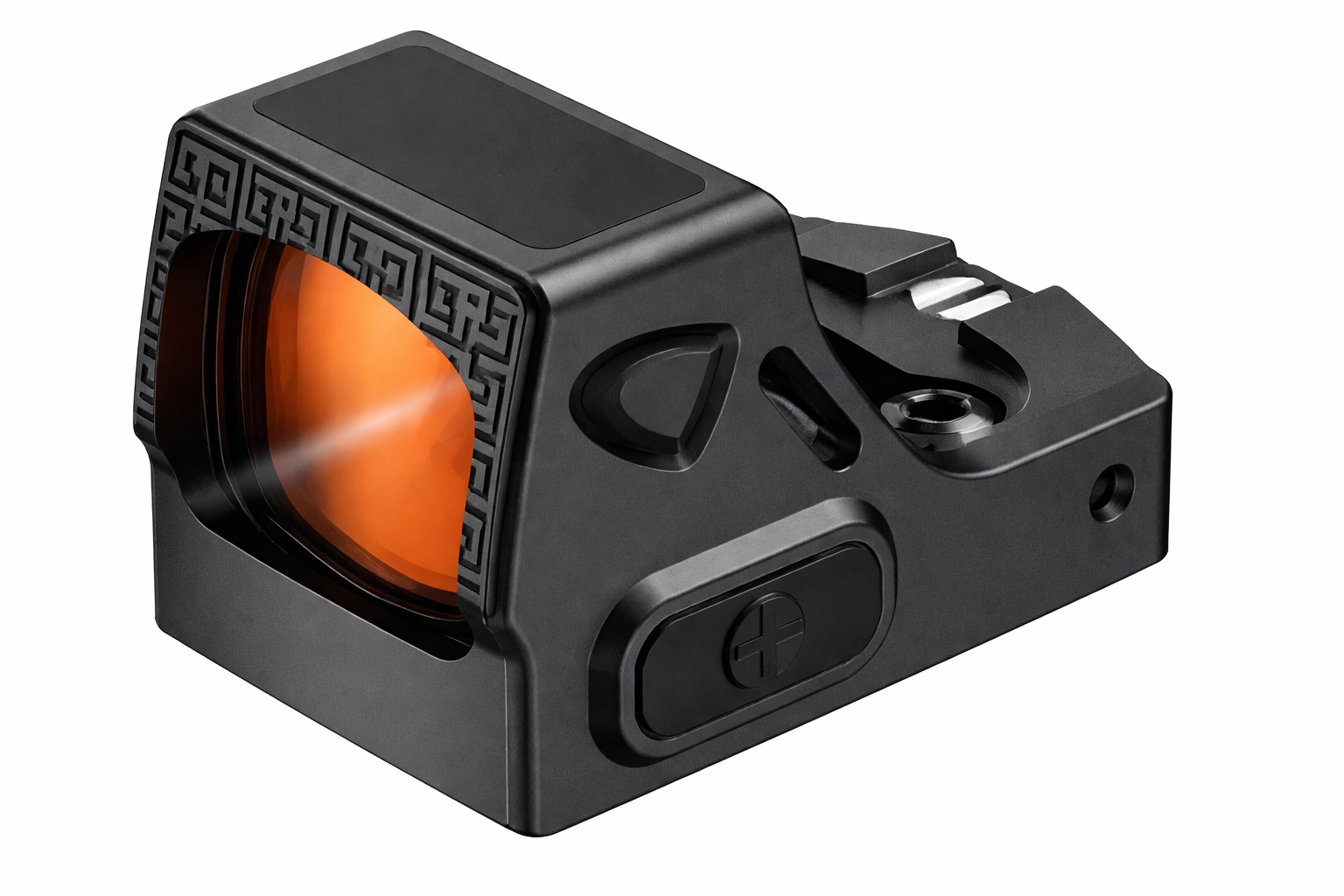
A reflex sight is a specific type of red dot sight that uses an open design. If you see a pistol with a slide-mounted optic, it’s almost certainly a reflex sight. Instead of a tube, a reflex sight usually consists of:
- A small frame
- A single-angled glass lens
- An exposed LED emitter that reflects the dot onto the glass
The most obvious difference between the two is that a red reflex sight has no enclosed tube. When you look through it, you’re basically looking through a window with a dot floating in space.
This partly explains why rifle sights (and not enclosed red dots) are extremely popular on pistols, competition guns, shotguns, and lightweight or compact builds.
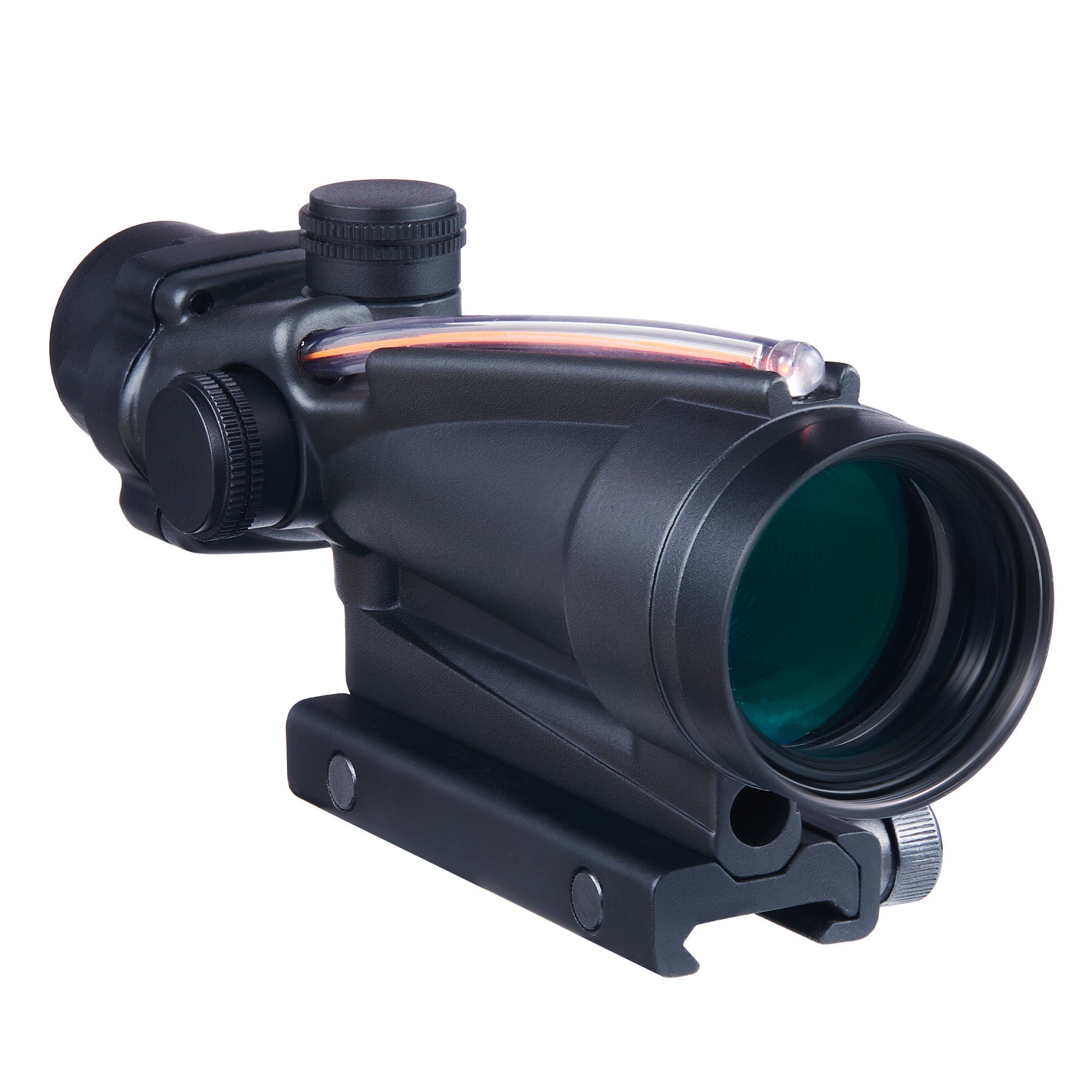
Pinty Red and Green Reflex Dot Sight: A Protected, Durable Reflex Sight
Made of aircraft-grade aluminum alloy, the Pinty Red/Green Reflex Sight is waterproof, fog-proof, and shockproof for reliable performance in all weather conditions.
The red and green reticle each offer 4 different types of patterns, which:
- offer unlimited eye relief and corrected parallax
- make it perfect for rapid-firing and moving targets.
This reflex sight also comes with free 20mm mount rails. Deservedly the best handgun red dot! Take it with you on your next hunting trip!
Red Dot vs. Reflect Sights: Practical Differences
Again, all reflex sights are red dot sights, but not all red dot sights are reflex sights.
- “Red dot” sight is the category
- “Reflex sight” is one specific design inside that category
So when someone says “I’m buying a red dot,” they might mean a small pistol optic or a rugged tube-style optic for an AR. But reflex sights are also considered red dots. Many people do not understand this distinction, and that’s where the confusion comes from.
Red Dot vs Reflex Rights: Pros and Cons Compared
On paper, both types do the same job. In real life, red dot sights and reflect sights behave differently when things get dirty, wet, dropped, or abused.
1. Advantages of Red Dot Sights: Better Protected, More Durable
In terms of durability, ease of cleaning, and use in challenging environments, a red dot is more solid and dependable than a reflex sight. Thats because:
- Being enclosed, they are better protected. Rain, snow, mud, dust, carbon, and lint are far less likely to block the emitter or lens.
- More forgiving if the front lens gets dirty. Even if the front glass is partially blocked, you can often still see the dot and use the sight.
- More durable. Red dots are popular on-duty rifles and training guns for a reason.
- Usually have very long battery life: Many run for years on a single battery.
2. Downsides of Red Dot Sights: Bigger and Heavier than Reflex Sights
The downsides of red dot sights are that they are bigger and heavier, which is not very conducive, especially for smaller guns. A red dot would be:
- Bigger and heavier
- More bulky on small guns
- Not ideal for pistol slides or ultralight builds
Red dots shine on AR-15s and carbines, defensive rifles, training guns, and guns that generally get used a lot, especially in challenging environments.
3. Advantages of Reflex (Open) Sights: Lightweight, Easier to Use
These are compact, open, and lightweight, more maneuverable, and suitable for a variety of firearms.
- They are very small and light: This is why they work so well on pistols and shotguns.
- Easier to mount low: Helps with co-witnessing and natural presentation.
- Fast and intuitive: Especially for competition and close-range shooting.
- Huge window options available: Some modern reflex sights have massive viewing windows for fast target acquisition.
4. Downsides of Reflex Sights: Exposed, More Vulnerable to Damage
- With reflex sights, the emitter is exposed, making it easy for mud, snow, heavy rain, carbon, or even lint to block it.
- More sensitive to debris. If something covers the emitter, the dot can disappear.
- Usually not as rugged as enclosed sights (though top-tier ones are still very tough)
Reflex sights are best paired with shotguns, competition guns, lightweight builds, and guns for range and sport shooting.
 Red Dot vs Reflex Sights: Which is Better?
When it comes to red dot sights and reflex sights, neither is objectively better than the other. Think of them as different tools for different jobs. A red dot sight is better for some tasks/rifles than a reflex sight, and vice versa.
So rather than compare the two, it is wiser match each of these rifles to shooting tasks and rifles to which they are best suited.
Red Dots vs Reflex Sights: Making the Best Choice
| Your Setup / Use Case | Best Choice | Why |
| Pistol | Reflex sight |
|
| AR-15 / Carbine | Tube-style or enclosed red dot |
|
| Shotgun | Usually reflex sight |
|
| Range / Plinking | Either |
|
| Hunting Rifle | Enclosed red dot | Better if you hunt in bad weather. |
| Hunting Shotgun | Reflex sight | Better for quick target acquisition in relatively favorable hunting conditions |
| Competition Shooting | Reflex sight |
|
| Duty / Hard Use | Enclosed or tube-style red dot |
Red Dots vs Reflex Sights: The Bottom Line
Most times, the confusion between red dot sights and reflex sights comes from the marketing, not the technology itself. To easily differentiate between the two, keep in mind that a red dot sight refers to the category, while a reflex sight is a specific type of red dot.
When it comes to it, what really matters is what gun the sight is going on, the amount of roughness you expect it to be able to endure, and what kind of shooting you actually do. Pick the right style for the job, and both types will serve you extremely well.




Share:
Choosing the Best Red Dot Sight for Deer Hunting
The 3 Benefits Of Using A Red Dot Sight