
Struggling to hit distant targets through your rifle scope? Blame it on eye relief. An overlooked distance that makes or breaks precision.
Master proper eye relief, and witness your accuracy transform. Miss the optimal angle, and facial bruises become the best outcome.
This definitive guide examines eye relief from A to Z. Arm yourself with the techniques to unlock your scope’s capabilities and take your marksmanship to the next level. Let’s set up for intuitive aiming and tack-driving precision.
(Reading Time: 5-6 Minutes)
What is Eye Relief and Why Does It Matter to Accuracy

Before diving in, let’s define eye relief:
Eye relief is the optimal distance between your eye and the ocular lens when viewing through the scope.
If your eye is too close, the image may be distorted, and under recoil, the scope can come back and hit you. If your eye is too far away, you’ll see a dark ring around the image (called “scope shadow”) and lose part of your field of view.
In simple terms, eye relief is the “sweet spot” distance where:
- The image is full and bright
- The reticle is sharp
- There’s no shadowing
- You’re safely positioned behind the rifle
When eye relief is correct, you don’t have to hunt for the image. You mount the rifle, and the sight picture is just there. That’s when you know your setup is right.
Proper eye relief is crucial for five reasons:
- Safety: Too close risks dangerous scope eye injury from recoil.
- Accuracy: Ideal eye relief allows a full sight picture for precise aim and adjustments.
- Comfort: Correct distance provides a relaxed, natural shooting position.
- Speed: Proper eye relief allows faster target acquisition
- Consistency: A consistent head position improves accuracy
Simply put, proper eye relief makes shooting intuitive. Get it right, and distant X-rings await your bullets.

Common Scope Eye Relief Distances
Not all scopes have the same eye relief. It varies depending on the type of optic and intended use. Most scopes use a standard eye relief of 3-4 inches, but some may have longer eye relief (4+ inches) or shorter eye relief (2-3 inches).
1. Short Eye Relief (2–3 inches)
Short eye relief is typically fine on low-recoil rifles like .22 LR. Since recoil is minimal, there’s less risk of getting hit by the scope, which is why it is perfect for Rimfire scopes, some older fixed-power scopes, and certain compact optics.
Take note, however, that short eye relief is generally not recommended for centerfire hunting rifles unless the recoil is very mild.
2. Standard Eye Relief (3–4 inches)
Standard eye relief of 3-4 inches is considered the “sweet spot” for most shooters. It provides enough distance to stay safe under recoil while still giving a full field of view, and is most common for hunting scopes, variable power scopes, and many tactical scopes
For the average deer rifle or AR platform, you’ll usually see eye relief in the 3.5–4 inch range.
3. Long Eye Relief (4+ inches)
Long eye relief (4+ inches) is common on heavy-recoiling rifles like Magnum-caliber hunting scopes, Scout scopes, and handgun scopes that tend to move significantly during firing. More eye relief gives you more safety margin
Scout scopes (mounted forward on the rifle) are specifically designed for extended eye relief, sometimes 9–12 inches.
Handgun scopes also require long eye relief because your arms extend the optic farther from your face.
The trade-off, however, is that very long eye relief can sometimes slightly reduce the field of view.
Rifle Eye Relief Distance Table
| Eye Relief Distance | Common On | Pros | Cons |
| Short (2–3 inches) | Rimfire scopes, compact scopes, and some fixed-power optics |
|
|
| Standard (3–4 inches) | Most hunting scopes, variable-power scopes, and AR platform optics |
|
|
| Long (4+ inches) | Magnum scopes, scout scopes, handgun scopes |
|
|
What Is Considered “Good” Eye Relief?
For most modern rifle scopes, 3.5 to 4 inches is considered good eye relief. This eye relief distance provides adequate safety margin for recoil, a comfortable shooting position, and a full sight picture without excessive head movement.
However, “good” eye relief depends on the rifle and its purpose.
- For Light-Recoil Rifles (.22, .223, etc.): 3 inches may be sufficient.
- For Standard Hunting Calibers (.308, .30-06, 6.5 Creedmoor): 3.5–4 inches is ideal.
- For Magnum Calibers (.300 Win Mag, .338 Lapua, etc.): 4 inches or more is strongly recommended.
For Scout Rifles or Handguns
You’ll want extended eye relief, sometimes 6 to 12 inches, depending on design. So the real answer is: good eye relief matches the recoil and application of your rifle.

Measuring Your Ideal Eye Relief Distance
Determining your optimal eye relief depends on body frame, shooting form, and scope model. Follow this process to precisely measure your perfect distance:
- Mount your scoped rifle and get in a natural shooting stance. Close your eyes.
- Shoulder the rifle fully, then slowly slide the stock away until it barely touches your nose.
- Open eyes. The scope should be distant enough for full, comfortable viewing.
- If the image seems cramped, move the rifle further away slightly.
Your ideal eye relief for fast target acquisition is set. If sharing the rifle, repeat for other shooters.
Now let's examine factors that impact eye relief, starting with magnification.
How to Get Proper Eye Relief for Your Rifle Scope
Getting proper eye relief isn’t about guessing. It’s about setting up your scope correctly during mounting. The key is to mount the scope properly, set yourself in a comfortable shooting position, and tighten when you get the best eye relief. Follow these steps:
1. Mount the Scope Loosely First
Install the scope rings, but don’t fully tighten them. You want the scope to slide forward and backward.
2. Set the Scope to Maximum Magnification
Eye relief is least forgiving at maximum magnification. This is important because if you set it correctly here, it will be correct at lower magnifications.
3. Shoulder the Rifle Naturally
-
Close your eyes.
-
Mount the rifle the way you normally would.
- Open your eyes.
You should see a full, clear picture immediately. If you see shadowing, move the scope slightly forward or backward and try again. Repeat until the image appears instantly when you mount the rifle.
4. Position for Maximum Distance (Without Shadow)
For safety, especially with heavier calibers, position the scope as far forward as possible while still maintaining a full sight picture. This gives you the maximum recoil clearance.
5. Check from Field Positions
Don’t just test from a bench. Check eye relief in different positions, from standing to kneeling to prone. If the sight picture disappears when you change position, your setup may need a slight adjustment.
6. Tighten and Reconfirm
Once you’re satisfied:
- Level the reticle
- Torque the rings properly
- Recheck eye relief one final time
After tightening, always confirm the sight picture again.
Eye Relief and Magnification - What You Must Know
Variable power scopes typically provide longer eye relief at lower zooms:
- As magnification rises, eye relief shortens. A 3-9x features more relief at 3x than 9x.
- At higher power, the aiming "sweet spot" tightens. Precision feels cramped.
- Lower magnification gives a larger margin for fast targeting. Wider viewing feels relaxed.
So when dialing up magnification for long shots, precision aiming becomes paramount. But start low for fast target acquisition.

Beware of These Common Eye Relief Errors
While flexible within a range, maintaining eye relief requires diligence. Avoid these miscues:
Positioning Too Close
Placing your eye too near the scope risks serious facial injury from recoil. Always err on the side of more distance. Signs you’re too close:
- Feeling cramped or restricted when looking through the scope
- Seeing shadowed or blocked areas around the sight picture edges
- Uncomfortable shooting position, like scrunching down
In addition to injury risks, poor visibility hampers accuracy.
Sitting Too Far Away
Exceeding ideal eye relief also causes headaches:
- Difficulty seeing the full field of view
- Diminished sight picture even in daylight
- Scope shadow creeps in around the edges
- Required contorted posture to reach the ocular lens
Set eye relief too far, and targeting becomes frustrating. Dial it in for effortless aiming.
Flinching Before Recoil
Flinching as you pull the trigger often unintentionally shifts head position. This brief movement alters eye relief distance right when consistency matters most.
Use quality recoil pads and practice smooth trigger pulls. Consistent form leads to consistent targeting.
Adjusting Eye Relief on Fixed vs Variable Scopes
Setting eye relief varies slightly depending on scope's power design:
Fixed Power
- Loosen ring screws and slide the scope forward/back until eye relief fits your form.
- Re-tighten rings without disturbing scope position.
Variable Power
- Set relief at highest magnification you expect to use for proper distance through entire zoom range.
Some variables have additional adjustment methods:
- Focus eyepiece -Twist to fine tune eye relief. Don't crank excessively.
- Slide adjustment - Loosen collar and slide ocular lens to desired eye relief.
Maintaining Your Distance When Conditions Change
After setting the ideal eye relief, avoid losing it:
- Confirm eye relief before each shooting session. Adjust if needed.
- Account for factors like clothing thickness that alter fit over time.
- Use quality recoil pads to aid in keeping stock firmly planted on shoulder.
- Try lasering empty cases when you occasionally shoot erratic groups. Watch for laser point shift indicating eye relief issues.
Consistency is accuracy. Make eye relief second nature through practice and diligence.
Mounting Your Scope for Maximum Adjustment Range
Proper mounting optimizes eye relief flexibility:
- Forward scope mounts - Position the scope forward in the rings for extra distance.
- Canted bases - Allow scope to sit lower, aiding eye relief on rifles with tall stocks.
- Adjustable cheek risers - Dial comb height for ideal eye alignment behind optics.
With your scope positioned strategically, fine-tune eye relief for fast and comfortable shooting.

Long Eye Relief Scopes - Top Pinty Options for Generous Distance
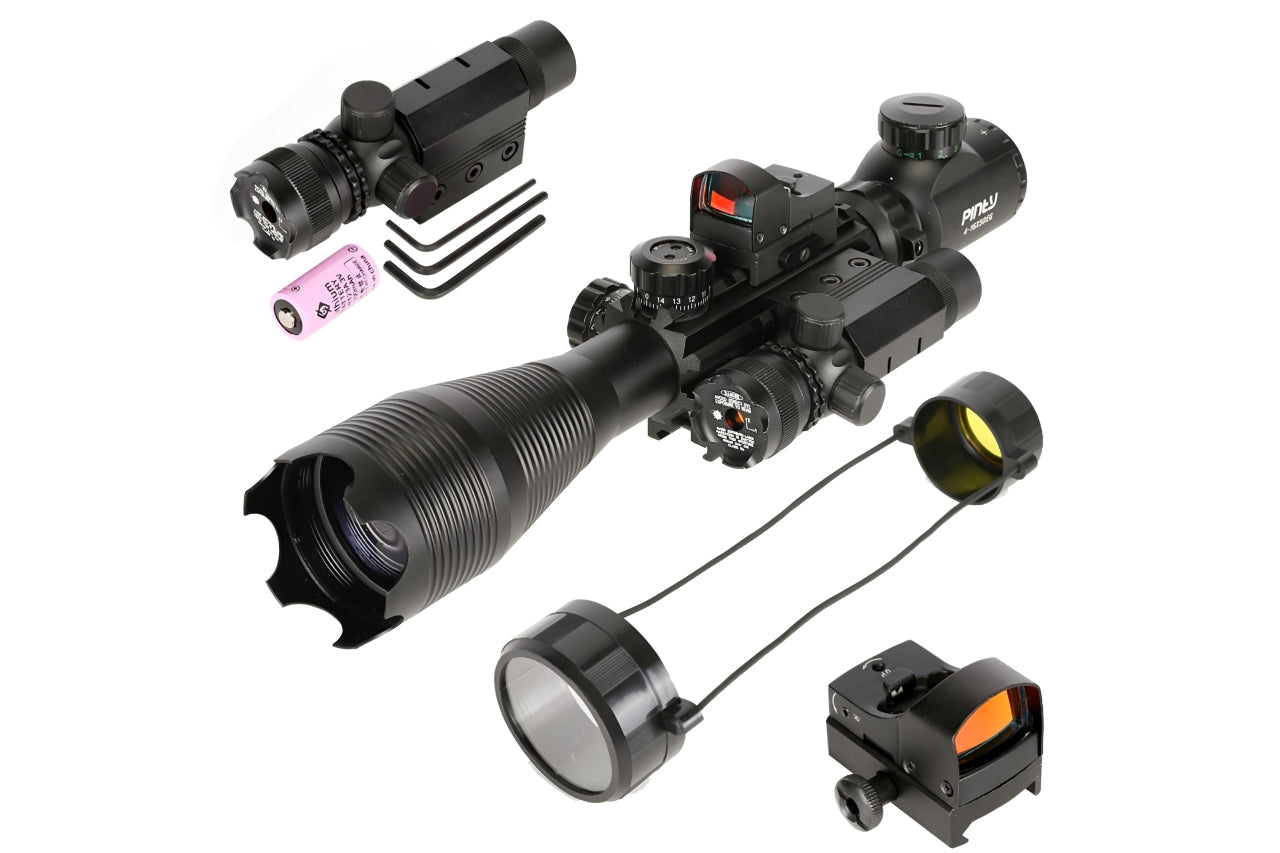
If you're seeking ample and flexible eye relief from your scope, Pinty offers several excellent long eye relief models to consider:
- Pinty 3-9x42 Scope - With an eye relief of 3.1-4 inches across its entire magnification range, this is one of Pinty's most forgiving optics.
- Pinty 2.5-10x40 Scope - Featuring up to 4 inches of eye relief at higher magnifications, this variable power scope remains comfortable even when dialed in.
- Pinty 4-16x40 Scope - With 3.9-6.5 inches of eye relief across its entire 4-16x range, this higher magnification scope remains comfortable even at max zoom.
Get Proper Eye Relief Dialed In
For best results, do not mix and match ammo. For dialing in, always use the same type from the same manufacturer. Consistency is key.
Mastering the nuances of eye relief is a vital skill for marksmen. Follow these tips to set up your scope for effortless aiming and prevent unnecessary facial injuries. Once your relief is properly dialed in, executing consistent shots becomes second nature. A perfectly sighted target will wait patiently for your next squeeze.