

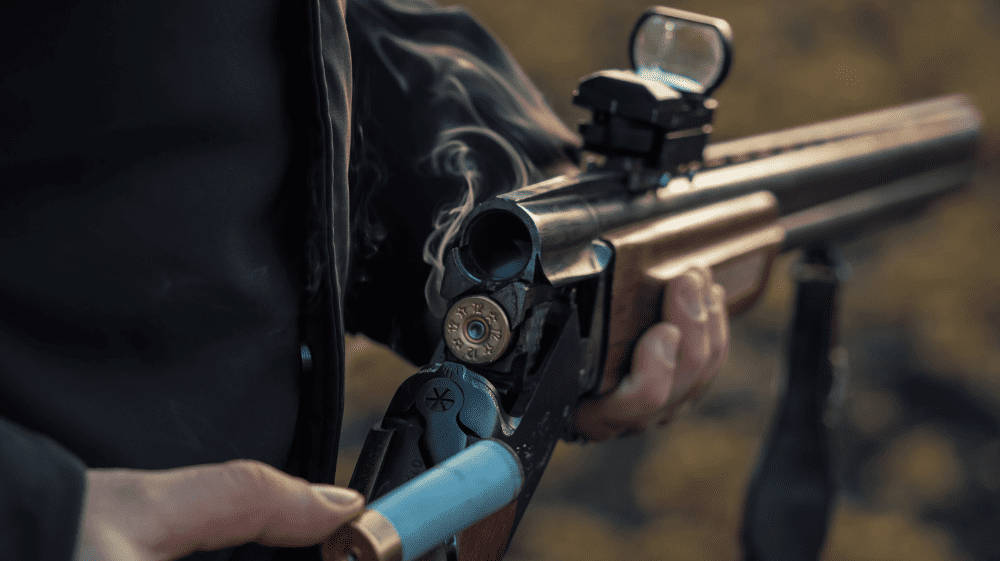
A red dot sight is a non-magnified optic designed to improve speed and simplicity in aiming. Instead of aligning traditional front and rear iron sights, the shooter places a single illuminated dot on the target and fires. This system significantly reduces aiming complexity, making it especially effective for close to mid-range shooting scenarios where speed matters.
Red dot sights are widely used in tactical, competitive, and recreational shooting because they allow faster target acquisition and more intuitive shooting under pressure. However, one of the most important choices when selecting a red dot is the dot size, commonly measured in MOA.
(Reading Time: 3-5 Minutes)
What Does MOA Mean?
MOA stands for Minute of Angle, a unit used to describe angular measurement. It is commonly used in shooting to define how large a red dot appears at different distances.
At 100 yards, 1 MOA equals approximately 1 inch (more precisely 1.047 inches). This means the apparent size of the dot increases with distance:
A 3 MOA dot covers about 3 inches at 100 yards, while a 6 MOA dot covers about 6 inches at the same distance. At closer ranges, the coverage becomes proportionally smaller, but the difference between dot sizes still significantly affects how much of the target is obscured.
For example, at 50 yards, a 3 MOA dot covers about 1.5 inches, while a 6 MOA dot covers about 3 inches. At 25 yards, the coverage is roughly 0.75 inch versus 1.5 inches respectively. This difference plays a key role in both speed and precision.
Understanding MOA in Red Dot Sights: What It Means and Why It Matters
3 MOA vs 6 MOA Size
The difference between a 3 MOA and 6 MOA red dot comes down to how large the dot appears on the target. MOA stands for Minute of Angle, a unit of angular measurement used in rifle optics and shooting. At 100 yards, 1 MOA equals approximately 1 inch, meaning a larger MOA dot covers more of the target.
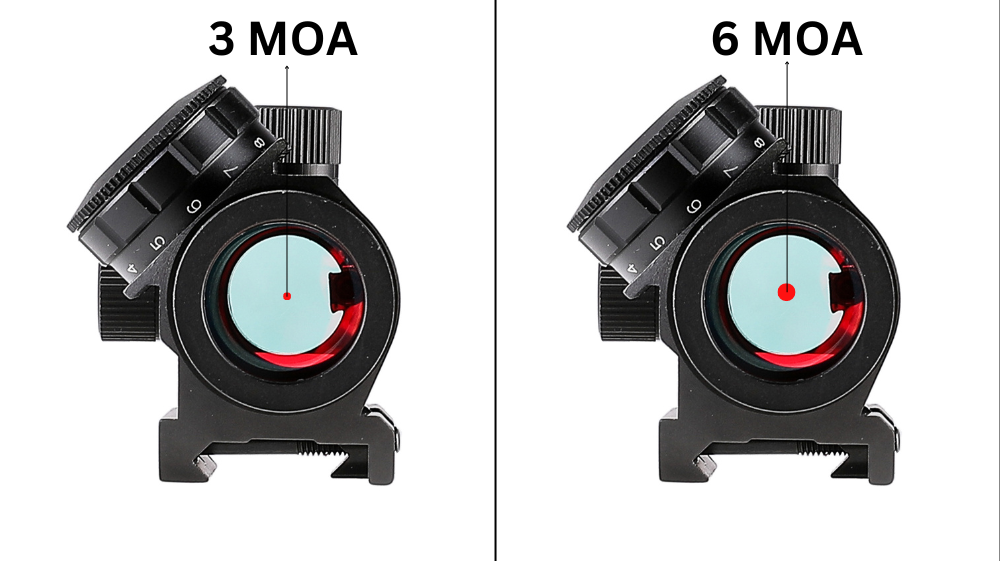
A 3 MOA dot covers about 3 inches of the target at 100 yards, while a 6 MOA dot covers about 6 inches at the same distance. Because of this, a 3 MOA dot appears smaller and more precise, while a 6 MOA dot appears larger and easier to see quickly.
As distance increases, the amount of target coverage also increases proportionally. At closer distances, the difference is less noticeable, but at longer ranges, the larger dot can begin to obscure smaller targets or fine aiming points.
3MOA vs 6MOA Red Dot: Close-Range Defense

Close-range defense, concealed carry (CCW), and everyday carry (EDC) all focus on one primary goal: fast and reliable performance in high-stress, close-quarters situations. In these scenarios, engagements typically happen at very short distances, where reaction time, target acquisition speed, and simplicity of use matter more than long-range precision.
|
Use Case |
What Matters Most |
Recommendation |
|
CCW (Concealed Carry) |
Fast draw, instant target acquisition under stress |
6 MOA for most CCW users |
|
Pistols |
Balance of speed and accuracy in close-range shooting |
6 MOA for defensive pistols |
|
Pistol Sights (General Use) |
Sight clarity + usability in real scenarios |
Depends: 6 MOA for defense, 3 MOA for range + defense mix |
|
Self Defense |
Maximum speed under stress (0–15 yards) |
6 MOA strongly preferred |
|
RMR Platform |
Compact optic for defensive handguns |
6 MOA for CCW-focused RMR setups |
|
Reflex Sight (General) |
Fast target tracking in close quarters |
6 MOA for close-range defensive use |
3 MOA vs 6 MOA for CCW (Concealed Carry Weapons)
For CCW and everyday concealed carry use, the choice between a 3 MOA and 6 MOA red dot is mainly about how quickly you can acquire the sight in a defensive situation. Since most concealed carry encounters happen at very close distances, speed is often more important than precision. A 6 MOA dot is typically easier to pick up quickly, especially under stress or in low-light environments, making it a strong option for defensive pistols.
3 MOA vs 6 MOA for Pistols
On pistols, the difference between 3 MOA and 6 MOA becomes a balance between speed and precision. A 6 MOA dot provides faster visual acquisition and is easier to track during recoil, which is helpful in close-range defensive shooting. A 3 MOA dot, however, offers a smaller aiming point that can improve accuracy, particularly when shooting at slightly longer distances or when more precise shot placement is required.
Choosing the Best MOA for Pistol Red Dot Sights
3 MOA vs 6 MOA Pistol Sights
When comparing general pistol sights equipped with red dots, the same trade-off applies. A 6 MOA sight is often favored for defensive use because it is highly visible and quick to acquire. A 3 MOA sight provides a cleaner sight picture with less target obstruction, making it more suitable for shooters who prioritize accuracy or use their pistol for both defensive and range purposes.
3 MOA vs 6 MOA for Self Defense
In self-defense scenarios, reaction time is critical, and target engagement typically occurs at very short distances. A 6 MOA dot is often preferred because it allows for faster target acquisition and quicker follow-up shots under stress. While a 3 MOA dot offers more precision, most defensive situations prioritize speed and simplicity over fine accuracy.
3 MOA vs 6 MOA RMR
On compact optics like the RMR platform, the choice between 3 MOA and 6 MOA depends on intended use. A 6 MOA RMR is commonly chosen for concealed carry due to its fast visibility and ease of use in high-stress environments. A 3 MOA RMR, however, is preferred by shooters who want a more versatile optic that performs better for precision shooting while still being suitable for defensive use.
RMR vs RMSc Footprint: Are RMR and RMSc Footprints the Same?
3 MOA vs 6 MOA Reflex Sight
For reflex sights in general, the 6 MOA dot is typically better suited for close-range defensive shooting because it is quicker to locate and easier to track during movement. The 3 MOA reflex sight provides a finer aiming point, which can be beneficial for shooters who want improved accuracy at mid-range distances or prefer a less obstructive sight picture.
3 MOA vs 6 MOA: Target Size Factors
Naturally, choosing dot size depends on your typical target sizes. 3 MOA dots cater to punching tiny bullseyes or hitting small game like rabbits where high accuracy is compulsory. The tighter dot leaves little margin for aiming error.
For defensive drills on silhouette targets or fast lead shots on moving targets, the larger 6 MOA dot proves more forgiving. The dot simply covers more area, allowing solid torso hits without hyper-precise hold alignment. Match your target objectives to the dot dimensions.
3 MOA vs 6 MOA: Competition
Competitive shooting disciplines such as USPSA, IPSC, and practical pistol matches place a strong emphasis on accuracy, split times, and efficient target transitions. Unlike defensive shooting, where speed under stress is the top priority, competition shooting demands a balance between precision and speed, with scoring often determined by tight shot placement and consistent performance across multiple targets.
|
Topic |
Key Focus |
Best Choice |
|
Competition Shooting (General) |
Accuracy, split times, target transitions |
3 MOA for precision-focused shooters |
|
Long Range / Small Targets |
Precision and minimal target obstruction |
3 MOA strongly preferred |
|
Fast Stage Transitions |
Speed between multiple targets |
6 MOA for speed-focused shooters |
|
USPSA Competition |
Balance of speed + accuracy scoring |
3 MOA most commonly used |
|
USPSA Speed Stages |
Split times and rapid transitions |
6 MOA for speed-heavy stages |
|
Circle Dot vs Standard Dot |
Hybrid reticle performance |
Circle dot = best all-around option |
3 MOA vs 6 MOA for Competition
In general competition use, a 3 MOA red dot is often preferred because it provides a smaller aiming point and allows for more precise shot placement. This becomes especially important at longer distances or when shooting smaller scoring zones, where excessive dot size can obscure the target and reduce accuracy. The finer dot also helps advanced shooters maintain tighter groups during rapid fire strings.
A 6 MOA dot, however, prioritizes visibility and speed. It can be easier to pick up during fast transitions between targets, especially in close-range stages. Some shooters prefer it for dynamic stages where target acquisition speed is more important than pinpoint precision. However, at longer distances, the larger dot may cover too much of the target and reduce fine aiming capability.
3 MOA vs 6 MOA in USPSA
In USPSA competition, where both speed and accuracy are heavily weighted in scoring, most shooters lean toward a 3 MOA dot. The smaller dot provides better precision for partial targets, no-shoot zones, and longer shots, which are common in stage design. It also allows more consistent shot placement when shooting at speed.
That said, some shooters still choose a 6 MOA dot for USPSA because it offers faster visual pickup during aggressive transitions. This can be beneficial in close-range stages where raw speed and split times are critical. Ultimately, the choice depends on whether the shooter prioritizes accuracy points or transition speed.
3 MOA vs 6 MOA vs Circle Dot
When comparing standard dots vs circle-dot reticles, the decision becomes even more nuanced. A 3 MOA dot offers a clean and precise aiming point, making it ideal for shooters focused on accuracy and consistency. A 6 MOA dot improves visibility and speed but sacrifices some precision.
A circle-dot reticle combines both speed and reference points. The outer circle helps with fast target acquisition and alignment, while the center dot provides precision aiming. Many competitive shooters prefer circle-dot systems because they allow for both rapid transitions and accurate shot placement, adapting well to different stage designs.
3 MOA vs 6 MOA: Platform-Based
Different firearm platforms place different demands on a red dot sight, which is why the choice between a 3 MOA and 6 MOA optic often depends on the firearm’s intended role.
3 MOA vs 6 MOA for AR15 Pistols
On an AR15 pistol, the decision between a 3 MOA and 6 MOA red dot depends heavily on how the firearm will be used. AR pistols are commonly employed for home defense, tactical training, close-quarters shooting, and sometimes mid-range range work.
A 3 MOA dot is typically the more versatile option for an AR15 pistol because it allows for better precision at extended distances while still remaining fast enough for close-range engagements. Since AR platforms are capable of accurate shooting beyond typical handgun distances, many shooters prefer the smaller dot for improved shot placement and reduced target obstruction.
A 6 MOA dot, however, excels in close-range and defensive scenarios where speed matters most. It is easier to acquire quickly during rapid movement, target transitions, and high-stress shooting. Shooters using an AR15 pistol primarily for home defense or CQB-style shooting may prefer the larger dot for faster sight acquisition.
Overall, a 3 MOA optic is usually favored for multi-purpose AR pistol setups, while a 6 MOA optic is preferred for dedicated close-range defensive use.
3 MOA vs 6 MOA for Shotguns
Shotguns are generally used at close range, making speed and target acquisition more important than pinpoint precision. Because of this, many shotgun users prefer a 6 MOA red dot, especially for defensive, tactical, or hunting applications involving moving targets.
The larger dot is easier to see and track during recoil, which is particularly useful on shotguns due to their heavier recoil impulse and fast target engagement style. A 6 MOA optic also works well for home defense shotguns where encounters are expected to happen within very short distances.
A 3 MOA dot can still be beneficial on slug guns or hunting shotguns where greater accuracy at longer distances is required. When shooting slugs at extended ranges, the smaller dot helps improve precision and prevents excessive target coverage.
In most defensive and tactical shotgun setups, however, the 6 MOA dot remains the more common and practical choice.
3 MOA vs 6 MOA for SIG Rattler
The SIG Rattler is a compact firearm platform designed primarily for close-quarters use, tactical applications, and suppressed shooting. Because of its short-barreled design and CQB-focused role, optic selection often prioritizes fast target acquisition and maneuverability.
A 6 MOA red dot pairs well with the SIG Rattler when the firearm is used primarily for home defense, tactical training, or rapid close-range engagements. The larger dot is easier to acquire quickly during movement and works especially well in low-light or high-stress situations.
A 3 MOA dot, however, offers greater flexibility for shooters who want to extend the effective range of the platform or maintain more precise shot placement. Since the Rattler is still capable of accurate shooting at moderate distances, some users prefer the cleaner sight picture and improved precision of the smaller dot.
For most CQB-focused SIG Rattler setups, a 6 MOA optic is often considered the faster and more intuitive option, while a 3 MOA optic provides more versatility for mixed-distance shooting.
3 MOA vs 6 MOA for Astigmatism
For shooters with astigmatism, choosing between a 3 MOA and 6 MOA red dot can significantly affect clarity, comfort, and target acquisition. Astigmatism often causes red dots to appear distorted, blurry, star-shaped, smeared, or stretched instead of crisp and round. Because of this, the “best” dot size is not always the same as it is for shooters without vision issues.
|
Feature |
3 MOA |
6 MOA |
|
Precision |
Better |
Lower |
|
Speed of Acquisition |
Moderate |
Faster |
|
Target Obstruction |
Less |
More |
|
Distortion Appearance |
Often smaller/manageable |
May appear larger or bloom more |
|
Best For |
Precision-focused shooters |
Close-range defensive shooting |
|
Common Astigmatism Preference |
Often preferred for cleaner aiming |
Preferred for easier visibility |
A 3 MOA red dot is smaller and more precise, but shooters with astigmatism may notice that the dot appears less defined or harder to locate quickly. However, because the dot itself is physically smaller, some users find that the distortion remains more manageable and covers less of the target. A 3 MOA optic can therefore still work well for shooters who prioritize precision and are able to maintain a relatively clean sight picture.
A 6 MOA red dot, on the other hand, is larger and easier to see quickly, which can improve target acquisition in defensive or close-range shooting. However, for some people with astigmatism, the larger dot may also appear more distorted or “bloated,” especially at higher brightness settings. This can make the dot seem less precise and may increase target obstruction at longer distances.
Brightness settings also play a major role. Many shooters with astigmatism notice that lowering the brightness of the optic can make the dot appear sharper and reduce blooming or starburst effects. In some cases, the quality of the optic itself matters more than the MOA size, as higher-end optics often produce a cleaner dot image.
Some shooters with astigmatism ultimately prefer a 3 MOA dot for improved precision, while others choose a 6 MOA dot because it is easier to acquire under stress. There is no universal answer because astigmatism affects each person differently.
Many users with astigmatism also consider alternatives such as:
- Circle-dot reticles
- Green dots instead of red
- Prism optics
- Holographic sights
These options can sometimes appear clearer than a standard red dot depending on the shooter’s vision condition.
3MOA vs 6MOA Red Dot: Pros and Cons
|
Feature |
3 MOA Red Dot |
6 MOA Red Dot |
|
Dot Size |
Smaller dot |
Larger dot |
|
Target Coverage at 100 yards |
~3 inches |
~6 inches |
|
Target Coverage at 25 yards |
~0.75 inch |
~1.5 inches |
|
Primary Advantage |
Higher precision |
Faster target acquisition |
|
Shooting Speed |
Moderate |
Very fast |
|
Accuracy at Mid–Long Range |
Better |
Less precise |
|
Close-Range Performance |
Good but slightly slower |
Excellent and very fast |
|
Visibility in Bright Light |
Moderate |
Easier to see |
|
Moving Targets |
Moderate tracking ability |
Better tracking ability |
|
Target Obstruction |
Less obstruction of target |
More obstruction of target |
|
Best Use Case |
General use, range shooting, precision work |
CQB, home defense, fast-paced shooting |
|
Shooter Type |
Precision-focused users |
Speed-focused users |
|
Learning Curve |
Slightly more refined aiming needed |
Easier for beginners and quick use |
Pinty 3MoA Red Dot Sight
3.25 MOA vs 6.5 MOA: Key Differences
3.25 MOA vs 6.5 MOA refers to the size of the red dot in a red dot sight, measured in Minutes of Angle (MOA)—a unit that describes how large the dot appears at distance.
|
Feature |
3.25 MOA Dot |
6.5 MOA Dot |
|
Dot size at 100 yards |
~3.25 inches |
~6.5 inches |
|
Precision |
Higher precision |
Lower precision |
|
Target speed |
Slower to acquire |
Faster to acquire |
|
Best use |
Shooting at distance, small targets |
Close-range shooting, fast action |
|
Sight picture |
Less obstruction of target |
Covers more of the target |
|
Beginner-friendly |
Moderate |
Very beginner-friendly |
3.25 MOA vs 6.5 MOA: Based on Firearm
|
Firearm / Use Case |
Best Choice |
Why |
|
Handguns (Pistols) |
6.5 MOA |
Faster target acquisition at close range; easier to see under stress |
|
AR-15 / Carbines |
3.25 MOA |
Better precision at 25–200 yards while still fast up close |
|
Shotguns |
6.5 MOA |
Close-range use; speed matters more than precision |
|
Competition Shooting |
3.25 MOA |
Improved accuracy and tighter aiming on small targets |
|
Home Defense |
6.5 MOA |
Quicker dot pickup in high-stress, close-quarters situations |
|
Mixed / Versatile Use |
3.25 MOA |
More balanced for both short and mid-range shooting |
3 MOA vs 6 MOA for Hunting
When choosing between a 3 MOA and 6 MOA red dot for hunting, the best option depends on the type of game you hunt, your typical shooting distance, and how quickly you need to acquire the target.
Hunting situations can vary from fast-moving close-range shots in thick woods to more precise shots at longer distances in open terrain, so dot size plays an important role in overall performance.
|
Feature |
3 MOA |
6 MOA |
|
Precision at Distance |
Better |
Lower |
|
Speed on Moving Targets |
Moderate |
Faster |
|
Target Obstruction |
Less |
More |
|
Low-Light Visibility |
Good |
Better |
|
Best for Rifles |
Yes |
Sometimes |
|
Best for Shotguns |
Situational |
Yes |
|
Best Hunting Style |
Open terrain, precise shots |
Dense woods, fast shooting |
3.25 MOA vs 6 MOA
A 3.25 MOA red dot is smaller and more precise, making it better for accurate shooting, longer distances, and versatile use on pistols or rifles. It covers less of the target and provides a cleaner sight picture.
A 6 MOA red dot is larger and easier to see quickly, making it better for close-range shooting, concealed carry, home defense, and fast target acquisition under stress.
3.25 MOA vs 6 MOA Size Comparison
|
Distance |
3.25 MOA Coverage |
6 MOA Coverage |
|
10 yards |
~0.33 inch |
~0.6 inch |
|
25 yards |
~0.8 inch |
~1.5 inches |
|
50 yards |
~1.6 inches |
~3 inches |
|
100 yards |
~3.25 inches |
~6 inches |
3.25 MOA vs 6 MOA — Which Is Better?
|
Use Case |
Better Choice |
Why |
|
Concealed Carry (CCW) |
6 MOA |
Faster dot pickup under stress |
|
Home Defense |
6 MOA |
Easier to acquire in close quarters |
|
Competition Shooting |
3.25 MOA |
Better precision and target clarity |
|
AR Platforms |
3.25 MOA |
More versatile at varying distances |
|
Shotguns |
6 MOA |
Faster on moving targets |
|
Hunting Rifles |
3.25 MOA |
Improved shot placement at distance |
FAQ
Is 6 MoA or 3 MoA better?
A 3 MOA red dot is generally better for precision shooting, longer distances, and versatile use. Because the dot is smaller, it covers less of the target and allows for more accurate shot placement. A 6 MOA red dot is better for close-range shooting, fast target acquisition, and defensive use.
What is the best MoA for concealed carry?
For concealed carry, many shooters consider a 6 MOA red dot to be the best overall choice because it is faster and easier to acquire in close-range defensive situations.
A 3 MOA dot can still work very well for concealed carry, especially for shooters who want more precise shot placement or a more versatile optic for both defense and range use. However, the smaller dot may take slightly longer to pick up quickly compared to a larger 6 MOA dot.
Is a 6 moa dot too big?
A 6 MOA dot is not too big—it is simply optimized for speed rather than precision. However, a 6 MOA dot can feel large if you start shooting at longer distances. If your focus is close-range defensive shooting, it is often considered an excellent and practical size.
What distance is 6 Moa good for?
6 MoA performs best within about 0–25 yards, which covers most pistol-based uses such as concealed carry, home defense, and general defensive shooting.
Is 6 MoA good for self-defense?
Yes, a 6 MOA red dot is generally very good for self-defense, especially on pistols used for concealed carry or home defense.
Is a 6 MOA good for beginners?
Yes, a 6 MOA red dot is often a very good choice for beginners, especially for pistol shooting and close-range practice.
Is 3 MoA or 6 MoA better for astigmatism?
For shooters with astigmatism, neither 3 MOA nor 6 MOA is universally “better,” because the issue is not the dot size itself—it’s how your eye focuses light from the optic.
What MoA is best for a handgun?
For most handgun uses like concealed carry and self-defense, a 6 MOA red dot is often considered the best choice.
A 3 MOA red dot is better if you want more precision or plan to use your handgun at slightly longer distances or for more range-focused shooting.
Is 3 MOA good for CCW?
Yes, a 3 MOA red dot is good for CCW, but it depends on what you prioritize.
For concealed carry, most shooting happens at very close distances where speed and quick target acquisition matter most. In this context, a 3 MOA dot works well.
However, compared to a 6 MOA dot, a 3 MOA dot is a bit smaller and may take slightly longer to pick up quickly during a fast draw or high-stress situation. That is why some CCW users prefer 6 MOA for maximum speed.
Share:
Top 5 Affordable Rifle Scopes Under $100 for Hunters and Shooters
Exploring the Use of Bullet Drop Compensators (BDC) in Rifle Scopes